TN:156 AIR
Album: Moon Safari
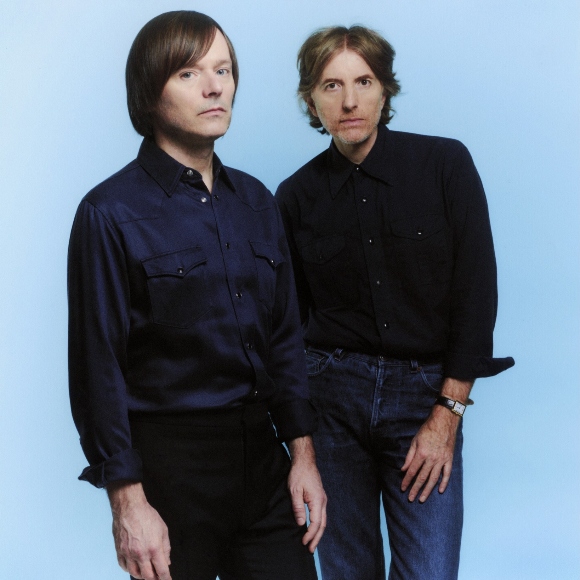
John is joined by Nicolas Godin, one half of the French electronic duo Air, to explore how they wrote, recorded, and produced their iconic debut album, Moon Safari.
Formed in 1995 by Nicolas Godin and Jean-Benoît Dunckel, Air rose to global fame with ‘Moon Safari’ in 1998, a critically acclaimed, genre-defining album that helped elevate French pop and inspired a generation of down-tempo electronic music. In 2025, the duo marked its 25th anniversary with Blue Moon Safari, a bold reinterpretation by British producer Vegyn.
In this episode, Nico shares the story behind ‘Moon Safari‘, sharing how each track came to life, the creative choices that shaped the album, and the instruments and techniques that defined the iconic Air sound.
Tracks discussed: Sexy Boy, La Femme d’argent, Talisman, Kelly Watch the Stars
Full Transcript:
00:00:00.360 –> 00:00:01.620
John Kennedy: Hello, welcome to Tape Notes.
00:00:01.620 –> 00:00:11.100
John Kennedy: We have got an exciting new episode for you this week, a classic, I think, and looking back at a classic album, Moon Safari, the debut album from French duo Air.
00:00:11.100 –> 00:00:23.040
John Kennedy: I was joined by Nico from the band with some rebuilt sessions and stems from the late 90s to tell the story of some of the big tracks of the record and dig into what went into creating that iconic air sound.
00:00:23.040 –> 00:00:28.920
John Kennedy: Nico joined us at Strong Room Studios and you can watch the full conversation and see into the sessions on the Tape Notes Patreon page.
00:00:29.260 –> 00:00:40.160
John Kennedy: So just head to patreon.com/tapenotes to check them out as well as access to the full video episodes which often include additional material from the conversations and screen recording of each guest door.
00:00:40.160 –> 00:00:51.260
John Kennedy: Becoming a patron also gives you access to all sorts of other content, episode previews, behind-the-scenes photos, gear lists and as you’ll often hear in the episodes the opportunity to ask questions to upcoming guests.
00:00:51.260 –> 00:00:56.540
John Kennedy: You can join us on Patreon from just three or five pounds and it really goes a long way.
00:00:56.540 –> 00:01:00.520
John Kennedy: If you’re already a Tape Notes patron, thank you for your support of the show.
00:01:00.520 –> 00:01:08.520
John Kennedy: Thank you also to our partners at Tape It, the iPhone recording app for musicians and some exciting news from the team at Tape It.
00:01:08.520 –> 00:01:14.520
John Kennedy: After lots of requests, including some from previous Tape Notes guests, they have introduced layering.
00:01:14.520 –> 00:01:21.600
John Kennedy: So as well as all of that fantastic organizational recording tools that Tape It has, you can now record on top of your voice notes.
00:01:21.600 –> 00:01:25.000
John Kennedy: You can jam with yourself, build up harmonies, add more parts.
00:01:25.000 –> 00:01:26.100
John Kennedy: It is just the start.
00:01:26.520 –> 00:01:28.140
John Kennedy: More on Tape It later in the show.
00:01:28.140 –> 00:01:37.480
John Kennedy: But if you d like to try it out now, all you have to do is head to tape.it forward slash Tape Notes, search Tape It on the App Store, or click the link in the show notes.
00:01:37.480 –> 00:01:40.420
John Kennedy: But now, without further ado, let’s get started.
00:01:46.350 –> 00:01:52.270
John Kennedy: Hello and welcome to Tape Notes, the podcast that looks behind the scenes at the magic of recording and producing music.
00:01:52.270 –> 00:01:59.270
John Kennedy: Every episode, we’ll be reuniting an artist and producer and talking through some of the highlights from their collaboration in the studio.
00:01:59.270 –> 00:02:05.710
John Kennedy: So join us as we lift the lid on the creative process and the inner workings of music production to see what lies beneath.
00:02:15.460 –> 00:02:24.900
John Kennedy: Hello, I’m John Kennedy, and joining me for this episode of Tape Notes is Ayre’s Nico Godin to talk about how the band wrote, recorded and produced the album Moon Safari.
00:02:24.900 –> 00:02:30.660
John Kennedy: Ayre are a French music duo consisting of Nicolas Godin and Jean-Benoît Dunckel.
00:02:30.660 –> 00:02:35.300
John Kennedy: The band formed in 1995 after the pair met while studying at university.
00:02:35.300 –> 00:02:48.020
John Kennedy: While they initially gained recognition through their psychedelic inspired remixes and an early EP, it was the release of their debut album, Moon Safari in 1998 that captured global attention and marked their breakthrough.
00:02:48.020 –> 00:02:57.840
John Kennedy: A commercial success that sold millions of copies worldwide, Moon Safari was praised for elevating French pop to the global stage and redefining electronic music.
00:02:57.840 –> 00:03:09.460
John Kennedy: Its distinctive down tempo sound inspired countless artists in the years that followed, with tracks like Sexy Boy, All I Need and La Femme d’argent becoming synonymous with the smooth, chilled out vibe of the era.
00:03:09.460 –> 00:03:21.760
John Kennedy: After the success of Moon Safari, Air went on to release five further albums, often fusing a variety of genres, from the pop melodies on Talkie Walkie to the more experimental sounds of 10,000 Hertz Legend.
00:03:21.760 –> 00:03:29.840
John Kennedy: Beyond their work as a duo, both members have also enjoyed successful solo careers and contributed music to a variety of film soundtracks.
00:03:29.840 –> 00:03:37.200
John Kennedy: More recently, to mark the album’s 25th anniversary, Air invited British producer Vegyn to reimagine Moon Safari.
00:03:37.220 –> 00:03:49.180
John Kennedy: The result, Blue Moon Safari, released in April 2025, is a bold fusion of genres and eras that channels a unique vision into the French duo’s beloved ambient pop masterpiece.
00:03:49.180 –> 00:03:52.980
John Kennedy: Today, I’m at Strong Room Studios and I’m joined by Nico from Air.
00:03:52.980 –> 00:03:56.840
John Kennedy: And what better way to start than by hearing something from Blue Moon Safari.
00:03:56.840 –> 00:04:00.080
John Kennedy: This is Vegyn’s reimagining of All I Need.
00:05:21.048 –> 00:05:29.188
John Kennedy: It is All I Need by Air and Vegyn, taken from the Blue Moon Safari album, Air’s Moon Safari, reimagined by Vegyn.
00:05:29.188 –> 00:05:34.728
John Kennedy: And I’m very pleased to say that I have one half of Air with me to find out more about the making of Moon Safari.
00:05:34.728 –> 00:05:36.308
John Kennedy: Nicolas, welcome.
00:05:36.488 –> 00:05:38.588
Nicolas: The question is, which half is it?
00:05:38.588 –> 00:05:41.708
Nicolas: Is it the good one or the bad one?
00:05:41.708 –> 00:05:44.468
John Kennedy: I think we’ll find out today, but I’m sure it’s the good one.
00:05:44.468 –> 00:05:54.808
Nicolas: But All I Need by Vegyn is, I remember, Vegyn, when he was working on that, it was one of his favorites.
00:05:54.808 –> 00:05:58.368
Nicolas: When he worked on the album, he was very happy of All I Need.
00:05:58.368 –> 00:06:00.988
Nicolas: So I’m glad that’s the one you chose.
00:06:01.248 –> 00:06:01.488
John Kennedy: Yeah.
00:06:01.488 –> 00:06:02.388
John Kennedy: Well, it’s interesting, isn’t it?
00:06:02.388 –> 00:06:04.108
John Kennedy: Because that has just arrived.
00:06:04.108 –> 00:06:05.468
John Kennedy: How did it come about?
00:06:05.468 –> 00:06:07.968
John Kennedy: How did that remix and reimagining come about?
00:06:09.268 –> 00:06:12.868
Nicolas: Well, it was before we took the decision to go back on tour.
00:06:12.868 –> 00:06:18.528
Nicolas: So we were looking for some ways to promote the anniversary of Moon Safari.
00:06:18.528 –> 00:06:24.508
Nicolas: And when we were doing Moon Safari at the time, there was an album that we really enjoyed.
00:06:24.508 –> 00:06:31.448
Nicolas: It was a remix album of Massive Attack by Matt Professor.
00:06:31.448 –> 00:06:33.528
Nicolas: And we were listening to that all the time.
00:06:33.528 –> 00:06:40.628
Nicolas: And we liked the idea that it was one guy who did the whole album, because there’s one vision, you know?
00:06:40.628 –> 00:06:44.568
Nicolas: And it brings a very strong artistic personality to the result.
00:06:45.368 –> 00:06:47.828
Nicolas: So we were looking for some people who could do that.
00:06:47.828 –> 00:06:50.848
Nicolas: And so we decided to call him.
00:06:50.848 –> 00:06:51.708
Nicolas: And he was into it.
00:06:51.708 –> 00:06:54.068
Nicolas: And he was very enthusiastic.
00:06:54.068 –> 00:06:58.928
Nicolas: And that’s amazing because it’s a big task, you know?
00:06:59.708 –> 00:07:04.008
Nicolas: It’s an album very, I mean, it’s a classic album.
00:07:04.008 –> 00:07:08.008
Nicolas: So it doesn’t seem to be worried by that at all.
00:07:08.008 –> 00:07:09.948
Nicolas: So we were very impressed.
00:07:10.988 –> 00:07:11.848
Nicolas: And then they did it.
00:07:11.908 –> 00:07:14.508
Nicolas: And it was so easy.
00:07:14.508 –> 00:07:16.788
Nicolas: Like, it was so easy to work with him.
00:07:16.788 –> 00:07:19.028
Nicolas: And everything was smooth.
00:07:19.028 –> 00:07:21.908
Nicolas: And he was working fast.
00:07:21.908 –> 00:07:25.868
Nicolas: Of course, he’s got a lot of talents, but he’s got a very nice energy.
00:07:25.868 –> 00:07:26.568
Nicolas: He’s a great guy.
00:07:26.568 –> 00:07:31.188
Nicolas: And from A to Z, it was just a pleasure to do this.
00:07:31.188 –> 00:07:31.588
John Kennedy: Yeah.
00:07:31.588 –> 00:07:36.708
John Kennedy: So he got a call from you out of the blue, suggesting that maybe he have a go at it.
00:07:36.748 –> 00:07:38.468
Nicolas: Yeah.
00:07:38.468 –> 00:07:41.568
Nicolas: But for us, we were very happy.
00:07:41.668 –> 00:07:45.408
Nicolas: He accepted it actually, because we didn’t thought…
00:07:45.408 –> 00:07:47.588
Nicolas: We don’t thought it was an easy job.
00:07:47.588 –> 00:07:47.928
John Kennedy: Yeah.
00:07:47.928 –> 00:07:56.228
John Kennedy: And it’s interesting that you chose a British producer, because in some ways, Moon Safari resonated most worldwide in Britain, you could say.
00:07:56.368 –> 00:07:57.028
Nicolas: That’s crazy.
00:07:57.028 –> 00:08:01.468
Nicolas: This album is part of the English culture in a way that everybody loves it here.
00:08:01.628 –> 00:08:11.548
Nicolas: I don’t say it’s English people did it, but for us, it means a lot, because we always say we’re English people, you have the best ears in the world.
00:08:11.548 –> 00:08:12.748
Nicolas: It’s crazy.
00:08:13.788 –> 00:08:18.888
Nicolas: In France, we’re better at fashion or restaurants.
00:08:18.888 –> 00:08:23.708
Nicolas: But in England, it’s like music is like, I don’t know what happens here.
00:08:24.788 –> 00:08:28.268
Nicolas: Why this thing is?
00:08:28.268 –> 00:08:31.888
Nicolas: I remember one day, I was with an English drummer.
00:08:31.888 –> 00:08:38.408
Nicolas: I used to work with Alex Thomas, and we were at a restaurant in Paris, and I was bitching about English food, as usual.
00:08:40.288 –> 00:08:50.088
Nicolas: And I was telling him, how lucky we are in France because for lunch, we take two hours break in nice restaurants while you eat like really horrible food.
00:08:50.088 –> 00:08:54.688
Nicolas: And I said, yes, I’m sorry for that, but we were too busy making great records.
00:08:56.048 –> 00:09:00.648
Nicolas: And at that, I thought, not only music you’re good at, but sense of humor as well.
00:09:01.048 –> 00:09:03.868
Nicolas: But also, he was so right.
00:09:03.868 –> 00:09:10.648
Nicolas: Like you made the best records in the history of humankind, you know.
00:09:10.648 –> 00:09:19.608
John Kennedy: So for the 25th anniversary of Moon Safari’s release, you took the album live for the first time and you’re continuing to do that again this year.
00:09:19.608 –> 00:09:31.628
John Kennedy: But one of the great things about an album like Moon Safari and Blue Moon Safari being reimagined by Vegyn, to me, when I listened to it, one of the things I really want to do after listening to it was to go back to Moon Safari.
00:09:31.628 –> 00:09:39.328
John Kennedy: And today we’re very privileged because you’re going to open the doors and let us into your world and show us how you created this record.
00:09:39.328 –> 00:09:44.428
Nicolas: I was very surprised when I opened the sessions, because it’s so few tracks.
00:09:44.428 –> 00:09:51.288
Nicolas: Like we record Moon Safari on an 8-track, digital 8-track, Fostex A80.
00:09:51.288 –> 00:09:53.488
Nicolas: And so basically there’s 8 tracks.
00:09:53.488 –> 00:09:58.148
Nicolas: And then we signed a deal with the record company and suddenly we had a lot of money.
00:09:58.768 –> 00:10:05.308
Nicolas: And so they gave us the opportunity to mix on a big desk like that.
00:10:05.868 –> 00:10:07.668
Nicolas: Is it an EVO SSL?
00:10:07.668 –> 00:10:09.588
John Kennedy: I’m not sure.
00:10:09.588 –> 00:10:14.488
John Kennedy: So we’re at Strong Rooms, one of Studio One’s Strong Rooms, and we’ve got this big old-fashioned desk beside us.
00:10:15.828 –> 00:10:17.728
Nicolas: But it was even bigger than that.
00:10:17.728 –> 00:10:20.688
Nicolas: I think it was 96 channels or something.
00:10:20.688 –> 00:10:22.768
John Kennedy: So you’re putting your 8 tracks through.
00:10:22.808 –> 00:10:23.968
Nicolas: And it was automatic faders.
00:10:23.968 –> 00:10:28.188
Nicolas: And suddenly we saw 8 faders moving on this gigantic desk.
00:10:28.188 –> 00:10:30.328
Nicolas: It was so funny.
00:10:30.328 –> 00:10:34.428
Nicolas: Then air has always been very empty.
00:10:34.428 –> 00:10:39.648
Nicolas: Right now, we’re just remixing in analog vergence, we said.
00:10:39.648 –> 00:10:44.148
Nicolas: And when I opened the session, and some tracks have like six tracks.
00:10:44.148 –> 00:10:44.948
Nicolas: It’s like crazy.
00:10:44.948 –> 00:10:48.688
Nicolas: Like nobody does that anymore, especially for instrumental music.
00:10:48.688 –> 00:10:52.048
Nicolas: Because if you’re a singer, at least you can sing a song with a guitar on.
00:10:52.508 –> 00:10:55.168
Nicolas: It can be like a training, you know.
00:10:55.168 –> 00:11:14.088
Nicolas: But when you do instrumental music with so little means, I think maybe that’s the thing I’m very proud of, just to have pulled this off with so few tracks, with so few equipments, and in a bedroom, and to record an album.
00:11:14.088 –> 00:11:18.948
Nicolas: And that’s a little stone we brought to the history of music.
00:11:18.988 –> 00:11:20.028
John Kennedy: Yeah, yeah.
00:11:20.028 –> 00:11:20.588
John Kennedy: Fantastic.
00:11:20.588 –> 00:11:23.208
John Kennedy: And we’re going to find out how you did that.
00:11:23.208 –> 00:11:27.368
John Kennedy: And the first song we’re going to look at from Moon Safari is Sexy Boy.
00:11:27.368 –> 00:11:33.128
John Kennedy: So maybe if you play us a bit of the master, then we can go back to how you created it.
00:11:33.128 –> 00:11:33.268
Nicolas: So…
00:12:33.588 –> 00:12:35.948
John Kennedy: Sexy Boy by Air from Moon Safari.
00:12:35.948 –> 00:12:40.968
John Kennedy: And I thought, because there are so few tracks, that maybe we could even identify every single part of the song.
00:12:40.968 –> 00:12:42.988
John Kennedy: So when it starts, what does that sound there?
00:12:42.988 –> 00:12:46.748
Nicolas: With Air, anything, you hear anything there is.
00:12:46.748 –> 00:12:48.888
Nicolas: There’s no hidden stuff, basically.
00:12:48.888 –> 00:12:51.388
Nicolas: And that’s, if you, there’s something you hear.
00:12:51.388 –> 00:12:55.068
Nicolas: That’s my production mantra, whatever.
00:12:55.068 –> 00:12:55.788
John Kennedy: Yeah.
00:12:55.788 –> 00:13:01.848
Nicolas: And so this sound is something, it’s a Minimoog, but in a talk box.
00:13:02.528 –> 00:13:08.428
Nicolas: And we used to have the talk box, and there was confusion at the time.
00:13:08.428 –> 00:13:13.248
Nicolas: Some vocoders things, people thought it was vocoders, but it was talk box.
00:13:13.248 –> 00:13:15.688
Nicolas: Like Around the World by Daft Punk, it’s a talk box.
00:13:16.728 –> 00:13:18.228
Nicolas: It’s not a vocoder.
00:13:18.228 –> 00:13:20.968
Nicolas: And here I put the baseline on my Minimoog.
00:13:20.968 –> 00:13:27.508
Nicolas: And I, so I don’t know, I don’t know if anyone is familiar with what is it, what a talk box is.
00:13:27.508 –> 00:13:28.648
John Kennedy: Well, you could explain maybe.
00:13:28.648 –> 00:13:29.568
Nicolas: Well, it’s a box.
00:13:30.788 –> 00:13:34.148
Nicolas: And you, it’s amplified.
00:13:34.148 –> 00:13:38.788
Nicolas: So you amplify it with a guitar amp or something, and you put your sound in it.
00:13:38.788 –> 00:13:46.408
Nicolas: And then there’s a tube, like something to do your water in your garden, you know, like a big tube like that.
00:13:46.408 –> 00:13:49.748
Nicolas: And then the sound goes in that tube and goes in your mouth.
00:13:49.748 –> 00:13:57.308
Nicolas: And then with the microphone, and then you modulate the sound that goes in your mouth with your mouth, with your palate.
00:13:57.308 –> 00:14:00.688
Nicolas: And then with the microphone, and you record what’s out of your mouth.
00:14:00.688 –> 00:14:11.768
Nicolas: And then it’s very physical, like you have shocks on your, vibrating shocks on your teeth, and you’re not very, a beautiful man when you do it.
00:14:11.768 –> 00:14:14.948
Nicolas: You have, you can spit.
00:14:14.948 –> 00:14:16.228
John Kennedy: So you’re not that sexy a boy.
00:14:16.228 –> 00:14:18.188
Nicolas: No, you’re not a sexy boy when you do that.
00:14:18.188 –> 00:14:21.648
Nicolas: And then, so if I isolate the track, you can see.
00:14:27.088 –> 00:14:30.128
John Kennedy: So you’re using the talkbox and the Minimoog there.
00:14:30.128 –> 00:14:32.308
Nicolas: Yeah.
00:14:32.308 –> 00:14:40.228
Nicolas: I play, the sound goes in the box, goes in the tube, goes in my mouth, and I take the output of my mouth with the microphone.
00:14:40.228 –> 00:14:41.148
John Kennedy: Right.
00:14:41.148 –> 00:14:44.328
Nicolas: So you change the sound with the shape of your, the inside of your mouth.
00:14:44.328 –> 00:14:44.488
John Kennedy: Yeah.
00:14:47.628 –> 00:14:50.168
Nicolas: So it’s a very cool thing.
00:14:50.168 –> 00:14:52.428
Nicolas: And I do, I use that thing all the time.
00:14:52.428 –> 00:14:58.348
Nicolas: For example, on Sexy Boy and many of Moon Safari tracks, I do this thing all the time.
00:14:58.348 –> 00:15:02.448
Nicolas: I put a pad, like an organ pad, and I modulate.
00:15:02.448 –> 00:15:05.088
Nicolas: I go in, I put in the talkbox and I’m…
00:15:09.728 –> 00:15:12.408
Nicolas: So you can think it’s a wah-wah, but it’s a talkbox.
00:15:12.408 –> 00:15:13.088
Nicolas: Yeah.
00:15:13.088 –> 00:15:16.288
John Kennedy: So the original sound is whatever the original sound is.
00:15:16.288 –> 00:15:18.448
Nicolas: It’s an organ pad.
00:15:18.448 –> 00:15:18.848
Nicolas: Yeah.
00:15:18.848 –> 00:15:22.148
John Kennedy: And then that goes into your mouth and you manipulate it.
00:15:22.148 –> 00:15:23.668
John Kennedy: And then that goes straight into the microphone.
00:15:23.668 –> 00:15:31.388
Nicolas: And I have to say that a lot of sounds were going through a guitar amp because we only had one guitar amp, a Peavey Classic 50.
00:15:31.388 –> 00:15:35.908
Nicolas: And this is the only amp we had to bring some textures to the sound.
00:15:37.348 –> 00:15:39.888
Nicolas: We used to put everything in the guitar amp.
00:15:39.888 –> 00:15:41.628
Nicolas: Like this pad goes in…
00:15:41.628 –> 00:15:43.548
Nicolas: It was a cheap organ, but it goes in this amp.
00:15:44.088 –> 00:15:45.588
Nicolas: We never record it in line.
00:15:45.588 –> 00:15:55.748
Nicolas: We go to the amp and get it with the microphone because we were looking for ways to make the song more dirty because we didn’t have a recording studio.
00:15:55.748 –> 00:16:02.308
Nicolas: We were recording in my bedroom, you know, as Daft Punk, as a lot of bands of that era.
00:16:02.308 –> 00:16:06.688
John Kennedy: So was the bedroom at the time still a bedroom or was it just a bedroom that had been turned into a studio?
00:16:06.688 –> 00:16:09.608
Nicolas: So I put the bed somewhere else.
00:16:11.168 –> 00:16:25.408
Nicolas: But we come from the home studio world and we are, I think, I’m sure we’re not the first artists to have recorded in the bedroom, but I think we are the first generation to make classic albums in a bedroom.
00:16:25.408 –> 00:16:29.488
Nicolas: Like it started with the house music and all this electronic music scene.
00:16:29.488 –> 00:16:42.908
Nicolas: But because we were classically trained musicians, and we used the means of house music, but with the skills of real musicians, with that DJs don’t have that skills, which is they have other skills, which is amazing or so.
00:16:42.908 –> 00:16:46.188
Nicolas: So I don’t compare or don’t say people are better than others.
00:16:46.188 –> 00:16:52.548
Nicolas: But then, but we learn from them because all our friends were doing house music, like Etienne de Cressy, Alex Gaufer.
00:16:53.608 –> 00:17:02.808
Nicolas: And even at the time, the big name was Daft Punk, because they were they were starting with the first singer and and it was electronic dance music.
00:17:02.808 –> 00:17:05.328
Nicolas: But I was I was very bad for that.
00:17:05.328 –> 00:17:07.588
Nicolas: I didn’t know how to make a dance song.
00:17:07.588 –> 00:17:12.288
Nicolas: And it was not my it was not my my skills, my talent.
00:17:12.288 –> 00:17:17.868
Nicolas: So I did slow music and I decided to divide the 120 BPM by 2.
00:17:17.868 –> 00:17:22.288
Nicolas: So I did 60 BPM and I did Le Soleil Pro Demois with JB.
00:17:22.348 –> 00:17:25.388
Nicolas: We were at a Mazistar concert in Paris one night.
00:17:25.388 –> 00:17:31.068
Nicolas: And after the concert, I said to JB, let’s make the slowest song we could do.
00:17:31.068 –> 00:17:34.728
Nicolas: And we did Le Soleil Pro Demois and it suddenly worked.
00:17:34.728 –> 00:17:39.788
Nicolas: And even now, when I struggle in the track and I don’t know, I think it’s not working.
00:17:39.788 –> 00:17:43.828
Nicolas: I just divide the tempo by 2 and suddenly it’s magic.
00:17:43.828 –> 00:17:45.208
Nicolas: So I got that in me.
00:17:45.348 –> 00:17:46.948
Nicolas: I’m good at slow music.
00:17:47.628 –> 00:17:48.748
Nicolas: It’s very strange.
00:17:48.748 –> 00:17:55.648
John Kennedy: It’s interesting at the time though, because in some ways there were parallel movements doing a similar thing in different genres.
00:17:55.648 –> 00:18:04.028
John Kennedy: So it’s almost like you had slowcore as a contrast to grunge or trip hop as opposed to hip hop.
00:18:04.028 –> 00:18:13.308
Nicolas: I think that for me the trip hop was the thing because I was a teenager and I was a big fan of music.
00:18:13.308 –> 00:18:21.988
Nicolas: I remember when Cure was there, Depeche Mode, Prince, Michael Jackson, Thriller.
00:18:21.988 –> 00:18:26.248
Nicolas: And I said, my God, I would never make music because I don’t know how to make this kind of stuff.
00:18:27.688 –> 00:18:31.948
Nicolas: How do you make Sign the Time by Prince or how do you make Thriller by Michael?
00:18:31.948 –> 00:18:36.988
Nicolas: How do you make The Head on the Door by Cure?
00:18:36.988 –> 00:18:45.448
Nicolas: And then I was listening to the radios, especially the music in French was terrible because we are a very bad country for pop music at the time.
00:18:45.448 –> 00:18:52.968
Nicolas: And then one day the Party Set album, Dummy was released and I said, oh, this I can do.
00:18:52.968 –> 00:18:55.888
Nicolas: And it was amazing because they had this big commercial success.
00:18:55.888 –> 00:19:04.968
Nicolas: And suddenly I was listening to it and I couldn’t, I could guess if I put my nose into that, I will be able to do something that will work.
00:19:04.968 –> 00:19:15.808
Nicolas: And because they had commercial success, so for the first time I hear commercial success music that’s readable for me, I could read it, I could understand it, I could figure out how to do it.
00:19:15.808 –> 00:19:20.548
Nicolas: Of course, they had this amazing sound engineers and Geoff Behrou and Dave McDonald.
00:19:20.548 –> 00:19:29.228
Nicolas: And these people are amazing and all the rest of the band, they had a great singer and they had a great samples as well.
00:19:29.228 –> 00:19:30.648
Nicolas: But this I can do.
00:19:30.648 –> 00:19:33.448
Nicolas: And suddenly it changed the whole thing for me.
00:19:33.448 –> 00:19:43.648
Nicolas: And despite the fact that all my friends were doing house music, because of a radio head of a party set, I said I can do slow music too and I can work and I can sell records.
00:19:45.668 –> 00:19:48.828
Nicolas: And it was such a great time, it was magic.
00:19:48.828 –> 00:19:52.968
Nicolas: And suddenly I used the means of the house music with the sampler, the computer.
00:19:52.968 –> 00:19:56.688
Nicolas: We had an Atari and then we started to make music.
00:19:57.648 –> 00:20:01.688
Nicolas: And Safari was released and it was a big commercial success.
00:20:02.108 –> 00:20:03.228
John Kennedy: Yeah, that’s really interesting.
00:20:03.348 –> 00:20:09.708
John Kennedy: It kind of ties in with a question that we had through from Patreon about the sound of air.
00:20:09.708 –> 00:20:15.468
John Kennedy: And Kira got in touch to say, the album has such a cohesive mood and flow.
00:20:15.468 –> 00:20:18.328
John Kennedy: Did you have a clear conceptual vision from the start?
00:20:18.328 –> 00:20:22.028
John Kennedy: Or was the most cohesive atmosphere something that developed organically as you worked?
00:20:22.028 –> 00:20:27.388
John Kennedy: Because maybe as you were realizing, say, through Portishead, that this was something you could work with.
00:20:27.448 –> 00:20:29.308
Nicolas: We had a cohesion vision.
00:20:29.308 –> 00:20:32.828
Nicolas: It was more a feeling that’s making music is like a feeling.
00:20:32.828 –> 00:20:38.068
Nicolas: It’s like when you’re a kid and you play hide and seek and say, oh, it’s getting warm, or it’s getting cold, you know?
00:20:38.068 –> 00:20:39.968
Nicolas: And that’s that.
00:20:39.968 –> 00:20:44.988
Nicolas: You’re in the studio making music and suddenly you can feel it getting hot.
00:20:44.988 –> 00:20:47.388
Nicolas: And you do things and say, oh my God, I’m getting cold.
00:20:47.388 –> 00:20:50.628
Nicolas: So you have to find back your path, you know?
00:20:50.628 –> 00:20:57.808
Nicolas: But this idea of heat was the color of Moon Safari was we could we could feel it in the air.
00:20:57.808 –> 00:21:01.088
Nicolas: I mean, it’s not a joking.
00:21:01.088 –> 00:21:03.408
Nicolas: Something we were, the vibration was amazing.
00:21:03.408 –> 00:21:07.968
Nicolas: And then as a paradox, like Sexy Boy was not feeling in the album.
00:21:07.968 –> 00:21:10.328
Nicolas: It was very different from the rest of the tracks.
00:21:10.328 –> 00:21:11.968
Nicolas: So at the origin, it was not on the album.
00:21:11.968 –> 00:21:14.048
Nicolas: We were not supposed to release it.
00:21:14.048 –> 00:21:19.128
Nicolas: And then we found that trick on the vocals that we put the vocals in a Leslie Cabin.
00:21:19.168 –> 00:21:22.588
Nicolas: And that suddenly, it became a hit single.
00:21:22.588 –> 00:21:24.068
Nicolas: Like I could hear it.
00:21:24.068 –> 00:21:27.588
Nicolas: It was wow, because of that thing, you know?
00:21:27.588 –> 00:21:31.448
Nicolas: And until that thing, it was, we would have never made it on the album.
00:21:31.448 –> 00:21:32.448
Nicolas: It’s crazy.
00:21:32.448 –> 00:21:33.108
John Kennedy: That’s interesting.
00:21:33.108 –> 00:21:36.248
John Kennedy: Should we have a look at that on the track then?
00:21:36.248 –> 00:21:39.408
Nicolas: I show you the, oops.
00:21:39.408 –> 00:21:41.188
Nicolas: This is the original voice.
00:21:41.308 –> 00:21:43.388
Nicolas: Sexy boy.
00:21:44.548 –> 00:21:47.668
Nicolas: And then when you put the Leslie on it.
00:21:50.548 –> 00:21:55.928
Nicolas: So the same thing as a talk bus, everybody thinks it’s a vocoder, but it’s a voice going through a Leslie.
00:21:55.928 –> 00:21:56.828
John Kennedy: Right.
00:21:56.828 –> 00:22:15.808
Nicolas: So we had this track in the studio, and after we signed a record deal, the record company offered us two weeks in a real studio to make all the re-recording, like vocals with Beth Hirsch, and like record it in a professional way, with big expensive microphones.
00:22:15.808 –> 00:22:22.108
Nicolas: And there was a big beautiful piano, like a long piano, you know.
00:22:23.128 –> 00:22:30.648
Nicolas: And then there was this organ, like there’s here, like I’m an organ with a Cabin Leslie, and there was this pedal called the Combo Pedal.
00:22:30.648 –> 00:22:32.748
Nicolas: And I asked the assistant, what’s this pedal?
00:22:32.748 –> 00:22:41.688
Nicolas: And he said, well, it’s a pedal you can plug everything in the Leslie, because the plug is to plug into a harmon organ.
00:22:41.688 –> 00:22:46.988
Nicolas: But if you want to put something else in the Leslie, Leslie, it’s a speaker that turns very fast, you know.
00:22:46.988 –> 00:22:49.728
Nicolas: And so you use that pedal, I said, really?
00:22:49.728 –> 00:22:56.468
Nicolas: So I took the vocals of the chorus, say Sexy Boy, and I sampled it in my Akai S1000.
00:22:56.468 –> 00:23:00.008
Nicolas: And then we put the cable out of the…
00:23:00.008 –> 00:23:00.888
Nicolas: In France, we say jack.
00:23:00.888 –> 00:23:01.488
Nicolas: Do you say jack?
00:23:01.488 –> 00:23:02.108
John Kennedy: Yeah.
00:23:02.108 –> 00:23:05.648
Nicolas: We put a jack out of the sampler, and we put in the combo pedal, then in the Leslie.
00:23:06.388 –> 00:23:07.888
Nicolas: And I was getting hunter, hunter.
00:23:07.888 –> 00:23:11.708
Nicolas: But we struggled to do the connection with the desk and the recording.
00:23:12.768 –> 00:23:23.588
Nicolas: And suddenly, suddenly I heard the song of the vocals in the LST, and we all look at each other, like JB, me, and Alf, the sound engineer, and wow.
00:23:23.588 –> 00:23:26.728
Nicolas: And we were, that’s changed everything.
00:23:26.728 –> 00:23:30.848
Nicolas: And so we bring back the track from the beginning and say, okay, record.
00:23:30.848 –> 00:23:34.348
Nicolas: And then each chorus, I was pressing hunter on the S1000.
00:23:34.888 –> 00:23:38.288
Nicolas: And each time I pressed hunter, I saw my life changing, you know.
00:23:38.288 –> 00:23:40.408
Nicolas: I said, this is gonna be a big song.
00:23:40.408 –> 00:23:46.788
Nicolas: And each chorus, each time I was pushing on with the finger, I could see success.
00:23:46.788 –> 00:23:50.228
Nicolas: I could see millions of albums selling.
00:23:50.228 –> 00:23:54.368
Nicolas: I could see my dream as a child becoming true.
00:23:54.368 –> 00:23:57.908
Nicolas: Every fucking chorus, oh yeah, I said, I have spring.
00:23:57.908 –> 00:24:01.248
Nicolas: And then it was finished and it was 11 or midnight.
00:24:01.248 –> 00:24:05.668
Nicolas: And I, I walked out the door of the studio and I want to pick up my girlfriend.
00:24:05.668 –> 00:24:07.728
Nicolas: She was over at the restaurant.
00:24:07.728 –> 00:24:12.188
Nicolas: And I crossed the river, the scene, and it was raining and I was watching Paris.
00:24:12.188 –> 00:24:15.068
Nicolas: And I was saying, my God, my life will never be the same anymore.
00:24:15.068 –> 00:24:20.068
Nicolas: And then I had this moment in my life just because I saw that pedal in the studio, you know?
00:24:20.068 –> 00:24:21.428
John Kennedy: Yeah, that’s amazing.
00:24:21.428 –> 00:24:26.028
John Kennedy: And to think that you thought this is going to change everything.
00:24:26.028 –> 00:24:32.828
Nicolas: And it was in July and then the album was released in January, the six months later.
00:24:32.828 –> 00:24:38.628
Nicolas: But all this time, I was taking the metro and I was sitting on the metro and I was watching people in the metro and I said, will they listen to the album?
00:24:38.628 –> 00:24:40.108
Nicolas: Is this guy really like the album?
00:24:40.108 –> 00:24:42.508
Nicolas: If this girl, I was trying to guess, you know?
00:24:42.508 –> 00:24:44.188
Nicolas: Cause I knew we had something.
00:24:44.188 –> 00:24:44.408
John Kennedy: Yeah.
00:24:45.528 –> 00:24:46.168
Nicolas: And that was it.
00:24:46.168 –> 00:24:47.648
Nicolas: And we had something.
00:24:47.648 –> 00:24:48.588
Nicolas: This album was released.
00:24:48.588 –> 00:24:52.188
Nicolas: Honestly, it’s like, I could feel it, you know?
00:24:52.188 –> 00:25:00.528
Nicolas: One day, all the curves are crossing and you are at this magic point, you know, where everything you touch is working, you know?
00:25:00.528 –> 00:25:04.248
Nicolas: And also, you are only a newcomer once in your life.
00:25:04.248 –> 00:25:09.328
Nicolas: And I know whatever success you will have later, it will never be as good as the first time.
00:25:09.328 –> 00:25:09.868
John Kennedy: Interesting.
00:25:09.868 –> 00:25:14.088
John Kennedy: So it acted as a kind of calling card in a way for the album.
00:25:14.088 –> 00:25:15.968
John Kennedy: And yet it’s not like anything else on the album.
00:25:15.968 –> 00:25:16.228
Nicolas: Yeah.
00:25:16.228 –> 00:25:27.268
Nicolas: And then because we were on the Parisian scene since couple of years, because we did a couple of singles, Modular Mix, Le Soleil, Point Noir, Casanova, 70.
00:25:27.268 –> 00:25:29.288
Nicolas: Because at the time there was no albums.
00:25:29.648 –> 00:25:34.748
Nicolas: The French scene, the French electronic music scene, you were releasing a 12 inch, you know.
00:25:34.748 –> 00:25:38.528
Nicolas: And then basically you were making music at home.
00:25:38.528 –> 00:25:41.528
Nicolas: You would print it on that DAT.
00:25:41.528 –> 00:25:46.428
Nicolas: Then you would bring the DAT to a mastering place and then you will cut a white label.
00:25:46.428 –> 00:25:53.288
Nicolas: Then you will bring the white label to a nightclub, like the day after and you will test it, you know, and you will see if people dance or not.
00:25:53.288 –> 00:25:57.068
Nicolas: And so that’s, we were not thinking albums really at the time.
00:25:57.068 –> 00:25:59.728
Nicolas: So I lost my thoughts.
00:25:59.728 –> 00:26:10.408
Nicolas: But then, yeah, and so we were a little bit famous in the middle of 1000 people in Paris because we did these cool tracks, you know.
00:26:10.408 –> 00:26:18.168
Nicolas: And then Sexy Boy was released as a single and people considered us as we betrayed the…
00:26:18.168 –> 00:26:21.528
Nicolas: Because we suddenly, we did something commercial on Poppy.
00:26:21.528 –> 00:26:26.668
Nicolas: People think we were lost for the cause and we sold our soul, but I was on my couch.
00:26:26.668 –> 00:26:27.428
Nicolas: What can I say?
00:26:27.428 –> 00:26:30.668
Nicolas: I had this, you know, you don’t…
00:26:30.668 –> 00:26:38.608
Nicolas: It’s like if you have a child, you have a child, whatever, if he’s beautiful or not, or he’s red hair or dark hair, you know, it’s like that.
00:26:38.648 –> 00:26:42.808
Nicolas: Song is a song and there’s nothing you can do about it.
00:26:42.808 –> 00:26:43.728
John Kennedy: Yeah, totally.
00:26:43.968 –> 00:26:46.248
John Kennedy: Let’s hear some more from the song.
00:26:46.248 –> 00:26:49.088
John Kennedy: So the different elements that you were talking about.
00:26:49.088 –> 00:26:50.288
Nicolas: So it’s very simple.
00:26:50.288 –> 00:26:51.948
Nicolas: There’s…
00:26:51.948 –> 00:26:57.508
Nicolas: So this was for the vocals, you know, and JB and I, we did…
00:26:57.508 –> 00:27:06.028
Nicolas: It was on a rare song we did in France, in French, and we recorded it in my bedroom and we sing out of tune.
00:27:06.088 –> 00:27:11.648
Nicolas: And when the record company offered us these two weeks in the studio, we did the vocals again.
00:27:11.648 –> 00:27:15.128
Nicolas: And suddenly they were in tunes and we lost the charm of the song.
00:27:15.128 –> 00:27:18.248
Nicolas: So we kept the original verse.
00:27:18.248 –> 00:27:20.948
John Kennedy: So the original vocal recording is both you and JB.
00:27:20.948 –> 00:27:21.568
Nicolas: Yeah.
00:27:21.568 –> 00:27:30.048
Nicolas: And what we do at the time, that was a process, because we were a home studio band, we didn’t have a drummer.
00:27:30.048 –> 00:27:42.988
Nicolas: So to put some life in the song, we always put some analog synth sound designs, like for example, crash cymbals like that.
00:27:42.988 –> 00:27:46.728
Nicolas: And that’s how we make, you know, this kind of sound.
00:27:46.728 –> 00:27:48.028
Nicolas: So we have…
00:27:50.168 –> 00:27:55.488
Nicolas: This is the way we were doing crash or percussions, because we didn’t have a drummer.
00:27:57.108 –> 00:28:11.068
Nicolas: And that was part of the signature of our sounds, because to bring some life into a song, we had to announce the chorus or to announce the solo.
00:28:11.068 –> 00:28:14.568
Nicolas: We were sampling all this kind of stuff, because we were…
00:28:14.568 –> 00:28:28.748
Nicolas: We have the high tracks on the digital recorder, a track, and then we were sampling some sounds and with the sound design with Moogs or MS20s or a very rare synth called the Syrinx.
00:28:28.748 –> 00:28:29.768
Nicolas: It’s a synth from Holland.
00:28:30.508 –> 00:28:31.628
Nicolas: And then…
00:28:32.748 –> 00:28:33.808
Nicolas: So we have…
00:28:33.808 –> 00:28:39.068
Nicolas: There’s all this where like this kind of sound, you know.
00:28:40.128 –> 00:28:41.488
Nicolas: Sonars.
00:28:41.488 –> 00:28:46.548
Nicolas: Or this kind of sound.
00:28:47.908 –> 00:28:51.468
Nicolas: So you put that in the reverb and in the delay, and it makes something atmospheric.
00:28:51.468 –> 00:28:54.048
Nicolas: And that’s how we were making the…
00:28:54.048 –> 00:28:58.788
Nicolas: It comes from the fact that at the beginning, we didn’t even have a track recorder.
00:28:58.848 –> 00:29:03.308
Nicolas: We were doing music with a sampler triggered by a Cubase on an Atari.
00:29:03.308 –> 00:29:06.528
Nicolas: And we were sampled a chord and a bassline and a pad.
00:29:07.268 –> 00:29:13.388
Nicolas: And after that, to make the song alive for five minutes, we were sending some sound designs like that with delays.
00:29:13.388 –> 00:29:15.128
Nicolas: And we were feedbacking delays.
00:29:15.128 –> 00:29:16.208
Nicolas: So it brings some life.
00:29:17.348 –> 00:29:19.728
Nicolas: We have to keep people’s attention for five minutes.
00:29:19.868 –> 00:29:23.908
Nicolas: But the memory of the sampler was full, so we couldn’t put more music into it.
00:29:24.688 –> 00:29:30.548
Nicolas: So we used to learn that art of making a song alive with no composition.
00:29:30.548 –> 00:29:35.848
Nicolas: And then one night we did a remix for Depeche Mode and we get paid.
00:29:35.848 –> 00:29:42.148
Nicolas: And with the money, we bought this 8-track digital recorder and suddenly we did a song with a verse and a chorus and a middle eight.
00:29:42.148 –> 00:29:44.288
Nicolas: And it was Le Soleil est près de moi.
00:29:44.288 –> 00:29:49.668
Nicolas: And that’s the first real song of ARM because we had no more problem of memories.
00:29:49.668 –> 00:29:51.388
Nicolas: So we could compose really something.
00:29:52.108 –> 00:30:00.488
Nicolas: Before it was just a loop that we will make live with some design, edits, cuts and stuff like that, you know.
00:30:00.488 –> 00:30:00.888
John Kennedy: Yeah.
00:30:01.708 –> 00:30:05.148
John Kennedy: I mean, Sexy Boy has verses and choruses.
00:30:05.148 –> 00:30:05.368
Nicolas: Yeah.
00:30:05.628 –> 00:30:07.188
Nicolas: But yeah, because we did it after that.
00:30:07.328 –> 00:30:08.248
John Kennedy: Yeah, totally.
00:30:08.248 –> 00:30:11.628
Nicolas: It’s funny because I’m a very verse person and JB is a very chorus person.
00:30:11.628 –> 00:30:13.668
Nicolas: So it’s a perfect match.
00:30:15.188 –> 00:30:19.168
Nicolas: Something I always think choruses are a little bit vulgar for me.
00:30:20.288 –> 00:30:22.448
Nicolas: I’m a more sophisticated verse person.
00:30:22.448 –> 00:30:23.288
John Kennedy: Right.
00:30:23.288 –> 00:30:25.468
John Kennedy: So who came up with the phrase Sexy Boy?
00:30:25.468 –> 00:30:26.508
Nicolas: That’s crazy.
00:30:26.508 –> 00:30:28.528
Nicolas: So we had the album.
00:30:28.528 –> 00:30:34.428
Nicolas: I mean, we were with JB and I said, I got this track that was not amazing.
00:30:34.628 –> 00:30:37.088
Nicolas: I got the instrumental track and said, man, I got this song.
00:30:37.088 –> 00:30:38.228
Nicolas: I don’t know what to do with it.
00:30:38.228 –> 00:30:47.668
Nicolas: And because JB is a very good musician and he’s a classical trainer, trained in new classical music since a very young age.
00:30:47.788 –> 00:30:50.808
Nicolas: So the composition of Sexy Boy is very simple.
00:30:50.808 –> 00:30:55.108
Nicolas: You know, it’s like the chords are not very, they’re very basic.
00:30:55.108 –> 00:30:58.768
Nicolas: So in a way, I was kind of ashamed to make the song.
00:30:58.768 –> 00:31:02.548
Nicolas: We were looking for tracks because we were a band and we wanted to make a record.
00:31:02.548 –> 00:31:05.528
Nicolas: So everyone was bringing some ideas to the studio.
00:31:05.528 –> 00:31:06.908
Nicolas: You know, I said, man, I get this thing.
00:31:06.908 –> 00:31:08.488
Nicolas: I don’t know what to think about it.
00:31:08.488 –> 00:31:10.028
Nicolas: And he listened to it.
00:31:10.028 –> 00:31:12.448
Nicolas: And so it was the instrumental track.
00:31:12.448 –> 00:31:14.788
Nicolas: And then the chorus arrives and it was like that.
00:31:14.868 –> 00:31:17.628
Nicolas: And he said, sexy boy.
00:31:17.628 –> 00:31:21.448
Nicolas: I said, whoa, where does it coming from?
00:31:21.448 –> 00:31:26.768
Nicolas: I had no idea how he had the inspiration, but it was there.
00:31:26.768 –> 00:31:27.188
Nicolas: That was it.
00:31:27.188 –> 00:31:31.328
Nicolas: That was such a great, I would never have done something like that.
00:31:31.328 –> 00:31:42.288
Nicolas: But he’s doing some, he has some ideas that comes from, I mean, from him obviously, but you feel like it comes from somewhere else that nobody would think.
00:31:43.008 –> 00:31:44.648
Nicolas: He got an idea that nobody will have.
00:31:44.648 –> 00:31:46.168
Nicolas: That’s what I mean.
00:31:46.168 –> 00:31:49.008
Nicolas: And I remember, yeah, that was another great step.
00:31:49.128 –> 00:31:52.088
Nicolas: The last step was to put that sentence into the Leslie Cabin.
00:31:52.088 –> 00:31:53.668
Nicolas: So it was a team effort.
00:31:53.668 –> 00:31:54.828
Nicolas: Yeah.
00:31:54.828 –> 00:31:56.808
John Kennedy: But it was a reaction to your music.
00:31:56.828 –> 00:31:57.408
Nicolas: Yeah.
00:31:57.408 –> 00:31:59.788
Nicolas: And the music that I was not very proud of, actually.
00:31:59.808 –> 00:32:00.448
John Kennedy: Right.
00:32:00.448 –> 00:32:04.808
Nicolas: Especially him, because he makes a lot of great chords.
00:32:04.808 –> 00:32:06.868
Nicolas: And these chords of Sexy Boy were not great.
00:32:06.868 –> 00:32:14.048
Nicolas: And I was kind of, at first time, I didn’t know if it would be a good song for the album and I said if we should work on it or whatever.
00:32:14.048 –> 00:32:17.048
Nicolas: So I’m happy I finally did it.
00:32:17.048 –> 00:32:17.808
John Kennedy: Yeah.
00:32:17.808 –> 00:32:26.748
John Kennedy: I wonder if you could play the track and maybe isolate sounds as we go through the track and identify them and explain how you recorded them.
00:32:26.748 –> 00:32:34.068
Nicolas: Basically, there’s the bones of the track with the drum pattern.
00:32:42.508 –> 00:32:44.448
John Kennedy: So where did you record that?
00:32:44.448 –> 00:32:47.968
Nicolas: So I record that on a cassette.
00:32:49.148 –> 00:32:52.888
Nicolas: One afternoon, I went to one of my friends’ studio.
00:32:52.888 –> 00:32:53.808
Nicolas: I’m in home studio.
00:32:53.928 –> 00:32:54.808
Nicolas: He had a drum on it.
00:32:54.808 –> 00:32:56.608
Nicolas: So I spent one afternoon.
00:32:56.608 –> 00:33:00.548
Nicolas: I recorded a lot of drums patterns that will loop later.
00:33:00.548 –> 00:33:03.988
Nicolas: The first one to loop was the modular mix drum loop.
00:33:04.908 –> 00:33:07.648
Nicolas: And then I did this pattern and it was Sexy Boy.
00:33:09.228 –> 00:33:14.248
Nicolas: And then when we signed this record, I was kind of, I don’t know how to play drums.
00:33:14.248 –> 00:33:21.308
Nicolas: And I was kind of, I said, man, if I play drums myself, it’s not legit, you know?
00:33:21.308 –> 00:33:30.548
Nicolas: So we asked a drummer, I need to take sax and beat as me, but it’s really, it’s spending money for nothing because he said, you really want me to play that?
00:33:30.608 –> 00:33:35.388
Nicolas: Yeah, this is, I just want thing that I do, but doing by a professional.
00:33:36.888 –> 00:33:37.948
John Kennedy: Can we hear a bit more of that?
00:33:38.008 –> 00:33:39.408
Nicolas: Yeah.
00:33:40.048 –> 00:33:41.508
John Kennedy: So who is playing that?
00:33:41.508 –> 00:33:44.808
Nicolas: Marlon is a fan of us.
00:33:44.808 –> 00:33:48.048
John Kennedy: But he’s copying the pattern that you had created before.
00:33:48.048 –> 00:33:51.188
Nicolas: Because it was a loop, it’s a loop.
00:33:51.188 –> 00:33:55.848
Nicolas: All the rhythm part was made by, with the sampler and the loop.
00:33:55.848 –> 00:33:59.208
Nicolas: So we can gain some tracks on the eight tracks.
00:33:59.948 –> 00:34:02.768
Nicolas: Each time we could loop something, we loop it and put in the S1000.
00:34:02.768 –> 00:34:08.488
Nicolas: So we will gain one of the eight tracks free for more melodic stuff.
00:34:08.488 –> 00:34:08.768
John Kennedy: Yeah.
00:34:08.768 –> 00:34:17.548
John Kennedy: And so would you then, when you were recording the stuff on top of that, would that be playing from the AK sampler on a loop itself?
00:34:17.548 –> 00:34:19.308
John Kennedy: So that would just keep going, keep playing.
00:34:19.308 –> 00:34:22.448
John Kennedy: So you could play along and put another track down.
00:34:22.508 –> 00:34:22.828
Nicolas: Yeah.
00:34:22.828 –> 00:34:28.808
Nicolas: And then there’s the, my bass, something, something I looped it to, to gain some tracks.
00:34:28.808 –> 00:34:31.388
Nicolas: So the basic section is like a loop.
00:34:34.068 –> 00:34:35.088
Nicolas: It’s a loop.
00:34:35.088 –> 00:34:37.608
John Kennedy: And that again is being played by the AK?
00:34:37.728 –> 00:34:38.248
Nicolas: AK, yeah.
00:34:38.528 –> 00:34:39.088
John Kennedy: Yeah.
00:34:39.088 –> 00:34:42.028
Nicolas: Everything on this was, with this on the top of it.
00:34:43.348 –> 00:34:48.148
Nicolas: MS20.
00:34:48.148 –> 00:34:50.428
John Kennedy: So does that end up taking a whole track?
00:34:50.428 –> 00:34:52.468
John Kennedy: Yeah, the whole track.
00:34:52.468 –> 00:34:53.668
Nicolas: And then there’s the guitar.
00:34:53.668 –> 00:34:59.488
Nicolas: And the thing is that we had one MS20, one Minimoog and the Syrinx.
00:34:59.488 –> 00:35:08.548
Nicolas: So the Syrinx was mainly used for sound design, which is this amazing sound design, which is there that you can hear.
00:35:29.563 –> 00:35:35.403
Nicolas: So, this goes in the sampler as well, because I can see it’s the same wave.
00:35:35.403 –> 00:35:37.583
Nicolas: So, yeah, all this little…
00:35:37.583 –> 00:35:47.023
Nicolas: Each time we could do something, and then so we keep the head track for vocals, the organ with the top voice, wah, wah, wah, wah, and…
00:35:47.023 –> 00:35:50.543
Nicolas: And yeah, and that’s not a lot.
00:35:50.543 –> 00:35:56.503
Nicolas: So we did bass, drums, the pads of the organ, and yes, there’s the guitar here, and that’s it.
00:35:56.503 –> 00:35:57.523
Nicolas: And that’s it for Sexy Boy.
00:36:02.683 –> 00:36:06.383
Nicolas: That’s the thing that was, I wanted to do like a Bowie style.
00:36:10.763 –> 00:36:20.043
Nicolas: And it’s all the same amp, it’s a little Peavey Classic 50, and everything goes, bass, guitars, pads and stuff like that.
00:36:20.263 –> 00:36:22.123
John Kennedy: And the other vocals, the vocals on the verse?
00:36:22.123 –> 00:36:24.703
Nicolas: Yeah, so it’s this famous…
00:36:31.939 –> 00:36:32.419
Nicolas: It’s me and him.
00:36:39.010 –> 00:36:41.610
Nicolas: And it’s one of the rarest songs in French.
00:36:41.610 –> 00:36:44.410
Nicolas: Because when we were recording, we were watching TV.
00:36:44.410 –> 00:36:52.710
Nicolas: The TV was on with no sound, and there was the Fashion Week in Paris, and we see all these models, male models.
00:36:52.710 –> 00:36:54.590
Nicolas: And so we wrote the song about that.
00:36:54.590 –> 00:36:56.530
Nicolas: We were looking at them, and they were handsome guys.
00:36:58.050 –> 00:36:59.350
Nicolas: And so the song was called Sexy Boy.
00:36:59.350 –> 00:37:05.070
Nicolas: So it was just a miracle, why we were looking for the lyrics, the TV was on.
00:37:05.070 –> 00:37:12.350
Nicolas: Because the title was found that night, that evening, when JB said Sexy Boy, but then we didn’t have any chorus.
00:37:12.350 –> 00:37:18.030
Nicolas: And then when we were writing, and suddenly on the TV, we saw the fashion shows.
00:37:18.030 –> 00:37:22.430
Nicolas: I’m telling you, a lot of making great albums is miracles.
00:37:23.110 –> 00:37:28.170
Nicolas: Like little moments like that, where I tell everything you do is working.
00:37:28.230 –> 00:37:30.230
Nicolas: You know, it’s pretty funny.
00:37:30.230 –> 00:37:33.550
John Kennedy: And happen chants and things coming together, but they’re meant to be.
00:37:33.550 –> 00:37:38.910
John Kennedy: No, he came up with the phrase Sexy Boy, then you see the Sexy Boys on the TV without the sound.
00:37:38.910 –> 00:37:40.530
John Kennedy: And you start writing some words about them.
00:37:40.530 –> 00:37:41.750
John Kennedy: And how did you record those?
00:37:41.750 –> 00:37:42.910
John Kennedy: I mean, was that just one?
00:37:42.910 –> 00:37:45.930
Nicolas: So we had one mic with Akg C414.
00:37:45.950 –> 00:37:55.050
Nicolas: Cause basically when I wanted to make decent music, I asked my friend Etienne Decreti, he’s an electronic musician.
00:37:55.050 –> 00:37:56.410
Nicolas: He was making house music at the time.
00:37:56.410 –> 00:37:58.830
Nicolas: And he was working in a recording studio.
00:37:58.830 –> 00:38:04.310
Nicolas: I said, man, I want to buy some gear to make records.
00:38:04.310 –> 00:38:05.270
Nicolas: And what do you suggest?
00:38:05.270 –> 00:38:07.230
Nicolas: And if you can give me advice.
00:38:07.230 –> 00:38:09.750
Nicolas: And he said, man, you have to buy…
00:38:09.750 –> 00:38:15.630
Nicolas: Music is sound, so if you want to just, instead of having several mics, just buy one good mic.
00:38:15.630 –> 00:38:18.190
Nicolas: And this is pretty expensive at the time.
00:38:18.190 –> 00:38:24.290
Nicolas: It was like 5,000 francs or 4,500 francs, which is the same as in euros now.
00:38:24.290 –> 00:38:30.050
Nicolas: And then he told me to buy an Ensoniq DP-4 because he said there’s all the effects on it.
00:38:30.050 –> 00:38:44.350
Nicolas: So I used the Moon Safari is all about the DP-4, the reverb, the tempo delay, the dotted eight tempo delay, and also the guitar amp one, just to crunch some stuff.
00:38:44.410 –> 00:38:47.550
Nicolas: And also the Doppler, the Synth Doppler.
00:38:47.550 –> 00:38:50.930
Nicolas: It’s like something that’s like delay chorus reverby.
00:38:50.930 –> 00:38:52.910
Nicolas: We put that on the pads.
00:38:52.910 –> 00:38:56.250
Nicolas: So we had one amp and we record with this amp.
00:38:56.250 –> 00:39:01.550
Nicolas: And we have one mic, this AKG, and we record everything with it, like the Rhodes in mono.
00:39:01.550 –> 00:39:02.790
Nicolas: Yeah, because there’s the Rhodes as well.
00:39:02.790 –> 00:39:04.230
Nicolas: The Rhodes is our signature.
00:39:04.230 –> 00:39:08.750
Nicolas: Basically our signature was for the air sound.
00:39:08.810 –> 00:39:17.070
Nicolas: It’s a Rhodes with the solennar and with the bass and with some Moog sound design, you know, that sound.
00:39:17.070 –> 00:39:21.090
Nicolas: So if we find the Rhodes, so Rhodes, so it was a suitcase.
00:39:21.090 –> 00:39:22.250
Nicolas: It was against a wall.
00:39:22.250 –> 00:39:24.850
Nicolas: So the amp was in front of your legs.
00:39:24.850 –> 00:39:26.050
Nicolas: And so the mic was here.
00:39:26.050 –> 00:39:28.950
Nicolas: So you can hear the pedal and all the noise.
00:39:28.950 –> 00:39:30.830
Nicolas: It’s very funny.
00:39:30.930 –> 00:39:30.990
Nicolas: So.
00:39:37.557 –> 00:39:38.257
Nicolas: And if you put…
00:40:01.502 –> 00:40:03.902
Nicolas: So, this is the core of the air sound.
00:40:03.902 –> 00:40:09.062
Nicolas: Syrinx, Rhodes, sound design, electronic, and bass, P-bass.
00:40:09.062 –> 00:40:09.782
John Kennedy: Yeah.
00:40:09.782 –> 00:40:11.622
John Kennedy: But all recorded through one mic.
00:40:11.642 –> 00:40:14.822
Nicolas: One mic, the C414, and one guitar amp.
00:40:14.822 –> 00:40:25.322
John Kennedy: Because in a way, going back to that comment about the sound of air, and somebody else is commenting on Alexander, on the warmth and coziness of what you create.
00:40:25.762 –> 00:40:37.022
John Kennedy: And in a way, because you were trying to make it dirty a bit, but just using the one microphone in these cramped circumstances helped condense it all, I suppose.
00:40:37.022 –> 00:40:41.962
Nicolas: But then we put everything on this big desk, and Alf, the sound engineer, he created some miracles.
00:40:41.962 –> 00:40:50.762
Nicolas: Because when you hear the first print, like before the mix, it was very flat, and he put some sparkle in everything.
00:40:50.902 –> 00:40:55.382
Nicolas: Because he was a professional sound engineer, he knew a lot of tricks.
00:40:55.382 –> 00:40:57.882
Nicolas: And we were smoking a lot.
00:40:57.882 –> 00:41:02.582
Nicolas: So we were doing something very high, with no weight.
00:41:02.582 –> 00:41:13.522
Nicolas: And that was also the idea of to record music that would be like a frisbee, that will never touch the floor, the ground.
00:41:13.522 –> 00:41:17.062
Nicolas: Something that’s always weightless, no weight at all.
00:41:17.062 –> 00:41:19.322
John Kennedy: And does that correspond to the name of the band?
00:41:20.002 –> 00:41:25.082
Nicolas: Yeah, the air is the best name to illustrate the texture of our music.
00:41:25.082 –> 00:41:27.262
Nicolas: It’s like no weight at all.
00:41:27.262 –> 00:41:29.062
John Kennedy: Fantastic.
00:41:29.062 –> 00:41:29.882
John Kennedy: We need to move on.
00:41:29.882 –> 00:41:35.922
John Kennedy: Let’s hear a blast of the master, maybe near the end of Sexy Boy, and then we’ll move on to another song.
00:41:35.922 –> 00:41:42.422
Nicolas: Yeah, because there’s the genius of JB, which is the MOOC solo, which is really badass.
00:41:42.422 –> 00:41:55.382
Nicolas: Because the thing is that when people used to make solos, there’s always something like song music solos, but JB is making some solos that come out of the blue as everything he does, you know?
00:41:55.382 –> 00:41:56.282
John Kennedy: Yeah.
00:41:56.282 –> 00:42:00.682
Nicolas: And so there’s this thing, this is towards the end of the song.
00:42:12.955 –> 00:42:14.035
Nicolas: And the…
00:42:28.542 –> 00:42:29.762
Nicolas: But you see, there’s nothing in this track.
00:42:29.762 –> 00:42:31.082
Nicolas: Now you know all the elements.
00:42:31.082 –> 00:42:31.842
John Kennedy: Yeah.
00:42:31.842 –> 00:42:32.582
John Kennedy: Simplicity.
00:42:32.582 –> 00:42:33.442
Nicolas: Yeah.
00:42:33.442 –> 00:42:35.902
John Kennedy: But it’s so affective and so powerful.
00:42:35.902 –> 00:42:47.542
Nicolas: And the record company, they edit the single version and they cut this part in half, and it was hard to swallow for him, I remember.
00:42:47.542 –> 00:42:48.722
Nicolas: He was kind of pissed.
00:42:48.722 –> 00:42:49.762
John Kennedy: Yeah.
00:42:49.762 –> 00:42:51.222
John Kennedy: I can understand that.
00:42:51.222 –> 00:42:58.582
John Kennedy: And when he was doing that solo, he would just improvise that at the time, and would it be one take, or would he have a few pauses on it?
00:42:58.582 –> 00:42:59.242
Nicolas: One take, yeah.
00:42:59.242 –> 00:42:59.822
John Kennedy: Yeah, yeah.
00:42:59.822 –> 00:43:01.962
Nicolas: And the same with the solo of La Femme d’argent.
00:43:01.962 –> 00:43:02.322
John Kennedy: Yeah.
00:43:02.322 –> 00:43:02.882
Nicolas: One take.
00:43:02.882 –> 00:43:03.502
Nicolas: That’s amazing.
00:43:03.502 –> 00:43:17.442
Nicolas: That’s, it’s very good at, and then we played at the closing ceremony of the Olympics, and we played Playground Love, and on the original track, there’s a sax player, but for the Olympics, we didn’t have any sax players.
00:43:17.442 –> 00:43:19.822
Nicolas: So we did the solo with Moog.
00:43:19.822 –> 00:43:27.602
Nicolas: Same thing, he’s got this thing in him, like he does when he’s got this time, when he makes solos, that’s completely different from any human being.
00:43:27.842 –> 00:43:29.202
Nicolas: That’s what I like about him.
00:43:29.202 –> 00:43:30.762
John Kennedy: Yeah, fantastic.
00:43:30.762 –> 00:43:34.842
John Kennedy: Right, we’re gonna take a quick break, and the next song we’re going to look at is Talisman.
00:43:36.322 –> 00:43:43.342
John Kennedy: For musicians and songwriters who rely on voice notes, like so many of our guests do, TAPE IT, the iPhone recording app, is made for you.
00:43:43.342 –> 00:43:46.262
John Kennedy: And now, TAPE IT has layering.
00:43:46.262 –> 00:43:59.142
John Kennedy: You can now record over your existing voice notes, whether that’s building up instruments, trying out top lines or adding as many harmonies as you like, layering is a brilliant way to flesh out ideas while staying in the creative flow.
00:43:59.142 –> 00:44:02.962
John Kennedy: In case you haven’t tried TAPE IT already, layering is just one of many features.
00:44:02.962 –> 00:44:12.942
John Kennedy: With stereo recording, automatic instrument detection, markers, photo notes and shared mixtapes, everything is built to support how musicians actually write and collaborate.
00:44:12.942 –> 00:44:19.862
John Kennedy: So to find out more and try layering for yourself, head to tape.it forward slash tape notes and download TAPE IT now.
00:44:20.322 –> 00:44:25.422
John Kennedy: And for even more, use the code TAPE NOTES for 20% off TAPE IT PRO.
00:44:25.422 –> 00:44:28.562
John Kennedy: The next song we are going to look at from Moon Safari is Talisman.
00:44:28.562 –> 00:44:33.442
John Kennedy: So Nico, if you play us the master, we will find out how it was created.
00:45:53.984 –> 00:45:57.284
John Kennedy: It is Talisman by Air from Moon Safari.
00:45:57.284 –> 00:46:00.324
John Kennedy: So, Nico, how did this one start?
00:46:00.324 –> 00:46:01.244
Nicolas: Very funny.
00:46:01.244 –> 00:46:05.504
Nicolas: As I mentioned earlier, I talked about the remix we did for Depeche Mode.
00:46:05.504 –> 00:46:06.444
John Kennedy: Yeah.
00:46:06.444 –> 00:46:16.564
Nicolas: And basically we took the money, bought this gear, and then one day we had to deliver the remix that we didn’t do.
00:46:18.464 –> 00:46:21.024
Nicolas: And so with JB, we decided to do it.
00:46:21.024 –> 00:46:23.704
Nicolas: So we were there and we were going nowhere.
00:46:24.304 –> 00:46:26.024
Nicolas: It was very hard.
00:46:26.024 –> 00:46:35.704
Nicolas: And at 10pm, SMN, or maybe 8pm or 10pm SMN, let’s do something else because we can’t make nothing.
00:46:35.704 –> 00:46:36.844
Nicolas: We have no inspiration.
00:46:36.844 –> 00:46:42.444
Nicolas: And so let’s change our mind for a couple of hours and then we go back.
00:46:42.444 –> 00:46:44.264
Nicolas: And then we did that track.
00:46:44.264 –> 00:46:49.024
Nicolas: And it was like from 10pm to 2pm, four hours.
00:46:49.024 –> 00:46:51.984
Nicolas: And then we went back to do the remix of Depeche Mode.
00:46:52.324 –> 00:46:53.104
Nicolas: Right.
00:46:53.104 –> 00:46:54.684
John Kennedy: And had it fired you up.
00:46:54.684 –> 00:46:55.304
Nicolas: Very good.
00:46:55.304 –> 00:46:56.404
Nicolas: After that it was easy.
00:46:56.404 –> 00:46:56.984
John Kennedy: Right.
00:46:56.984 –> 00:46:59.464
Nicolas: And we did a great track.
00:46:59.464 –> 00:47:04.964
Nicolas: And so basically I took the bass and JB went on the Rhodes.
00:47:04.964 –> 00:47:09.544
Nicolas: And so we can hear the original composition, which is here.
00:47:14.124 –> 00:47:20.244
Nicolas: So the Rhodes with the famous Akg C414.
00:47:21.644 –> 00:47:26.924
Nicolas: And then there’s the bass on the top of that, which is here.
00:47:29.244 –> 00:47:34.564
Nicolas: Sorry.
00:47:34.564 –> 00:47:38.004
Nicolas: So that was recorded at like maybe 10:30 PM that night.
00:47:38.004 –> 00:47:38.404
John Kennedy: Right.
00:47:38.404 –> 00:47:39.784
John Kennedy: And is that the two of you playing together?
00:47:39.784 –> 00:47:40.264
Nicolas: Yeah.
00:47:40.264 –> 00:47:41.924
John Kennedy: Yeah.
00:47:41.924 –> 00:47:45.084
John Kennedy: So in a way, this is your downtime from the task of having to remix.
00:47:45.464 –> 00:47:46.804
Nicolas: Yeah, exactly.
00:47:46.804 –> 00:47:52.104
Nicolas: And so if you know, as I told you, this is one mic, C414.
00:47:52.104 –> 00:47:58.204
Nicolas: So I think I recorded it in after we did it one by one because we just had one mic.
00:47:58.204 –> 00:48:00.464
Nicolas: So we couldn’t record the two together.
00:48:00.464 –> 00:48:02.804
John Kennedy: But had you already worked it out beforehand?
00:48:02.804 –> 00:48:03.364
Nicolas: No, no, no, no.
00:48:03.364 –> 00:48:04.644
Nicolas: It was just out of the blue.
00:48:04.644 –> 00:48:08.184
John Kennedy: So JB put down the Rhodes first, and then you played along to the Rhodes record.
00:48:08.184 –> 00:48:16.604
Nicolas: And then also, I mean, we were talking about, we were talking, we were just jamming, you know, and say, okay, yeah, this is good.
00:48:16.604 –> 00:48:18.244
Nicolas: Oh, yeah, well, yeah, do that, do that.
00:48:18.324 –> 00:48:21.904
Nicolas: And then, then I thought, wait, wait, and then, okay, no, yeah, yeah.
00:48:21.904 –> 00:48:24.284
Nicolas: And then you little by little, you do the track, you know?
00:48:24.284 –> 00:48:24.824
John Kennedy: Yeah.
00:48:24.824 –> 00:48:28.564
Nicolas: And we didn’t, we didn’t have even a bass amp.
00:48:28.564 –> 00:48:34.644
Nicolas: So we had all this, the only amp that we had was the Peavey Classic 50 for guitar.
00:48:34.644 –> 00:48:38.924
Nicolas: And so I put the bass in it, and that’s why there’s this medium.
00:48:40.524 –> 00:48:41.884
Nicolas: It’s in the guitar amp.
00:48:41.884 –> 00:48:42.444
John Kennedy: Yeah.
00:48:42.444 –> 00:48:43.284
Nicolas: And that’s my secret.
00:48:49.475 –> 00:48:52.735
Nicolas: And then after, I double the melody with the Whurlitzer.
00:48:58.666 –> 00:49:00.946
Nicolas: So, that’s me playing.
00:49:02.186 –> 00:49:03.806
John Kennedy: And what instrument is that?
00:49:03.806 –> 00:49:05.846
Nicolas: It’s the Rhodes Melody.JB.
00:49:05.846 –> 00:49:07.286
John Kennedy: Yeah, and then you’re doubling it.
00:49:07.286 –> 00:49:08.406
Nicolas: I double it with the Vultzer.
00:49:08.406 –> 00:49:10.226
Nicolas: Right, okay.
00:49:10.226 –> 00:49:11.766
Nicolas: Because you hear it.
00:49:15.306 –> 00:49:20.706
John Kennedy: And then as the track comes in, there’s loads of percussion.
00:49:20.706 –> 00:49:23.766
Nicolas: Yeah, so I did the loop as I do.
00:49:23.766 –> 00:49:30.466
Nicolas: I looped hi-hats in my Akkai, so that’s the…
00:49:32.006 –> 00:49:36.746
Nicolas: And then we had a very primitive…
00:49:36.746 –> 00:49:39.106
Nicolas: We have a very primitive beatbox.
00:49:42.406 –> 00:49:44.186
Nicolas: It’s a Harmon beatbox.
00:49:44.426 –> 00:49:52.746
Nicolas: And then I took the DP-4 with the tempo delay, with the dotted, and it does like…
00:50:01.490 –> 00:50:08.630
Nicolas: But it’s not, it’s not there, no, it’s there I think.
00:50:14.766 –> 00:50:21.246
Nicolas: And then, so there’s the chord of the song, like Rhodes’ bassline, and this beatbox with the tempo delay.
00:50:21.246 –> 00:50:22.886
Nicolas: And then we signed that deal.
00:50:22.886 –> 00:50:32.386
Nicolas: And of course, the Serena as usual, because yeah, you have, you know, I was a big fan of Roy Ayer, so there’s this thing, Roy Ayer signature.
00:50:32.386 –> 00:50:36.126
Nicolas: It’s the most pure string sound you can ever find.
00:50:36.126 –> 00:50:37.846
Nicolas: Ever.
00:50:37.846 –> 00:50:39.726
Nicolas: Even not a synth could do that.
00:50:39.766 –> 00:50:40.766
John Kennedy: Yeah.
00:50:40.786 –> 00:50:43.086
Nicolas: So beautiful.
00:50:43.086 –> 00:50:47.446
Nicolas: And then, and that’s it, you know.
00:50:47.446 –> 00:50:50.026
John Kennedy: So is that a sample of Roy Ayer’s?
00:50:50.026 –> 00:50:50.566
Nicolas: No, no, no, no.
00:51:04.626 –> 00:51:14.406
Nicolas: And so we’ve, we’ve done after that, when we had to record this sign, suddenly we had tons of money, but then most of the album was recorded.
00:51:14.406 –> 00:51:18.546
Nicolas: So we decided to spend the money to record some strings.
00:51:18.546 –> 00:51:23.426
Nicolas: And so we went to see this English arranger called David Whittaker.
00:51:23.426 –> 00:51:26.206
Nicolas: And he did this amazing arrangements.
00:51:27.326 –> 00:51:29.746
Nicolas: So basically you have the…
00:51:32.606 –> 00:51:34.406
Nicolas: So right now it’s 30 now.
00:51:37.586 –> 00:51:39.966
Nicolas: And then the strings come here.
00:51:52.277 –> 00:51:55.857
Nicolas: And then if you hear them in solo, it’s just mind-blowing.
00:52:11.562 –> 00:52:12.942
Nicolas: There’s something very cool coming.
00:52:40.236 –> 00:52:43.336
John Kennedy: So, how many parts are involved in that, and where did you record that?
00:52:44.596 –> 00:53:01.396
Nicolas: So, we contacted this guy, and he was very old, very gentleman, like the amazing, do you know this kind of English people, they’re very good clothies, but you can see they wore them for many years, and so it’s perfect.
00:53:01.996 –> 00:53:19.176
Nicolas: The fabric is just at the right point, you know, where it’s not new, but it’s not old, but it’s and it’s very, we went to visit him in his house near Oxford, and we were so young, and he was, he started in the sixties, he did the…
00:53:22.936 –> 00:53:24.956
Nicolas: The verve, sample, yeah, that’s him.
00:53:24.956 –> 00:53:25.776
John Kennedy: Right.
00:53:25.776 –> 00:53:29.296
Nicolas: I think that was the biggest rip off from the history of music.
00:53:29.316 –> 00:53:30.556
John Kennedy: Right, yes.
00:53:31.056 –> 00:53:36.336
John Kennedy: So he did the original arrangement for the Andrew Luke Oldham Orchestra, which was sampled by the verve.
00:53:36.896 –> 00:53:38.116
John Kennedy: Yeah, that’s him.
00:53:38.116 –> 00:53:39.776
Nicolas: He was the arranger for the Andrew Luke Oldham.
00:53:39.776 –> 00:53:40.576
John Kennedy: Yes, yeah.
00:53:40.616 –> 00:53:56.596
Nicolas: And so we have to imagine like we were just guys from Versailles, a city that has nothing to do with music and pop music and the history of whatever music is, except the one from Louis XIV.
00:53:56.656 –> 00:54:00.156
Nicolas: And so, Derrick Whitaker decided to record in Abbey Road.
00:54:00.156 –> 00:54:03.096
Nicolas: And suddenly we went in Abbey Road.
00:54:03.096 –> 00:54:06.456
Nicolas: We took the Eurostar very early in the morning.
00:54:07.116 –> 00:54:13.256
Nicolas: And we arrived at Abbey Road and we recorded in the studio too, of the front Beatles, like for us.
00:54:13.256 –> 00:54:15.656
Nicolas: And there was this giant orchestra.
00:54:15.656 –> 00:54:19.596
Nicolas: And then, and me, I was like 27.
00:54:19.596 –> 00:54:21.216
Nicolas: We were young, but not that young, you know.
00:54:21.216 –> 00:54:23.436
Nicolas: But we still, we were new in the music business.
00:54:24.516 –> 00:54:28.736
Nicolas: And we discovered the, we discovered the arrangements on that day.
00:54:28.736 –> 00:54:30.616
Nicolas: We didn’t, I couldn’t read a score.
00:54:30.616 –> 00:54:34.616
Nicolas: I couldn’t figure it, what it was before, you know.
00:54:34.616 –> 00:54:40.456
Nicolas: And then the B part, and I didn’t like what it did, because I think it was too busy.
00:54:40.456 –> 00:54:44.976
Nicolas: And I think it would be, not be able to put it in the mix.
00:54:44.976 –> 00:54:46.156
Nicolas: And that was there.
00:54:46.156 –> 00:54:53.256
Nicolas: And so I had to tell him to cut the violas.
00:54:54.196 –> 00:54:57.356
Nicolas: And I was there, and it was the whole orchestra.
00:54:57.356 –> 00:55:02.936
Nicolas: There was David Whitaker, the whole studio, the engineers, the record company.
00:55:02.936 –> 00:55:07.616
Nicolas: And I said, no, they cannot play that, because I know when we will mix it, there will be no room for that.
00:55:07.616 –> 00:55:08.816
Nicolas: And I said, really?
00:55:08.816 –> 00:55:11.376
Nicolas: And you can feel that there was a tension at this moment.
00:55:11.376 –> 00:55:17.716
Nicolas: And I had no street cred to do that, because I never made a record in my life.
00:55:17.716 –> 00:55:21.676
Nicolas: Because we had the clock, there’s a guy with a, we had three hours.
00:55:21.716 –> 00:55:23.636
John Kennedy: Right, with a stopwatch time at all.
00:55:23.636 –> 00:55:26.636
Nicolas: And it was kind of scary for us, especially with French, you know?
00:55:26.636 –> 00:55:29.176
Nicolas: So we say, what the hell is this?
00:55:29.176 –> 00:55:32.916
Nicolas: Because we’re not very speed people.
00:55:32.916 –> 00:55:38.036
Nicolas: And so we struggled sometimes to put him in the mix, but the guy was amazing.
00:55:38.036 –> 00:55:40.556
Nicolas: His wife was so charming.
00:55:40.556 –> 00:55:43.356
Nicolas: And she cooked us some tart.
00:55:43.356 –> 00:55:47.916
Nicolas: And we had some tart in the studio, two beautiful tarts.
00:55:47.916 –> 00:55:55.616
Nicolas: And it’s cool because after that, when I came back years later in Abirut, I could tell I’m recorded here.
00:55:55.616 –> 00:55:58.636
Nicolas: And I recorded something that’s there forever.
00:55:58.676 –> 00:56:00.476
Nicolas: So that’s my little stone.
00:56:00.476 –> 00:56:03.396
Nicolas: Yeah.
00:56:03.396 –> 00:56:03.556
Nicolas: Yeah.
00:56:03.556 –> 00:56:04.036
Nicolas: So that’s it.
00:56:04.036 –> 00:56:07.496
Nicolas: Talisman was a very simple thing, made in two or three hours.
00:56:07.496 –> 00:56:12.316
Nicolas: And then that David Bittaker put it in a higher stratosphere.
00:56:12.316 –> 00:56:16.216
Nicolas: With the strings orchestra, it brings everything up.
00:56:16.216 –> 00:56:21.296
Nicolas: So it was about the same thing, the eight fadders and the six fadders with the big orchestra.
00:56:21.296 –> 00:56:22.456
Nicolas: It was very funny.
00:56:22.456 –> 00:56:22.776
Nicolas: Yeah.
00:56:22.776 –> 00:56:25.576
John Kennedy: Well, it sounds amazing and it’s such a combination.
00:56:25.576 –> 00:56:27.336
John Kennedy: But then you had to take that.
00:56:27.336 –> 00:56:38.996
John Kennedy: And as you were saying earlier, you had Alf who brought a kind of magic to the mix because you’ve got to combine that recording of the orchestra with your basic setup.
00:56:38.996 –> 00:56:39.256
Nicolas: Yeah.
00:56:39.256 –> 00:56:39.456
Nicolas: Yeah.
00:56:39.456 –> 00:56:39.756
John Kennedy: Yeah.
00:56:39.756 –> 00:56:40.056
Nicolas: Yeah.
00:56:40.096 –> 00:56:42.596
Nicolas: And it was a very…
00:56:42.596 –> 00:56:56.796
Nicolas: Me and JB, we love to put some little gadgets and to make songs with them and then go in LA and taking the best choir or the best orchestra and have them record on this little thing we did at home.
00:56:56.796 –> 00:57:09.476
Nicolas: It’s very funny, this little contrast between two worlds, the worlds of a home studio with little gadgets and then the world of professional studio with you have fair child for each track and stuff like that.
00:57:09.476 –> 00:57:15.276
Nicolas: That’s for the second album when we had endless budget.
00:57:15.276 –> 00:57:16.996
Nicolas: We went in LA and we did that a lot.
00:57:16.996 –> 00:57:22.196
Nicolas: We used to record with big orchestra, but based on the home studio recording.
00:57:22.516 –> 00:57:31.756
John Kennedy: Yeah, so it’s combining your approach and your experience, but using, utilizing that and bringing it back into your world.
00:57:31.756 –> 00:57:33.836
John Kennedy: And we had a question through Patreon.
00:57:34.436 –> 00:57:36.136
John Kennedy: Well, a couple that relate to this.
00:57:36.136 –> 00:57:46.056
John Kennedy: One from Leonard who says, one of the most striking aspects of your compositions like Talisman is how you balance ethereal softness with compelling rhythmic grooves and your approach to arranging these elements.
00:57:46.056 –> 00:57:55.136
John Kennedy: I’m particularly interested in how you decide on instrumentation, layering and the interplay between analog and electronic sounds to achieve that signature weightless yet grounded feeling.
00:57:55.136 –> 00:58:00.716
John Kennedy: And it seems to me, part of this skill is to combine both your knowledge and other people’s knowledge.
00:58:00.716 –> 00:58:06.316
Nicolas: Yeah, and also the groove is important because we’re doing very slow music and very…
00:58:06.316 –> 00:58:12.636
Nicolas: And the fact that there’s a groove on the bass, it makes it not boring, not atmospheric music.
00:58:12.636 –> 00:58:16.976
Nicolas: I think the groove makes it cool in terms of…
00:58:16.976 –> 00:58:22.236
Nicolas: Otherwise, it would be just atmospheric music and it would be pointless.
00:58:22.236 –> 00:58:23.436
Nicolas: Yeah.
00:58:23.436 –> 00:58:34.916
Nicolas: People have done that before, but the fact that the tempo is so slow and the fact that I groove on the bass, it’s had people to swallow the slowness of the song.
00:58:34.916 –> 00:58:35.196
John Kennedy: Yeah.
00:58:35.196 –> 00:58:39.696
Nicolas: Because there’s something in the background that’s the bass player that’s making cool grooves.
00:58:39.976 –> 00:58:42.476
Nicolas: I think that helps a lot.
00:58:42.476 –> 00:58:46.276
Nicolas: Because after all, they didn’t even notice it was slow.
00:58:46.276 –> 00:58:46.616
John Kennedy: Yeah.
00:58:47.276 –> 00:58:47.756
John Kennedy: And you’re right.
00:58:47.756 –> 00:58:48.376
John Kennedy: It has a groove.
00:58:48.376 –> 00:58:49.636
John Kennedy: It has a funkiness.
00:58:49.696 –> 00:58:55.416
John Kennedy: I mean, does that come from jazz or you mentioned Royairs?
00:58:55.416 –> 00:58:57.356
John Kennedy: Does it come from being steeped in that?
00:58:57.356 –> 00:59:00.176
Nicolas: It’s very strange because I was not a bass player.
00:59:00.176 –> 00:59:02.256
Nicolas: And then we were making music with JB.
00:59:02.256 –> 00:59:03.656
Nicolas: JB was a keyboard player.
00:59:03.656 –> 00:59:06.556
Nicolas: And at some point, it needs to have a bass on the song.
00:59:06.556 –> 00:59:10.516
Nicolas: And I say, OK, I was going to do that because I know guitar.
00:59:10.516 –> 00:59:11.976
Nicolas: I learned guitar.
00:59:11.976 –> 00:59:14.016
Nicolas: And then I took the bass.
00:59:14.016 –> 00:59:16.376
Nicolas: And then I say, well, I am a bass player.
00:59:16.756 –> 00:59:21.616
Nicolas: In fact, I realized that I am a bass player inside of me.
00:59:21.676 –> 00:59:25.336
Nicolas: And that was my coming out as a bass player.
00:59:25.336 –> 00:59:26.276
Nicolas: It was crazy.
00:59:26.276 –> 00:59:28.276
Nicolas: Because I had to, because someone has to do it.
00:59:28.276 –> 00:59:32.916
Nicolas: And because we were just the two of us, we didn’t have the third party that was doing bass.
00:59:32.916 –> 00:59:35.656
Nicolas: And then I say, wow, bass is cool.
00:59:35.656 –> 00:59:38.736
Nicolas: And even when I’m on stage, I play a lot of instruments.
00:59:38.736 –> 00:59:41.476
Nicolas: But when I take the bass, that’s the best moment.
00:59:41.516 –> 00:59:46.996
Nicolas: That’s you feel unpowered, but just regarding yourself, you don’t care.
00:59:46.996 –> 00:59:48.436
Nicolas: It’s not the show of instruments.
00:59:48.436 –> 00:59:52.156
Nicolas: You just know, you know, you know, and that’s enough for you to be happy.
00:59:52.156 –> 00:59:55.256
Nicolas: You don’t need people to acknowledge that.
00:59:55.256 –> 01:00:01.756
Nicolas: You just feel you have the power, but that’s enough for you to be happy.
01:00:03.216 –> 01:00:07.356
Nicolas: But you stop playing, suddenly everything comes down, you know.
01:00:07.356 –> 01:00:22.696
Nicolas: Even the drum can stop playing, but the bass, man, when it’s out, that’s actually, that’s very hard for me to listen to the White Strap when there was no bass, you know, and even the most popular song is the one with the bass line, you know.
01:00:22.696 –> 01:00:23.716
John Kennedy: Yeah, yeah.
01:00:23.716 –> 01:00:25.076
John Kennedy: Interesting.
01:00:25.076 –> 01:00:26.456
John Kennedy: Are there any more parts that we…
01:00:26.836 –> 01:00:37.856
Nicolas: Yeah, basically, so, there’s only the six instruments that were mentioned that were in the room when we were recording with Safari, which is the Rhodes and the Serenade.
01:00:40.536 –> 01:00:48.396
Nicolas: And then, the other part sources was the organ.
01:00:48.396 –> 01:00:50.376
Nicolas: And then, as usual.
01:00:57.605 –> 01:00:58.185
Nicolas: Sound design.
01:01:16.007 –> 01:01:24.907
Nicolas: So, as I mentioned, the air sound is like Rhodes bass and Syrinx with some Moogs or MS20 sound design on the top of it.
01:01:24.907 –> 01:01:25.507
John Kennedy: Yeah.
01:01:25.507 –> 01:01:26.167
Nicolas: Always the same.
01:01:26.167 –> 01:01:28.187
Nicolas: And then you add the orchestra, but that’s it.
01:01:28.187 –> 01:01:29.307
Nicolas: You have the song.
01:01:29.307 –> 01:01:29.827
John Kennedy: It’s interesting.
01:01:29.827 –> 01:01:34.347
John Kennedy: We’ve had a few questions via Patreon about the air sound.
01:01:34.347 –> 01:01:42.587
John Kennedy: You know, people like Brad are asking about the limitations, and Raw KB is also asking about the concept of the sound.
01:01:42.587 –> 01:01:45.167
John Kennedy: But it seems to be a combination of those things in a way.
01:01:45.527 –> 01:01:47.827
John Kennedy: The limitations and the concept brought together.
01:01:47.827 –> 01:01:48.367
Nicolas: Yeah.
01:01:48.367 –> 01:01:50.907
Nicolas: And also the fact that…
01:01:50.907 –> 01:01:57.747
Nicolas: Yeah, and the slow tempo with the bass groove on something very slow.
01:01:57.747 –> 01:02:13.027
John Kennedy: And so your ability to use all these different elements and master them, did this come through hours of endless practice and experimentation, or when you got an idea, did you just try and get that idea down, and then by luck it happened?
01:02:16.027 –> 01:02:19.207
John Kennedy: Like learning to use the Aki and things like that?
01:02:19.207 –> 01:02:21.127
Nicolas: As I said, it’s a sensation.
01:02:21.127 –> 01:02:25.747
Nicolas: You feel you’re getting cold, or you think you’re getting hot.
01:02:25.747 –> 01:02:28.407
Nicolas: And also I want to do something very sweet.
01:02:28.407 –> 01:02:30.907
Nicolas: Yeah, the sweetness in air.
01:02:30.907 –> 01:02:33.027
Nicolas: I feel like…
01:02:33.027 –> 01:02:37.727
Nicolas: I know now everybody is talking about safe space and stuff, but that’s…
01:02:37.727 –> 01:02:44.887
Nicolas: I’ve always felt the outside world, I was very oppressed by it in terms of…
01:02:44.887 –> 01:02:50.587
Nicolas: I’m a very sensitive person and I always feel bad vibes when I went to school, when I was young and stuff like that.
01:02:50.587 –> 01:02:53.147
Nicolas: And so I always considered music as a safe space.
01:02:53.147 –> 01:03:00.787
Nicolas: So I was building it really with the tracks, you know, but this softness and this…
01:03:00.787 –> 01:03:01.927
Nicolas: it’s like caress, you know?
01:03:02.387 –> 01:03:08.347
Nicolas: And it was very, it’s a very big elements of the music.
01:03:08.347 –> 01:03:27.107
Nicolas: And to explain so everybody will understand, when I used the vocoders and my favorite band on the planet like Kraftwerk, you know, they used vocoders, but they used them as a robot voice, you know, something related to industry and something.
01:03:27.107 –> 01:03:35.267
Nicolas: But as I was looking for the softness and the sweetness, I wanted to use vocoders as an angel voice, you know, and there’s a big difference.
01:03:35.267 –> 01:03:49.127
Nicolas: And I think I was one of the, yeah, just that was one of the first one in the 90s to bring back this kind of angel sounds from vocoders that you can see with Kelly Watch the Stars, the next track.
01:03:49.127 –> 01:03:52.527
Nicolas: And that was a new element of AR.
01:03:53.307 –> 01:03:54.667
Nicolas: We brought that back in the music.
01:03:54.667 –> 01:03:59.067
Nicolas: Like we didn’t use vocoders as a robotic thing.
01:03:59.067 –> 01:04:08.427
Nicolas: We used it as an angel thing, like something that has no gender, something neutral, something it’s not masculine or feminine.
01:04:08.427 –> 01:04:09.647
Nicolas: It’s a third party.
01:04:09.647 –> 01:04:11.947
Nicolas: It’s something different, you know.
01:04:11.947 –> 01:04:12.427
John Kennedy: Yeah.
01:04:12.427 –> 01:04:13.627
John Kennedy: Beautifully set up.
01:04:13.667 –> 01:04:14.487
John Kennedy: Yeah.
01:04:14.487 –> 01:04:15.987
John Kennedy: So we’re going to take a break.
01:04:15.987 –> 01:04:18.907
John Kennedy: And the next song we’re going to look at is Kelly, Watch the Stars.
01:04:21.867 –> 01:04:27.167
John Kennedy: This episode is supported by the brand new Songwriting Masters Program at Trinity Laban, London.
01:04:27.167 –> 01:04:32.807
John Kennedy: As a world renowned conservatoire, Trinity Laban offers exceptional education and training in the arts.
01:04:32.807 –> 01:04:43.247
John Kennedy: And this September, you can join their world leading experts and industry professionals for their masters in songwriting, designed to give you the knowledge to build a lasting and successful career in the industry.
01:04:43.247 –> 01:04:51.787
John Kennedy: And very excitingly, I have got Dr Tony Briscoe, Music Production Pathway Leader at Trinity Laban, here to tell us a little bit more about it.
01:04:51.787 –> 01:04:53.867
John Kennedy: Hi Tony, thanks for speaking to us.
01:04:53.867 –> 01:04:55.987
John Kennedy: Can you tell us more about this course?
01:04:55.987 –> 01:04:57.567
Tony: Hi John, it’s great to be here.
01:04:57.567 –> 01:05:10.467
Tony: So this year, we’re offering a brand new course at Trinity Laban, it’s an MA in songwriting, and it will really offer people who are interested in songwriting an opportunity to really advance their skills in there.
01:05:10.467 –> 01:05:32.107
Tony: So it’s a blend between academic and practical learning, which will help students really kind of refine their artistic identity, but it also has a multifaceted set of modules covering musicianship, lyrical craft, music production, music industry insights, and really get into the various aspects of what it takes to be an advanced songwriter in this industry.
01:05:32.107 –> 01:05:33.167
John Kennedy: It sounds great, Tony.
01:05:33.167 –> 01:05:37.307
John Kennedy: What is the one most important element that this course offers, do you think?
01:05:37.307 –> 01:05:40.007
Tony: Yes, I would say definitely it’s the collaboration.
01:05:40.447 –> 01:05:55.487
Tony: So there’s the online component where you’ll be sharing ideas, but there is also a writing camp which is kind of modeled after the industry standard kind of writing camps where all the students will get to Trinity Laban in London in Greenwich.
01:05:55.487 –> 01:06:02.847
Tony: They will be in the studio working together collaboratively to create a song from scratch to a professional standard at the end.
01:06:02.847 –> 01:06:04.987
John Kennedy: And at the end of the year, what do you leave with?
01:06:04.987 –> 01:06:07.487
Tony: So you’ll leave with an industry-ready portfolio.
01:06:07.487 –> 01:06:12.227
Tony: You’ll gain a lot of one-to-one mentorship which will take your whole craft to that next level.
01:06:12.227 –> 01:06:15.447
Tony: And also those industry connection part is super, super important.
01:06:15.447 –> 01:06:26.387
Tony: So you’ll gain those connections through things like master classes, network events, and also of course that songwriting camp, which will provide you a direct access to the industry professionals.
01:06:26.387 –> 01:06:27.187
John Kennedy: Thanks, Tony.
01:06:27.187 –> 01:06:32.047
John Kennedy: That’s Trinity Laban’s MA in Songwriting, now taking applications to begin this September.
01:06:32.047 –> 01:06:37.987
John Kennedy: To find out more, head to the link in a recent episode Show Notes, or visit trinitylaban.ac.uk.
01:06:38.287 –> 01:06:39.527
John Kennedy: That’s trinitylaban.ac.uk.
01:06:45.427 –> 01:06:49.727
John Kennedy: The next song we are going to look at from Moon Safari is Kelly, Watch the Stars.
01:06:49.727 –> 01:06:51.287
John Kennedy: Nico, if you want to play the master?
01:06:51.287 –> 01:06:53.027
Nicolas: Yes, let me find it.
01:07:34.352 –> 01:07:36.612
John Kennedy: So, just a little taste of Kelly Watch the Stars.
01:07:36.612 –> 01:07:44.332
John Kennedy: And so, this was the track, Nico, that you were saying, you wanted to explore the vocoder as an angelic voice.
01:07:44.332 –> 01:07:45.172
Nicolas: Yeah, it’s true.
01:07:45.172 –> 01:07:47.352
Nicolas: And you can hear it there.
01:07:50.612 –> 01:07:53.012
John Kennedy: And is that a combination of the two of you again?
01:07:53.012 –> 01:07:54.412
Nicolas: Or is it one or just one?
01:07:54.572 –> 01:07:58.172
Nicolas: I sing and JB is doing the voicing.
01:07:58.172 –> 01:08:00.812
Nicolas: We just together.
01:08:02.252 –> 01:08:06.452
Nicolas: That’s a very strong complicity.
01:08:06.452 –> 01:08:10.572
Nicolas: Two guys in the same room doing art, you know?
01:08:10.572 –> 01:08:12.772
Nicolas: Just like a team effort.
01:08:14.172 –> 01:08:16.432
John Kennedy: Almost playing the same instrument at the same time.
01:08:16.432 –> 01:08:23.032
Nicolas: And as usual, the same elements, the Rhodes with the same mic on the Syrina.
01:08:27.712 –> 01:08:31.092
Nicolas: And this time, the only difference…
01:08:38.612 –> 01:08:42.932
Nicolas: The only difference with the other air tracks on the album is that I play the bass with the Minimoog.
01:08:44.052 –> 01:08:53.092
Nicolas: And my Minimoog, and I do something very cool, is that I didn’t program the envelope from the filter.
01:08:53.092 –> 01:08:54.272
Nicolas: I played it live.
01:08:54.272 –> 01:09:07.332
Nicolas: So each time I was changing the envelope, like, poing, poing, poing, poing, poing, poing, with my fingers, I didn’t program and set up an envelope setting, and that would be tion, tion, tion, tion, tion, tion, like automatically.
01:09:07.332 –> 01:09:09.332
Nicolas: I just do all the time.
01:09:09.332 –> 01:09:13.872
Nicolas: So any note has a different envelope setting.
01:09:13.872 –> 01:09:15.252
Nicolas: So it’s like…
01:09:22.912 –> 01:09:25.252
John Kennedy: And you do that for the entirety of the track?
01:09:25.352 –> 01:09:25.912
Nicolas: Entire track.
01:09:25.932 –> 01:09:31.332
Nicolas: So this one is because I need the whole 8-track memory, not sampling.
01:09:33.032 –> 01:09:36.652
Nicolas: And same guy, Marlon, came to do the…
01:09:38.112 –> 01:09:41.352
John Kennedy: Did he have a blueprint from you before for that drum beat?
01:09:41.352 –> 01:09:44.112
Nicolas: No, he came to the studio in one afternoon.
01:09:45.392 –> 01:09:56.812
Nicolas: And also, when we were 80% of the album finished, we wanted to go in a place to finish it because we struggled to finish the album.
01:09:56.812 –> 01:09:58.632
Nicolas: We were in my apartment in Paris.
01:09:58.632 –> 01:09:59.832
Nicolas: The neighbors were complaining.
01:09:59.832 –> 01:10:05.112
Nicolas: We hear the streets, the noise streets, and our friends coming by.
01:10:05.112 –> 01:10:08.772
Nicolas: And then someone called us, hey, there’s this party.
01:10:09.652 –> 01:10:10.452
John Kennedy: Distracted.
01:10:10.452 –> 01:10:11.432
Nicolas: Yeah.
01:10:11.432 –> 01:10:25.632
Nicolas: So we asked the record company, because we had this deal to find a place in Versailles, in a quiet area, where for like one month, and we promised them, if you find us a place for one month, we promise to you, we will finish the album.
01:10:25.632 –> 01:10:31.292
Nicolas: And then they find us this bankrupt recording studio in the countryside of Versailles.
01:10:31.292 –> 01:10:36.232
Nicolas: And there was a famous studio in the 80s, but there was bankrupt and it was abandoned.
01:10:36.232 –> 01:10:37.372
Nicolas: So the structure was there.
01:10:37.372 –> 01:10:39.872
Nicolas: It’s an old house from the 18th century.
01:10:39.872 –> 01:10:43.612
Nicolas: The structure was there, but the cables were out of the walls.
01:10:43.612 –> 01:10:44.672
Nicolas: There was no equipment, nothing.
01:10:45.272 –> 01:10:48.852
Nicolas: And then we put all the gifts from my apartment.
01:10:48.852 –> 01:10:54.372
Nicolas: And I remember JB bought a Mac because we used to work on Atelier.
01:10:55.432 –> 01:10:57.612
Nicolas: And then there was this grand piano.
01:10:57.612 –> 01:11:05.672
Nicolas: It was new for us because so far the piano was not part of the air sound, but the piano was the only thing that was left from the MCU.
01:11:05.672 –> 01:11:14.252
Nicolas: And it happens that Marvin Gaye started the sessions of sexual hitting there and then went to Belgium.
01:11:14.852 –> 01:11:16.512
Nicolas: To finish it.
01:11:16.512 –> 01:11:22.032
Nicolas: So on this piano, Marvin Gaye played, but it was terrible.
01:11:22.032 –> 01:11:28.232
Nicolas: So on this track, there’s the piano, which is there and very out of tune.
01:11:29.712 –> 01:11:30.352
Nicolas: I can hear.
01:11:37.611 –> 01:11:40.231
Nicolas: And then during the break, Jean-Benoît does that.
01:11:52.228 –> 01:11:57.008
Nicolas: And also, there’s a part that was not kept, that we edited.
01:11:57.008 –> 01:11:57.908
Nicolas: So, it was there.
01:12:06.400 –> 01:12:07.820
Nicolas: So we didn’t keep that, right?
01:12:07.820 –> 01:12:08.540
Nicolas: We did unedit.
01:12:23.204 –> 01:12:27.384
Nicolas: With the beats, it’s the loop of Franz Kim.
01:12:27.384 –> 01:12:28.804
Nicolas: Voila.
01:12:28.804 –> 01:12:37.144
Nicolas: So we see Rhodes, strings, Angel Vocoder, the piano from Marvin Gaye, and the bass mook, and that’s it.
01:12:37.144 –> 01:12:39.904
Nicolas: There’s nothing, and the sound design as usual.
01:12:39.904 –> 01:12:49.124
John Kennedy: What’s the, there’s a sound within the track, there’s a space disco sound, that you hear.
01:12:50.904 –> 01:12:51.944
John Kennedy: That sound.
01:12:51.944 –> 01:12:53.484
Nicolas: So this is Syrinx.
01:12:55.224 –> 01:13:02.524
John Kennedy: Because it’s almost as if that is a reference to kind of the space disco tracks that would have been around in the 70s or something.
01:13:04.464 –> 01:13:08.684
Nicolas: And also, I noticed there’s…
01:13:10.464 –> 01:13:13.344
Nicolas: But there’s the intro of that song that has nothing to do with the song.
01:13:13.344 –> 01:13:13.644
John Kennedy: Yeah.
01:13:13.644 –> 01:13:15.644
Nicolas: We played with the Casio tone.
01:13:15.644 –> 01:13:16.604
Nicolas: And a little Casio.
01:13:16.604 –> 01:13:17.424
John Kennedy: It’s very nice.
01:13:17.424 –> 01:13:19.544
Nicolas: Yeah, it’s here.
01:13:19.544 –> 01:13:21.084
Nicolas: And I played it on the Casio tone.
01:13:21.084 –> 01:13:28.644
Nicolas: That’s Casio because our friend David Woodcock, it was belong to him and he came to do the haunts on Samatala.
01:13:28.644 –> 01:13:30.544
Nicolas: He was a haunt player.
01:13:30.544 –> 01:13:33.784
Nicolas: And he gave me this Casio and I did that.
01:13:39.473 –> 01:13:41.193
John Kennedy: Yeah, I really like it.
01:13:41.193 –> 01:13:42.713
John Kennedy: So that’s right at the beginning of the song.
01:13:42.993 –> 01:13:45.073
John Kennedy: It’s almost like a coda to the song.
01:13:57.462 –> 01:13:59.082
Nicolas: And then the song starts.
01:14:00.462 –> 01:14:01.982
John Kennedy: And so what started the song?
01:14:01.982 –> 01:14:10.742
John Kennedy: You said that with the angelic voice and that saying, Kelly, Watch the Stars, was that the first impetus for the song, or do you got the…
01:14:10.742 –> 01:14:15.082
Nicolas: Well, I remember we were eating at…
01:14:15.082 –> 01:14:23.582
Nicolas: We were in Paris, in Pigalle, and we were eating at the quick, quick restaurants.
01:14:23.642 –> 01:14:24.842
Nicolas: It’s like the French…
01:14:24.842 –> 01:14:25.322
John Kennedy: Fast food.
01:14:25.322 –> 01:14:26.042
Nicolas: Yeah, fast food.
01:14:26.042 –> 01:14:28.462
Nicolas: Like a Belgian McDonald’s or something.
01:14:28.462 –> 01:14:34.262
Nicolas: And out of the blue, JB started to talk about Charlie’s Angels.
01:14:34.262 –> 01:14:41.122
Nicolas: And he said that when he was a kid, he thought Jacqueline Smith was the most beautiful woman on earth.
01:14:42.562 –> 01:14:45.102
Nicolas: And so her name was Kelly in the TV show.
01:14:45.102 –> 01:14:58.022
Nicolas: So he came up with this idea, Kelly Watch the Stars, because the whole Moon Safari concept was about stars, moon, planets, sky, everything that has no weight really, because the whole album has no weight.
01:14:58.022 –> 01:15:01.782
Nicolas: And so, yeah, we did that track.
01:15:01.782 –> 01:15:07.802
Nicolas: And same thing, we didn’t know what to do because he had this sentence, Kelly Watch the Stars, and we didn’t know what to do with it.
01:15:07.802 –> 01:15:11.002
Nicolas: And then he played the chords on piano.
01:15:11.002 –> 01:15:19.662
Nicolas: And then instead of taking the bass, as I always do, I took the Minimoog and I found the riff, pion, pion, pion, pion, pion, pion.
01:15:19.662 –> 01:15:21.622
Nicolas: So I did that riff and it matched.
01:15:21.622 –> 01:15:32.142
Nicolas: And suddenly his sentence, Kelly Watch the Stars, with that riff that goes another note on the bass and on the piano, like it goes up instead of going down.
01:15:32.142 –> 01:15:36.902
Nicolas: And the song was there, but it was very slow.
01:15:36.902 –> 01:15:41.642
Nicolas: And we didn’t know how to make speed, so the song was so slow.
01:15:41.862 –> 01:15:47.382
Nicolas: And the record company was mad at us because they could feel they have a hit single.
01:15:47.382 –> 01:15:53.622
Nicolas: But it was too slow, and we tried to make more speed version, but it was not us, you know.
01:15:53.622 –> 01:15:56.702
Nicolas: I was not proud of them.
01:15:56.702 –> 01:16:03.162
Nicolas: So I was unhappy, they were unhappy, because they wanted to reproduce the success of Sexy Boy, that was their first single.
01:16:03.162 –> 01:16:11.062
Nicolas: And so then we knew at that time the difference between writing a hit single and writing a classic.
01:16:12.202 –> 01:16:15.762
Nicolas: And so at that time we wrote a classic, but that’s not a hit single, you know.
01:16:15.762 –> 01:16:17.922
Nicolas: And that’s two different things.
01:16:17.922 –> 01:16:18.562
John Kennedy: Yeah.
01:16:19.662 –> 01:16:20.962
John Kennedy: But it still was a hit though.
01:16:20.962 –> 01:16:22.842
John Kennedy: I mean, it did pretty well, didn’t it?
01:16:22.842 –> 01:16:27.742
Nicolas: It’s your memories transforming it to hits, but at the time it was not a hit.
01:16:27.742 –> 01:16:34.682
Nicolas: And because there was a video and because everybody loved that song, but it was not on the radio, it was bizarre.
01:16:34.682 –> 01:16:41.682
Nicolas: And then when you go to see an air show, you have the feeling that we wrote only hits, but it’s just classic songs.
01:16:41.682 –> 01:16:47.552
Nicolas: It’s not like High School Lover from the Vegyn Suicide, but it’s not…
01:16:47.552 –> 01:16:52.842
Nicolas: except maybe Sexy Boy, maybe a little bit Cherry Blossom Girl.
01:16:52.842 –> 01:16:55.202
Nicolas: The rest of our tracks are classic songs.
01:16:55.202 –> 01:16:56.622
Nicolas: You think they are hit, but they’re not hit.
01:16:56.622 –> 01:17:03.422
Nicolas: But when you hear them during concert, you say, oh my God, air, there were so many hit songs, but none of them was a hit.
01:17:04.002 –> 01:17:04.702
John Kennedy: Yeah.
01:17:04.702 –> 01:17:10.382
John Kennedy: But then with Moon Safari, in a way, the whole thing was a hit, I would say, especially at the time.
01:17:10.382 –> 01:17:14.862
John Kennedy: And it’s continued to get new people to listen to it and enjoy it.
01:17:14.862 –> 01:17:17.982
John Kennedy: But at the time, it was kind of everywhere.
01:17:17.982 –> 01:17:26.122
John Kennedy: Be it every cafe, every shop you went into, every club, or one of the songs from it was being played.
01:17:26.122 –> 01:17:29.302
John Kennedy: So it was kind of soundtracking that period really, really well.
01:17:29.302 –> 01:17:34.382
John Kennedy: And so maybe that helps create the idea that the individual songs were hits.
01:17:34.382 –> 01:17:38.662
John Kennedy: But even so, I mean, Kelly, Watch the Stars sounds like a hit to me.
01:17:38.662 –> 01:17:47.662
John Kennedy: But I like this idea that it’s kind of, there’s a whole combination of things going on, a combination of exploration of sound, but also of having fun with ideas.
01:17:48.002 –> 01:18:02.182
John Kennedy: So if Moon Safari had this vague concept about being, about weightlessness and about staring up at the sky and being in space in a way that you could take Jacqueline Smith as Kelly and Charlie’s Angels looking at the night sky.
01:18:02.182 –> 01:18:04.402
John Kennedy: Kelly, Watch the Stars is born in a way.
01:18:04.442 –> 01:18:05.302
Nicolas: Yeah, yeah, yeah.
01:18:05.302 –> 01:18:06.922
Nicolas: That’s nice memory.
01:18:06.922 –> 01:18:08.522
Nicolas: Our very nice memories.
01:18:08.522 –> 01:18:10.862
Nicolas: We were, we didn’t know what we were doing.
01:18:10.862 –> 01:18:16.482
Nicolas: And the fact that we were in this little bubble in Paris, but everybody know each other every night we were going out.
01:18:16.482 –> 01:18:23.602
Nicolas: Everybody was famous in his neighborhood, in his street, you know, so we feel like we were happy like that.
01:18:23.602 –> 01:18:34.002
Nicolas: Basically we thought that the level of fame we needed, we already had it before success because we were going out every night, we had free drinks every night.
01:18:34.302 –> 01:18:37.902
Nicolas: We were making music all day long and all our friends were cool.
01:18:37.902 –> 01:18:41.842
Nicolas: And that was a paradise.
01:18:41.842 –> 01:18:48.342
Nicolas: Paris was the place to be like in 95, 96, 97, the French Dutch, you know.
01:18:48.342 –> 01:18:52.562
Nicolas: And all the Eurostar was just open.
01:18:52.562 –> 01:19:07.622
Nicolas: So all the English journalists were coming to Paris and suddenly they discover that French people could do music a little bit in a little corner that you let us, you authorize us to explore.
01:19:07.622 –> 01:19:10.302
Nicolas: And that was great.
01:19:10.302 –> 01:19:14.842
Nicolas: And then, yeah, then Moon Safari was out.
01:19:14.842 –> 01:19:28.362
Nicolas: And the challenge when you’re an artist is then after that, each time you go in the studio, it has to feel like it is the first time you have to be like as innocent as you were for the first album.
01:19:28.362 –> 01:19:30.802
Nicolas: And that’s the main job you have to do.
01:19:31.062 –> 01:19:34.122
Nicolas: Okay, you have to write songs, but so many…
01:19:34.122 –> 01:19:37.582
Nicolas: I can write a good song now and it will have no magic in it.
01:19:37.582 –> 01:19:41.442
Nicolas: It’s not because they will have nice chords, nice melody, but it will be boring.
01:19:41.442 –> 01:20:01.322
Nicolas: But this little innocence that you have, if you can keep it in you when the door is closed and you forgot everything about record companies and PR competitions and record sales or whatever and about business problems, no ego.
01:20:01.322 –> 01:20:15.062
Nicolas: But then if you keep that away and if you step in the studio with the same mind spirit that you were before that, that’s the main job as being an artist is to keep that fresh and to keep this idea.
01:20:16.162 –> 01:20:26.242
Nicolas: We were good with Air to do that when we did after that, when we did Virgin Suicide, it’s like, when Safari never exists, when we did 10,000 Hz, it’s like Virgin Suicide never exists.
01:20:26.242 –> 01:20:29.622
Nicolas: And when we did Talky Walky, it’s like 10,000 Hz never exists.
01:20:29.622 –> 01:20:37.702
Nicolas: Each time we change all the gear, all the computers, all the programs, and we say, OK, it’s the first album of the time.
01:20:37.702 –> 01:20:41.382
Nicolas: And then you have 10 years like that.
01:20:41.382 –> 01:20:44.662
Nicolas: And then you start making records that are less good.
01:20:46.062 –> 01:21:01.802
Nicolas: And I noticed that from all the bands that I love, on creative people, they have 10 years of creativity, where your creativity is at the same level of the fact that you are at ease with new technology.
01:21:01.802 –> 01:21:13.582
Nicolas: And then you pass the torch to a new generation, which is healthy, because as always said, the world doesn’t need air to make good records.
01:21:13.582 –> 01:21:16.882
Nicolas: The world only need a new band making good records.
01:21:17.322 –> 01:21:22.282
Nicolas: That’s what humankind needs, like always good music.
01:21:22.282 –> 01:21:25.222
Nicolas: And at some points, you need fresh blood.
01:21:26.962 –> 01:21:36.742
Nicolas: And then now we are into this new era for us, where we look in the back at what we’ve done, and we can play on stage.
01:21:36.742 –> 01:21:39.962
Nicolas: And it’s like a time capsule, really.
01:21:39.962 –> 01:21:47.522
Nicolas: And it’s the first time we can do that, because before that, when Moon Safari was released, it was in January in 98.
01:21:47.522 –> 01:21:51.702
Nicolas: And then I went on tour in September 98.
01:21:51.702 –> 01:21:53.922
Nicolas: And then I was not in the same spirit.
01:21:53.922 –> 01:21:55.742
Nicolas: I didn’t want to make the same music.
01:21:55.742 –> 01:21:56.482
Nicolas: I was an artist.
01:21:56.482 –> 01:21:57.642
Nicolas: I was a creative person.
01:21:57.642 –> 01:22:03.122
Nicolas: So I didn’t want to play the song like they were on the album, because this is not the music that I wanted to do.
01:22:03.122 –> 01:22:10.082
Nicolas: And then now, for the first time, I’m okay to do the song as they are on the album, because I got the distance.
01:22:10.082 –> 01:22:11.702
Nicolas: I’m more mature.
01:22:11.702 –> 01:22:14.242
Nicolas: I’m in another place in my life.
01:22:14.782 –> 01:22:23.922
Nicolas: And that’s good, because for so many years, I only wanted to play on stage the kind of music I was into, that the kind of albums I wanted to do next.
01:22:23.922 –> 01:22:28.642
Nicolas: So you go on tour to promote your past album, but your mind is in the next album.
01:22:28.642 –> 01:22:31.002
Nicolas: And so I said, no, I don’t want that.
01:22:31.002 –> 01:22:32.922
Nicolas: It’s boring.
01:22:32.922 –> 01:22:34.262
Nicolas: I’ve done it.
01:22:34.262 –> 01:22:36.202
Nicolas: So it’s good.
01:22:36.202 –> 01:22:37.602
Nicolas: This tour is good.
01:22:38.722 –> 01:22:41.922
Nicolas: I don’t even have to say that to promote it, because it’s sold out everywhere.
01:22:42.102 –> 01:22:51.202
Nicolas: But it’s just, if I can share my experience, because you can only have this experience if you reach that level in your career.
01:22:51.202 –> 01:22:53.502
Nicolas: I didn’t know that 10 years ago, you know?
01:22:53.502 –> 01:22:54.022
John Kennedy: Yeah.
01:22:54.022 –> 01:22:55.382
Nicolas: And so it’s interesting.
01:22:55.382 –> 01:22:57.642
Nicolas: It’s like the path is interesting.
01:22:57.642 –> 01:23:00.742
Nicolas: The career is interesting.
01:23:00.742 –> 01:23:08.442
Nicolas: It’s very, there’s a hard moment where you’re not new anymore and then you’re not old yet.
01:23:08.482 –> 01:23:15.222
Nicolas: So this is usually what we call the, it’s a moment where it’s not very comfortable for making great things.
01:23:15.222 –> 01:23:17.742
Nicolas: And then everything comes back, you know?
01:23:17.742 –> 01:23:20.662
Nicolas: And it’s very nice.
01:23:20.662 –> 01:23:21.542
Nicolas: Yeah.
01:23:21.542 –> 01:23:23.222
John Kennedy: We were going to look at the fourth song.
01:23:23.222 –> 01:23:24.422
John Kennedy: Do we have time to do that?
01:23:24.422 –> 01:23:25.922
John Kennedy: We were going to look at La Femme d’argent.
01:23:25.922 –> 01:23:26.882
Nicolas: Yeah, I have La Femme.
01:23:26.882 –> 01:23:27.342
John Kennedy: Okay.
01:23:27.342 –> 01:23:29.462
John Kennedy: So yeah, we’ve got time, we reckon.
01:23:29.462 –> 01:23:32.502
John Kennedy: We’re going to look at La Femme d’argent next.
01:23:34.322 –> 01:23:37.382
John Kennedy: The next song we’re going to look at from Moon Safari is La Femme d’argent.
01:23:37.502 –> 01:23:41.322
John Kennedy: But before that, I’m going to mention something that Ross has said via Patreon.
01:23:41.322 –> 01:23:47.762
John Kennedy: And Ross says, why do you think a record that was influenced so heavily by the past resonated with so many then and still resonates now?
01:23:47.762 –> 01:23:50.822
John Kennedy: And in a way, it kind of taps into what you were just saying, Nico.
01:23:50.822 –> 01:23:51.142
Nicolas: Yeah.
01:23:51.142 –> 01:23:59.062
Nicolas: And also I have to say my obsession at the time was to do something timeless.
01:23:59.062 –> 01:24:12.702
Nicolas: And if there was one thing, whatever we do, my only worried thing that would be able to make me lose my sleep at night was to say, my God, is it going to be timeless?
01:24:12.702 –> 01:24:15.662
Nicolas: So each time I had to make a decision, will it age well?
01:24:15.662 –> 01:24:17.342
Nicolas: You know, it will be timeless.
01:24:17.342 –> 01:24:26.362
Nicolas: That’s why I didn’t want to record drums like normal drums, because I thought the drum on an album is the carbon 14.
01:24:26.362 –> 01:24:28.402
Nicolas: It can date the music.
01:24:28.402 –> 01:24:34.202
Nicolas: If I hear a snare sound, I can tell you what year it has been recorded, you know, and I didn’t want that for Moon Safari.
01:24:34.202 –> 01:24:36.122
Nicolas: I wanted to do something that’s timeless.
01:24:37.402 –> 01:24:39.922
Nicolas: So that was my motto.
01:24:39.922 –> 01:24:42.142
Nicolas: That was my guideline.
01:24:42.142 –> 01:24:48.122
Nicolas: So I don’t know, in a way, I failed because it sounds really like a 98 French touch.
01:24:48.122 –> 01:24:49.442
John Kennedy: But it doesn’t, though.
01:24:49.442 –> 01:24:53.522
Nicolas: But in another way, I succeed because you can listen to it today and it’s fresh.
01:24:53.522 –> 01:24:54.042
John Kennedy: Yeah.
01:24:54.042 –> 01:24:54.702
Nicolas: Still fresh.
01:24:54.702 –> 01:24:55.502
John Kennedy: I think so.
01:24:55.502 –> 01:25:06.862
John Kennedy: And I think that in a way, I mean, to me, it was part of a movement that tapped into recordings from the 60s and 70s, but didn’t necessarily ape them or just follow them.
01:25:06.862 –> 01:25:18.722
John Kennedy: But say elements of, say, David Axelrod or some of the French compositions, you know, from Serge Gansbourg or some of those instrumental elements you picked up on, soaked up, but didn’t regurgitate.
01:25:18.722 –> 01:25:19.122
Nicolas: Yeah.
01:25:19.122 –> 01:25:31.102
Nicolas: And that’s why for the album, after Virgin Suicide, I was okay to record a drummer with the real drum set and with live recording because it was for a period movie that happened in the 70s.
01:25:31.102 –> 01:25:36.182
Nicolas: So, but yeah, the timeless thing was very important.
01:25:36.942 –> 01:25:38.382
Nicolas: I was obsessed by that idea.
01:25:38.382 –> 01:25:39.482
Nicolas: I was worried about that.
01:25:39.482 –> 01:25:47.862
Nicolas: I was, I said, I want to do, I want to do something that will not age badly, something like that.
01:25:47.862 –> 01:25:51.962
Nicolas: I wanted something, yeah, that’s, I don’t know if it answers the question, but it was my guideline.
01:25:53.322 –> 01:25:54.062
John Kennedy: Yeah, yeah.
01:25:54.062 –> 01:26:01.562
John Kennedy: And in a way, La Femme d’argent ties in with that nicely because it’s hard to place this in any particular era.
01:26:01.562 –> 01:26:02.222
Nicolas: Yeah.
01:26:02.222 –> 01:26:08.202
Nicolas: And also, so that’s, that song is very funny because basically it’s a bass riff.
01:26:08.202 –> 01:26:13.102
Nicolas: And a friend of mine, my apartment was kind of, everybody was coming there all the time.
01:26:13.102 –> 01:26:16.122
Nicolas: We were all living in the same area in Montmartre in Paris.
01:26:16.122 –> 01:26:21.722
Nicolas: And Cyril, my friend, he came with a record and we listened to it and there was this drum loop.
01:26:22.542 –> 01:26:25.662
Nicolas: And I put the drum loop and I sampled it.
01:26:25.662 –> 01:26:34.602
Nicolas: And then I took the bass and I was jamming on the drum loop and I said, I found this riff, you know, and that was, wow, I couldn’t believe it, you know, and said, oh my, I have to record that.
01:26:34.602 –> 01:26:40.722
Nicolas: So I put the bass and I set up the sampler to record my, and to loop it.
01:26:41.482 –> 01:26:46.942
Nicolas: And then when everything was set up, I just pressed break and then I couldn’t find the riff anymore.
01:26:46.942 –> 01:26:49.462
Nicolas: I was like, and I said, what?
01:26:49.462 –> 01:26:53.302
Nicolas: And I was in panic and I was playing and nothing was coming.
01:26:53.302 –> 01:26:55.162
Nicolas: And I said, I lost it.
01:26:55.162 –> 01:26:58.602
Nicolas: And then suddenly it came back and I said, and I recorded it.
01:26:58.602 –> 01:27:04.742
Nicolas: And then I just had this bass riff on this drum loop, but there was no harmony.
01:27:04.742 –> 01:27:13.982
Nicolas: So I took my record collection of classical music and I took any concert or symphony or whatever it was.
01:27:13.982 –> 01:27:25.082
Nicolas: And I put a clip, the size of the loop, and I put it on the keyboard and I played on the key until it was in the same key of the bass.
01:27:25.082 –> 01:27:28.422
Nicolas: And then I looked at them and I had this harmony.
01:27:28.422 –> 01:27:33.322
Nicolas: And so I had the song and then I recorded 20 minutes of this loop.
01:27:33.322 –> 01:27:41.742
Nicolas: And then I took the DAT and I went to see Mark, who was working at Marricot Company, Source, that was a division of Virgin.
01:27:41.742 –> 01:27:43.362
Nicolas: I said, man, I think I got something.
01:27:43.362 –> 01:27:44.582
Nicolas: And we listened to it.
01:27:44.582 –> 01:27:48.302
Nicolas: And then I can show you this.
01:27:59.408 –> 01:28:02.708
Nicolas: So, you hear the lupus here.
01:28:05.608 –> 01:28:07.588
Nicolas: And also the song is fading.
01:28:07.588 –> 01:28:16.448
Nicolas: And I always admired Bob Marley and I think it’s Natural Mystic on Catch a Fire, I don’t know which album, but it starts with a fade in.
01:28:16.448 –> 01:28:20.668
Nicolas: And so, I said, I wanted to make an album that starts with a fade in.
01:28:20.668 –> 01:28:31.348
Nicolas: And I didn’t even know how to make another album of the Moon Safari, so I said, if I have to make one, it has to start with a fade in because I don’t know if we’ll have another opportunity to do that.
01:28:31.348 –> 01:28:33.128
Nicolas: So that song starts with a fade in.
01:28:33.128 –> 01:28:34.028
John Kennedy: Right.
01:28:34.228 –> 01:28:36.528
John Kennedy: And so this starts the album as well, doesn’t it?
01:28:40.068 –> 01:28:43.728
Nicolas: And so then I took my bass and I.
01:28:49.852 –> 01:28:52.392
Nicolas: The same mic, C414 on the guitar amp.
01:28:57.812 –> 01:28:58.592
Nicolas: Yeah, I almost forgot.
01:28:58.592 –> 01:29:11.032
Nicolas: And then I took this…
01:29:11.032 –> 01:29:16.332
Nicolas: I was playing on the keyboard to match the notes of the bass.
01:29:23.572 –> 01:29:25.232
Nicolas: And that’s the secret of the thing.
01:29:25.232 –> 01:29:27.992
Nicolas: And then…
01:29:27.992 –> 01:29:34.332
Nicolas: You see, it goes very well with the bass.
01:29:34.332 –> 01:29:35.772
Nicolas: Let’s create the whole thing.
01:29:35.772 –> 01:29:38.252
Nicolas: Otherwise, it’s just the bass riff.
01:29:38.292 –> 01:29:43.212
Nicolas: And then JB plays the roots along the loop.
01:29:43.212 –> 01:29:48.532
Nicolas: And then the funny thing of that…
01:29:48.532 –> 01:29:53.032
Nicolas: is that at the time, there was this big label in London called Mowax.
01:29:53.775 –> 01:29:57.775
Nicolas: And they signed an artist called Money Mark.
01:29:57.775 –> 01:30:00.175
Nicolas: And he had this staccato organs.
01:30:00.175 –> 01:30:02.435
Nicolas: And I was big fan of that.
01:30:02.435 –> 01:30:03.455
Nicolas: At the time, I didn’t know him.
01:30:03.455 –> 01:30:08.535
Nicolas: Of course, I was just a kid from Versailles, very far from LA and the Beastie Boys.
01:30:09.695 –> 01:30:15.835
Nicolas: And so I was looking around me if someone could do like this kind of Money Mark solo.
01:30:15.835 –> 01:30:25.755
Nicolas: And of course, because JB’s doing some original stuff at the time, so I couldn’t ask him to copy someone because it would be too small for him.
01:30:25.755 –> 01:30:27.975
Nicolas: I think he’s more…
01:30:27.975 –> 01:30:30.075
Nicolas: So I was just looking, a guy can play organ.
01:30:30.075 –> 01:30:35.355
Nicolas: And so I had an old girlfriend that she was dating this guy and he was supposed to be the keyboard.
01:30:35.355 –> 01:30:44.715
Nicolas: So I put it in my apartment in Montmartre and I make him listen to the Money Mark album and say, can you make a solo like that?
01:30:44.715 –> 01:30:46.055
Nicolas: And he said, well, I will try.
01:30:46.055 –> 01:30:52.115
Nicolas: So I took this organ, I put this in the guitar amp, as usual, with the overdrive.
01:30:52.115 –> 01:30:55.075
Nicolas: And then he was not quite there yet.
01:30:55.075 –> 01:30:57.715
Nicolas: He was not playing dry like Money Mark.
01:30:57.715 –> 01:30:59.555
Nicolas: He was just…
01:30:59.555 –> 01:31:01.815
Nicolas: And so I said, man, he will not be able to make that.
01:31:01.815 –> 01:31:03.515
Nicolas: And so it was in February.
01:31:03.515 –> 01:31:05.175
Nicolas: It was very cold.
01:31:05.175 –> 01:31:10.215
Nicolas: So I opened all the windows of the living room and then my small living room.
01:31:10.215 –> 01:31:13.995
Nicolas: And suddenly it was very freezing.
01:31:13.995 –> 01:31:17.715
Nicolas: I wait 15 minutes and when it was very cold, he couldn’t even move his finger.
01:31:18.055 –> 01:31:20.095
Nicolas: And I said, okay, now we do the take.
01:31:20.095 –> 01:31:21.255
Nicolas: And he did that take.
01:31:22.515 –> 01:31:24.155
Nicolas: And that’s being a producer man.
01:31:24.155 –> 01:31:29.855
Nicolas: Just torture people until they deliver.
01:31:29.855 –> 01:31:31.455
Nicolas: And where is it?
01:31:31.495 –> 01:31:33.055
Nicolas: Yeah, that’s here.
01:31:33.055 –> 01:31:34.235
Nicolas: The organ.
01:31:39.475 –> 01:31:43.235
John Kennedy: So is this, this is the solo that comes in about three and a half minutes into the song.
01:31:52.488 –> 01:31:58.008
Nicolas: You see, he missed notes, because he was cold.
01:31:59.428 –> 01:32:04.188
Nicolas: Instead of doing ta ta ta ta, he does ta ta ta ta, because his fingers were blocked, you know?
01:32:04.368 –> 01:32:06.508
Nicolas: And then I got it, I got it.
01:32:06.508 –> 01:32:14.468
Nicolas: And then it was, of course, it was impossible to reproduce that live, because we would have to open the windows of the venue or something.
01:32:14.468 –> 01:32:16.528
Nicolas: And, but that’s how we did it.
01:32:16.528 –> 01:32:17.988
Nicolas: Yeah, very funny.
01:32:19.328 –> 01:32:25.328
Nicolas: And then, as I was mentioning, this amazing solo that JB did in one take at the end, that was super cool.
01:32:45.872 –> 01:32:46.512
Nicolas: And of course, the…
01:32:53.938 –> 01:32:57.618
Nicolas: So this is what JB does on the MS20, and he does that every night on stage.
01:32:57.618 –> 01:33:02.198
Nicolas: He has a loop pedal, and he plays it and he loops it.
01:33:02.198 –> 01:33:05.138
Nicolas: And so it’s all out of our control when it’s on.
01:33:05.138 –> 01:33:08.418
Nicolas: He’s still playing, and this thing is not even synced.
01:33:08.498 –> 01:33:10.218
Nicolas: That’s the magic of it.
01:33:11.758 –> 01:33:14.758
Nicolas: MS20, the one that was bought in a pawn shop in 1985.
01:33:19.778 –> 01:33:25.458
John Kennedy: Because this is a long track and in some ways it kind of ties in with some of the earlier releases that are put out.
01:33:25.458 –> 01:33:34.658
Nicolas: Yeah, more like when we were doing more like tree pop music or more like atmospheric music.
01:33:34.658 –> 01:33:38.838
Nicolas: I struggled a lot to put that to open the album.
01:33:38.838 –> 01:33:39.978
Nicolas: Everybody was against me.
01:33:40.818 –> 01:33:46.258
Nicolas: And it was a lot of, I was suffering a lot because I had everyone against me.
01:33:46.258 –> 01:33:47.458
Nicolas: Like, I mean, everyone.
01:33:47.458 –> 01:33:51.478
Nicolas: Like, and even, yeah, it was hard.
01:33:51.478 –> 01:33:55.518
Nicolas: I felt very lonely at the time because I knew it was the right decision to do.
01:33:55.518 –> 01:33:59.198
Nicolas: Because first, technically, where do you put it if you’re not put in first?
01:33:59.198 –> 01:34:03.358
Nicolas: There’s no way you put it last, but then nobody will listen to it, you know.
01:34:03.358 –> 01:34:05.178
Nicolas: Do you listen to the last song of Moon Safari?
01:34:05.178 –> 01:34:07.918
Nicolas: No, you cannot even name it, I’m sure.
01:34:10.778 –> 01:34:14.058
Nicolas: And then, it’s so classy, you know, it’s so elegant, it’s so panache.
01:34:14.058 –> 01:34:16.138
Nicolas: In French, we have this word called panache.
01:34:16.138 –> 01:34:19.378
Nicolas: It’s like the Eiffel Tower, something amazing, but that’s useless.
01:34:19.618 –> 01:34:22.238
Nicolas: That’s what French people do.
01:34:22.238 –> 01:34:28.398
Nicolas: And I say, man, if you put that, the beginning of the record, it will be a classic album.
01:34:28.398 –> 01:34:32.698
Nicolas: And I knew that nobody wants to listen to me because it was not commercial.
01:34:32.698 –> 01:34:35.098
Nicolas: People wanted to put Sexy Boy on the first track, you know.
01:34:36.718 –> 01:34:40.538
Nicolas: And I fought, I fought, I fought, and I won.
01:34:40.538 –> 01:34:40.778
John Kennedy: Yeah.
01:34:40.778 –> 01:34:41.478
John Kennedy: How did you win?
01:34:41.478 –> 01:34:42.778
John Kennedy: How did you manage to win that argument?
01:34:42.798 –> 01:34:51.358
Nicolas: I just, by saying no to any other proposition, I was not agree.
01:34:51.358 –> 01:34:56.958
Nicolas: And until they don’t have my green light, they couldn’t release the album, you know.
01:34:56.958 –> 01:34:58.778
John Kennedy: And where was JB in this?
01:34:58.778 –> 01:35:04.438
Nicolas: So JB is very cool because he’s much more diplomatic than me.
01:35:05.598 –> 01:35:21.818
Nicolas: I mean, he’s always been, he was very nice to accept this kind of decision because if he will have not accepted it, I don’t know how it will have end, and he’s more reasonable.
01:35:21.818 –> 01:35:28.458
Nicolas: He wanted peace and he wanted things to go well.
01:35:28.458 –> 01:35:34.438
Nicolas: Because also the problem of that kind of decision is because sometimes I’m right and sometimes I’m wrong.
01:35:34.438 –> 01:35:36.618
Nicolas: Like I took many decisions that were not good.
01:35:36.618 –> 01:35:42.518
Nicolas: So it’s not even you can say, okay, let’s say that what Nico says because he’s always right.
01:35:42.518 –> 01:35:43.558
Nicolas: Honestly, it’s half and half.
01:35:43.558 –> 01:35:50.158
Nicolas: I can, and I remember in the music, I did some things and it was not good.
01:35:50.158 –> 01:35:54.278
Nicolas: And the time proved me that I was not right, you know?
01:35:54.278 –> 01:35:58.618
Nicolas: And so how could we know that this decision will be the right one?
01:35:58.618 –> 01:36:02.598
Nicolas: But that was one of the decisions that I took that was a good one.
01:36:02.758 –> 01:36:04.258
Nicolas: But it’s not always the case.
01:36:04.258 –> 01:36:08.758
Nicolas: And sometimes if I would have listened to JB, it would have been better.
01:36:08.758 –> 01:36:12.878
Nicolas: And I did some stupid moves.
01:36:12.878 –> 01:36:17.738
Nicolas: But sometimes they’re great moves, but you don’t know until you see the result, you know?
01:36:17.738 –> 01:36:18.818
John Kennedy: Yeah, yeah.
01:36:18.818 –> 01:36:21.318
Nicolas: So that’s hard.
01:36:21.318 –> 01:36:26.698
Nicolas: That’s what is good to have a producer, to have a music partner on stack.
01:36:26.698 –> 01:36:31.538
Nicolas: Sometimes you don’t know when you do something good or you do something bad, you need someone to tell you, really.
01:36:32.518 –> 01:36:44.658
Nicolas: And after that, as I told you, when I did that track, I brought it to my friend Mark in my company, and it was just a loop for 20 minutes, just an orchestral loop with the bass line and drums.
01:36:44.658 –> 01:36:50.158
Nicolas: And also I wanted to have that for like 10 minutes because it was so pure.
01:36:50.158 –> 01:36:58.698
Nicolas: And JB said, you’re crazy, we are air, we’re supposed to do something psychedelic with crazy sounds and futuristic sound design and stuff.
01:36:58.698 –> 01:37:01.358
Nicolas: And so I listened to him and he took a good decision.
01:37:01.438 –> 01:37:10.378
Nicolas: Because the song is not boring and it’s a lot because of him, because he does his solo, he does all this crazy sound design with the moogs and also this middle part with the piano, with the Marvin Gaye piano.
01:37:10.378 –> 01:37:17.558
Nicolas: Yeah, because when we went to the studio in Versailles and then suddenly we had this piano, so we create this middle part.
01:37:17.618 –> 01:37:19.098
Nicolas: And that’s here.
01:37:20.278 –> 01:37:21.178
Nicolas: Where is the piano?
01:37:21.178 –> 01:37:25.318
Nicolas: Yeah.
01:37:25.318 –> 01:37:27.878
Nicolas: So that’s all, all GB.
01:37:31.218 –> 01:37:32.718
Nicolas: And then I do…
01:37:36.578 –> 01:37:38.378
Nicolas: Same thing, bass in the…
01:37:40.558 –> 01:37:42.858
Nicolas: You can hear it’s in the guitar amp.
01:37:44.818 –> 01:37:48.358
Nicolas: Yeah.
01:37:48.358 –> 01:37:48.658
Nicolas: There’s no…
01:37:56.922 –> 01:38:00.122
Nicolas: Oh yeah, I remember that part of the tambourine.
01:38:02.042 –> 01:38:03.982
Nicolas: Where is the tambourine?
01:38:03.982 –> 01:38:06.122
Nicolas: Because I remember, I was so…
01:38:15.631 –> 01:38:21.071
Nicolas: I had a cramp, and I remember…
01:38:23.191 –> 01:38:34.311
Nicolas: I remember when it was mixed and mastered, I went to see Guy Mann from Daft Punk, and I made him listen, and he’s a very silent guy.
01:38:34.311 –> 01:38:37.751
Nicolas: And at the end, the song was finished, and he looked at me and said, I like the tambourine.
01:38:40.111 –> 01:38:40.471
John Kennedy: Brilliant.
01:38:40.771 –> 01:38:42.731
Nicolas: Yeah.
01:38:42.731 –> 01:38:45.391
Nicolas: I never thought of that memory until now.
01:38:45.391 –> 01:38:46.051
John Kennedy: Wow.
01:38:46.051 –> 01:38:47.251
John Kennedy: That’s really funny.
01:38:47.251 –> 01:38:53.211
John Kennedy: But it’s really interesting about the whole decision-making process and trying to come up…
01:38:53.211 –> 01:38:58.711
John Kennedy: I can understand your conviction, both about the 20-minute version, but also then when it came down to a 7-minute version.
01:38:58.731 –> 01:39:05.891
John Kennedy: But because it has so many twists and turns and so many interesting things, the listener’s interest keeps evolving and changing with the song.
01:39:05.891 –> 01:39:10.571
John Kennedy: And it’s fascinating to think about that piano being used that Marvin Gaye had played on.
01:39:10.571 –> 01:39:30.191
John Kennedy: Because in some ways, aspects of it remind me of, say, Trouble Man, the soundtrack that Marvin Gaye did, where it’s instrumental and you can hear these bands just grooving and enjoying where they’re going, now enjoying the journey of it all, which on La Femme d’argent, I think you’re enjoying that journey.
01:39:30.191 –> 01:39:31.531
Nicolas: Yeah, yeah, yeah.
01:39:31.531 –> 01:39:35.571
John Kennedy: Fantastic, it’s been so good to speak to you and find out all about this, Nico.
01:39:35.571 –> 01:39:37.631
John Kennedy: So Moon Safari is out there, the timeless classic.
01:39:37.971 –> 01:39:42.351
John Kennedy: There is also Blue Moon Safari, the reimagining by Vegyn.
01:39:42.351 –> 01:39:50.791
John Kennedy: We’re going to play, I thought we’d use a track from that as an outro, but we do want to hold you for a couple more minutes to ask a couple of questions that we ask everybody who comes on Tape Notes.
01:39:50.791 –> 01:39:54.911
John Kennedy: So one is about gear or tech or equipment.
01:39:54.911 –> 01:39:59.311
John Kennedy: I mean, you’ve explained the simple setup that you had for Moon Safari.
01:39:59.311 –> 01:40:04.371
John Kennedy: Is there one go-to piece of hardware or software that you always use now?
01:40:05.471 –> 01:40:09.231
Nicolas: At the time, it was the Fender Rhodes because I’m a very limited keyboard player.
01:40:09.231 –> 01:40:12.531
Nicolas: And when you play Rhodes, the harmony is so rich.
01:40:12.531 –> 01:40:15.891
Nicolas: Then when you play a chord, a very simple chord, it sounds beautiful.
01:40:15.891 –> 01:40:19.531
Nicolas: And when you play that chord on the piano, the piano doesn’t lie.
01:40:19.531 –> 01:40:21.351
Nicolas: If it’s not good, it’s not good.
01:40:21.351 –> 01:40:25.911
Nicolas: Just the Rhodes, it was a good mesmerizing thing.
01:40:26.811 –> 01:40:29.231
Nicolas: You can fool people with Rhodes.
01:40:29.231 –> 01:40:30.051
Nicolas: So that was my go-to.
01:40:31.291 –> 01:40:37.971
Nicolas: And nowadays, I’m really into classical music a lot.
01:40:37.971 –> 01:40:40.391
Nicolas: I go to see symphony concerts every week.
01:40:40.391 –> 01:40:49.271
Nicolas: So my go-to is I compose music with sound banks of classical orchestra, the Spitfires banks.
01:40:49.271 –> 01:40:52.371
Nicolas: And I have a new way of composing now.
01:40:52.371 –> 01:40:57.671
Nicolas: And even I find nice because it changed my way of composing.
01:40:58.031 –> 01:41:04.371
Nicolas: And then I used my synthesizers and I replaced the classical song with Moogs or Prophet 5.
01:41:04.371 –> 01:41:08.291
Nicolas: I think you need a Prophet 5 to have the American sound.
01:41:08.291 –> 01:41:13.451
Nicolas: You need a Roland Juno or Jupiter-8 to have the Japanese sound.
01:41:13.451 –> 01:41:15.451
Nicolas: You need a Minimoog because this is the basis.
01:41:15.451 –> 01:41:17.051
Nicolas: This is what Kraftwerk use.
01:41:17.051 –> 01:41:19.431
Nicolas: And this is a monosynth.
01:41:19.431 –> 01:41:21.191
Nicolas: If you have to have one, you have to have this one.
01:41:21.191 –> 01:41:24.151
Nicolas: And then you need a modular synth like the ARP 2600.
01:41:24.151 –> 01:41:25.211
Nicolas: You need to do these four things.
01:41:25.531 –> 01:41:26.891
Nicolas: You also need a solenoid for the pads.
01:41:26.891 –> 01:41:30.271
Nicolas: But I don’t use it anymore because it’s so air.
01:41:30.271 –> 01:41:33.191
Nicolas: And each time I use a solenoid, it sounds like an air track.
01:41:33.191 –> 01:41:39.211
Nicolas: But right now, I’m as happy as listening to music than making music, really.
01:41:39.211 –> 01:41:40.231
Nicolas: Music is great.
01:41:40.231 –> 01:41:47.551
Nicolas: And music is a big mountain, you know, and there’s so many sides you can turn around.
01:41:47.551 –> 01:41:52.991
Nicolas: And sometimes when I go to see a symphonic music, it makes me as happy as if I was in a studio, really.
01:41:53.591 –> 01:41:54.911
Nicolas: But yeah, that’s what I do right now.
01:41:56.531 –> 01:41:58.411
Nicolas: You have to change your habits, you know.
01:41:58.411 –> 01:41:59.691
Nicolas: Habits are bad.
01:41:59.691 –> 01:42:10.451
Nicolas: And even the problem of my generation, of my musicians who have a career, is that you have a nice studio, very comfortable, but so it’s not good for creativity.
01:42:10.451 –> 01:42:16.851
Nicolas: Creativity is good when nothing works, everything is fucked up, and you are not in the good space, you know.
01:42:17.211 –> 01:42:24.891
Nicolas: And when you have success and you make regards, suddenly you end up with having an amazing studio, and that’s when you start making bad records.
01:42:24.891 –> 01:42:35.671
Nicolas: So I’m in that position where I have this amazing studio, and so it’s hard for me to make good music in such a comfortable situation.
01:42:35.671 –> 01:42:38.791
John Kennedy: You need a neighbor shouting at you, and all your mates coming around to do it.
01:42:38.791 –> 01:42:41.111
Nicolas: And the cold and everything.
01:42:42.311 –> 01:42:57.871
John Kennedy: We also ask everybody who comes on about advice, whether you have received advice along the way, or by the time you’ve got to where you are now, that you have accumulated advice through your own hard-won experience that you would pass on to other creative people.
01:42:57.871 –> 01:43:01.851
Nicolas: I would say when you don’t know what to do, let the music decide.
01:43:01.851 –> 01:43:03.611
Nicolas: Because making music is…
01:43:03.611 –> 01:43:06.211
Nicolas: Each 30 seconds you have to make a decision.
01:43:07.251 –> 01:43:11.311
Nicolas: It’s exhausting and sometimes you don’t know if it’s good or bad.
01:43:12.171 –> 01:43:14.491
Nicolas: At some point you have to trust the music itself.
01:43:14.491 –> 01:43:17.931
Nicolas: And the music will guide you if you let it expand.
01:43:18.871 –> 01:43:28.791
Nicolas: And yeah, the thing is that I have no idea whatsoever what’s the situation in the music business right now.
01:43:28.791 –> 01:43:35.391
Nicolas: I’m completely lost with the new system or business model or whatever.
01:43:35.391 –> 01:43:38.831
Nicolas: But yeah, I don’t know.
01:43:38.871 –> 01:43:40.271
Nicolas: It’s hard for me to give advices.
01:43:40.271 –> 01:43:44.451
Nicolas: I don’t, because I feel like I’m a person who needs advices all the time.
01:43:44.451 –> 01:43:58.451
Nicolas: Like even at my old age, I need my friend to tell me what to do with it sometimes because I’m lost and I don’t have self-confidence at what you’re making a band like.
01:43:58.451 –> 01:44:02.231
Nicolas: Because nowadays with the computer, you can make music alone.
01:44:02.231 –> 01:44:06.951
Nicolas: But all you need is another person to confront ideas.
01:44:07.071 –> 01:44:13.671
Nicolas: And I’m scared that with computers now, all the musicians are just happy with what they do and they buy themselves.
01:44:13.671 –> 01:44:15.191
Nicolas: I don’t know.
01:44:15.191 –> 01:44:20.351
Nicolas: I’m not saying even not even a band, but just another partner, like making two people.
01:44:20.351 –> 01:44:22.811
Nicolas: I don’t know if music is an art when you need two person.
01:44:22.811 –> 01:44:27.331
Nicolas: Even the solo artists like Bowie or Michael, they had producers.
01:44:27.331 –> 01:44:29.831
Nicolas: Music is not like painting or writing.
01:44:29.831 –> 01:44:31.791
Nicolas: It needs another guy or another girl.
01:44:31.791 –> 01:44:33.231
Nicolas: It needs someone.
01:44:33.231 –> 01:44:40.851
Nicolas: It can be basically even a manager who believes in you.
01:44:40.851 –> 01:44:45.091
Nicolas: You don’t need a manager to fix your problem or to do your papers.
01:44:45.091 –> 01:44:51.871
Nicolas: You need the manager just to believe in you, to believe that what you do is, if someone believes in you, it gives you the energy to do it.
01:44:51.891 –> 01:44:53.271
Nicolas: I think that’s what you need.
01:44:53.271 –> 01:45:01.291
Nicolas: You need to find someone who believes in you and you need to find someone to confront you, which would be like a partner.
01:45:01.291 –> 01:45:06.491
Nicolas: Like I did with JB and most of the bands, even the bands, of course, they need the drummer.
01:45:06.491 –> 01:45:15.871
Nicolas: At the time, in the 60s, they needed a bass player, but it was two individuals, like Lenon McCartney or JGRR which aren’t.
01:45:15.871 –> 01:45:18.031
Nicolas: It’s always two people.
01:45:18.031 –> 01:45:23.611
Nicolas: So I see nowadays, I see too many young people working alone with a computer.
01:45:23.611 –> 01:45:26.771
Nicolas: And I think that they missed something.
01:45:26.771 –> 01:45:29.151
Nicolas: Because also, the record is not even important.
01:45:29.151 –> 01:45:30.991
Nicolas: It’s just fun to make it.
01:45:30.991 –> 01:45:31.271
John Kennedy: Yeah.
01:45:31.271 –> 01:45:32.591
Nicolas: That’s the most cool part.
01:45:33.671 –> 01:45:40.031
Nicolas: Like, if I think of the past, of what all I did, all the records that I did, of course, I’m happy to have made them and I’m proud of them.
01:45:40.831 –> 01:45:51.991
Nicolas: But the fun part to make them, like when I go, when we’re in GB and me in the studio and sometimes something magic happened, it’s like that was the coolest part of the job.
01:45:52.851 –> 01:45:58.131
Nicolas: And yeah, and also most of the time this happens, it didn’t have any consequences.
01:45:58.131 –> 01:46:03.791
Nicolas: Like 95% of the tracks that I composed recorded in my life.
01:46:03.791 –> 01:46:04.911
Nicolas: They had no success.
01:46:04.911 –> 01:46:16.671
Nicolas: Like basically my whole life, my whole day, my main occupation is to do music that will not touch people because most of what I did every day didn’t reach success.
01:46:16.671 –> 01:46:18.731
Nicolas: But the fun of making it was amazing.
01:46:19.451 –> 01:46:25.551
Nicolas: And you rely on the 5% of staff that have success to justify all this, you know.
01:46:25.551 –> 01:46:33.691
Nicolas: And also the fact that I was in the time where there was a business, that was fun to make music that will have success.
01:46:33.851 –> 01:46:51.251
Nicolas: I have to say that when you make a song, that a lot of people listen to it, sometimes it happens and it’s a good thing because when you share people with the, when you are useful to your community and the other human beings, it’s a great feeling as well.
01:46:51.251 –> 01:46:52.731
Nicolas: So it’s good to have a little bit both.
01:46:52.731 –> 01:47:01.931
Nicolas: But yeah, but also I’m a man from the past and like even sometimes when young people want me to listen to the music, say, you don’t want me to like it.
01:47:01.931 –> 01:47:05.251
Nicolas: I mean, if I like it, it’s bad for you.
01:47:05.251 –> 01:47:10.891
Nicolas: Because I didn’t want, when I was young, I didn’t want my parents to like my music, you know.
01:47:11.031 –> 01:47:14.251
Nicolas: And that’s, you don’t want, yeah, I’m old.
01:47:16.091 –> 01:47:16.991
Nicolas: Don’t try to please me.
01:47:16.991 –> 01:47:21.151
Nicolas: You have to please whatever, whoever is out there.
01:47:21.151 –> 01:47:29.191
Nicolas: That’s, yeah, you can make music as good as you want, but it’s good also if you reach an audience and you have a fun base, I don’t know.
01:47:29.191 –> 01:47:33.791
Nicolas: But yeah, the fun part of making music, if you’re alone, I don’t know where you get it from.
01:47:33.791 –> 01:47:38.911
Nicolas: But if you are with another partner and with a nice manager, that’s the fun thing.
01:47:41.331 –> 01:47:42.051
Nicolas: That’s the trip.
01:47:42.051 –> 01:47:42.531
Nicolas: That’s it.
01:47:43.451 –> 01:47:44.791
Nicolas: That’s the good memories.
01:47:45.651 –> 01:47:46.311
Nicolas: That’s the thing.
01:47:46.311 –> 01:47:49.451
Nicolas: So have fun doing what you do and share.
01:47:49.451 –> 01:47:53.931
Nicolas: Don’t make music by yourself, but that’s my point of view.
01:47:54.331 –> 01:47:57.091
Nicolas: I don’t know if it’s right, but that will be my advice.
01:47:57.091 –> 01:47:57.591
John Kennedy: Yeah.
01:47:57.591 –> 01:47:58.371
John Kennedy: Fantastic.
01:47:58.371 –> 01:48:02.591
John Kennedy: Nico, thanks so much for spending time with us and taking all this time for us.
01:48:02.591 –> 01:48:07.271
John Kennedy: I am going to let you go and I think we’ll play another track from the reimagining of Moon Safari.
01:48:07.631 –> 01:48:09.611
John Kennedy: Is there anyone that you would go for?
01:48:09.611 –> 01:48:11.971
John Kennedy: I mean, I was thinking of playing the version of Talisman.
01:48:11.971 –> 01:48:12.951
John Kennedy: Yeah.
01:48:12.951 –> 01:48:15.111
John Kennedy: Because it kind of takes it to the dance floor in a way.
01:48:15.111 –> 01:48:15.571
Nicolas: I like it.
01:48:15.791 –> 01:48:16.151
John Kennedy: Yeah.
01:48:16.151 –> 01:48:16.591
John Kennedy: Excellent.
01:48:16.591 –> 01:48:16.871
John Kennedy: Okay.
01:48:16.871 –> 01:48:17.431
John Kennedy: So this is it.
01:48:17.431 –> 01:48:23.251
John Kennedy: This is Vegan Reimagining Air and Talisman from Blue Moon Safari.
01:48:32.053 –> 01:48:37.353
John Kennedy: Thank you for listening, and in particular, thanks to all of you who have signed up to support us on Patreon.
01:48:37.353 –> 01:48:41.853
John Kennedy: I’m just one part of the team that brings you Tape Notes, and it relies on your support.
01:48:41.853 –> 01:48:49.853
John Kennedy: Access to Patreon includes the full-length videos of new episodes where possible, ad-free episodes and detailed gear lists among many other things.
01:48:49.853 –> 01:48:53.653
John Kennedy: If you’d like to join, head to the link on our socials or website.
01:48:53.653 –> 01:49:02.333
John Kennedy: For pictures, highlight clips and behind-the-scenes content, head to our Instagram or YouTube channel, and on Discord, you can join the growing Tape Notes community.
01:49:02.333 –> 01:49:03.873
John Kennedy: Once again, thank you for listening.
01:49:03.873 –> 01:49:05.173
John Kennedy: Until next time, goodbye.