
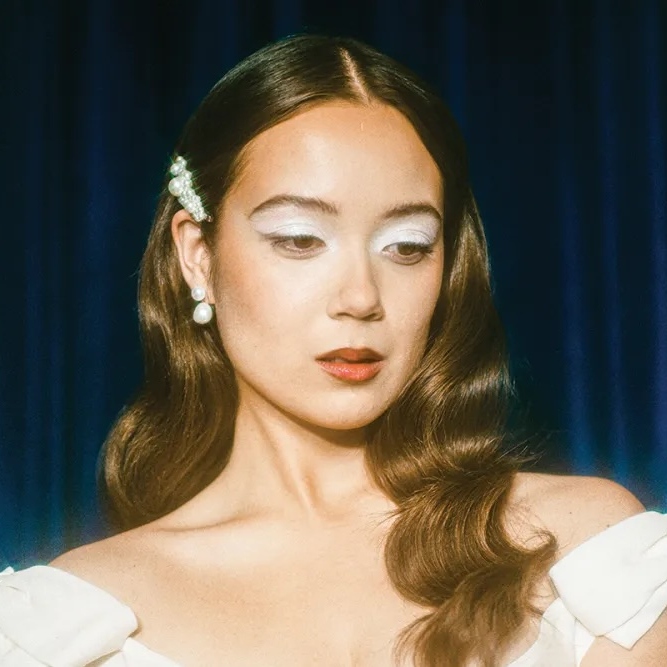
TN:162 LAUFEY & SPENCER STEWART
Album: Silver Lining
John is joined by singer-songwriter and musician Laufey and producer Spencer Stewart to discuss how they wrote and recorded the album ‘A Matter of Time’.
Having performed on numerous national TV singing shows in her youth, Icelandic-Chinese artist Laufey released her first full-length album, ‘Everything I Know About Love’ in 2022. It was praised for seamlessly blending jazz influences with contemporary production. Her second album, ‘Bewitched’, continued this trend with its captivating jazz-pop ballads and earned her the 2024 Grammy Award for Best Traditional Pop Vocal Album. Laufey met producer Spencer Stewart when they were students at music college in the US and they have been collaborating ever since. Laufey’s much anticipated third album ‘A Matter of Time’ was released on 24th August 2025.
Sitting down at Strongroom Studios in London, the trio discuss how creativity often involves breaking formal rules, why the voice is an underrated instrument, the importance of not being a snob when it comes to technology and their belief that when it sounds wrong in the studio, it might just be because you’ve hit on something really original!
Tracks discussed: Lover Girl; Tough Luck; Too Little, Too Late
Full Transcript:
00:00:05.502 –> 00:00:11.442
John Kennedy: Hello and welcome to Tape Notes, the podcast that looks behind the scenes at the magic of recording and producing music.
00:00:11.442 –> 00:00:18.442
John Kennedy: Every episode, we’ll be reuniting an artist and producer and talking through some of the highlights from their collaboration in the studio.
00:00:18.442 –> 00:00:24.882
John Kennedy: So join us as we lift the lid on the creative process and the inner workings of music production to see what lies beneath.
00:00:35.871 –> 00:00:45.871
John Kennedy: Hello, I’m John Kennedy, and joining me for this episode of Tape Notes is Laufey with producer Spencer Stewart to talk about how they wrote, recorded, and produced the album, A Matter of Time.
00:00:45.871 –> 00:00:49.651
John Kennedy: Laufey is an Icelandic-Chinese singer-songwriter and musician.
00:00:49.651 –> 00:00:57.471
John Kennedy: Growing up, she was heavily involved with music, and at just 15 years old, performed as a cello soloist with the Iceland Symphony Orchestra.
00:00:57.471 –> 00:01:11.491
John Kennedy: Going on to study at Berklee College of Music, it was here that she set to work on her debut EP, 2021’s Typical of Me, which was quickly followed by her first full-length album, Everything I Know About Love, in 2022.
00:01:11.491 –> 00:01:15.671
John Kennedy: Both were praised for their delicate blend of jazz and classical-infused pop.
00:01:15.671 –> 00:01:25.471
John Kennedy: Her second album, Bewitched, released in 2023, was a captivating collection of jazz-pop ballads that earned her a Grammy for Best Traditional Pop Vocal Album.
00:01:25.471 –> 00:01:39.091
John Kennedy: The success of Bewitched propelled her onto the global stage, making her the most-streamed Icelandic artist worldwide, and the album’s standout single, From the Start, became the most-streamed jazz track of 2023.
00:01:39.091 –> 00:01:53.751
John Kennedy: Her latest record, A Matter of Time, arrived in August 2025 and marks a poignant shift toward emotional vulnerability, weaving her orchestral pop and jazz influences to explore themes of friendship, love and self-reflection.
00:01:53.751 –> 00:01:57.091
John Kennedy: Spencer Stewart is a producer and composer based in Los Angeles.
00:01:57.711 –> 00:02:04.171
John Kennedy: Spencer graduated from Berklee College of Music with a dual degree in film scoring and jazz performance in 2013.
00:02:04.171 –> 00:02:09.851
John Kennedy: However, it wasn’t until a few years after graduating that he developed a deep passion for music production.
00:02:09.851 –> 00:02:21.871
John Kennedy: Since then, he has gone on to collaborate with a number of artists, executive producing Alina Baraz’s It Was Divine, role models RX and tracks from artists including Alicia Cara, Rule and many more.
00:02:21.871 –> 00:02:31.611
John Kennedy: Beyond his work in commercial music, Spencer’s foundation in jazz, classical and film composition has enabled him to write and arrange scores for various film and television projects.
00:02:31.611 –> 00:02:39.871
John Kennedy: Working closely with Lavey across her career, Spencer has produced all three of her studio albums, most recently working on A Matter of Time.
00:02:39.871 –> 00:02:45.971
John Kennedy: Today, I’m at Strongroom Studios and I’m joined by Lavey, and Spencer joins us remotely from his studio in LA.
00:02:45.971 –> 00:02:49.711
John Kennedy: And what better way to start than by hearing something from A Matter of Time.
00:02:49.711 –> 00:02:51.011
John Kennedy: This is Cuckoo Ballet.
00:03:58.951 –> 00:04:03.371
John Kennedy: It is Cuckoo Ballet from the album Matter of Time by Laufey.
00:04:03.371 –> 00:04:05.711
John Kennedy: And I’m very pleased to say that I am in the company of Laufey.
00:04:05.711 –> 00:04:06.491
John Kennedy: Hello Laufey.
00:04:06.491 –> 00:04:07.551
Laufey: Hi, how are you?
00:04:07.551 –> 00:04:08.591
John Kennedy: I’m very well, thank you.
00:04:08.591 –> 00:04:09.751
Laufey: Thank you so much for having me.
00:04:09.751 –> 00:04:11.211
John Kennedy: It’s brilliant to have you here.
00:04:11.211 –> 00:04:16.971
John Kennedy: I’m very excited and connected to us online in another part of the world is Spencer Stewart.
00:04:16.971 –> 00:04:17.911
John Kennedy: Hello Spencer.
00:04:17.911 –> 00:04:18.651
Laufey: Hi Spencer.
00:04:18.651 –> 00:04:20.351
Spencer: So good to see you John and Laufey.
00:04:20.351 –> 00:04:22.131
John Kennedy: It’s great to have you all here.
00:04:22.131 –> 00:04:22.691
John Kennedy: It’s exciting.
00:04:22.691 –> 00:04:27.831
John Kennedy: It’s really interesting hearing Cuckoo Ballet because it seems so appropriate as an opening scene setter.
00:04:28.071 –> 00:04:34.311
John Kennedy: It feels as if the curtains have drawn back now, and now we’re in Tape Notes in the world of Lavey and Spencer.
00:04:34.311 –> 00:04:36.691
Laufey: It is the perfect overture to our conversation.
00:04:36.691 –> 00:04:37.191
John Kennedy: Yeah.
00:04:37.191 –> 00:04:38.291
John Kennedy: It’s fantastic.
00:04:38.291 –> 00:04:40.691
Spencer: You need to commission a Tape Notes overture.
00:04:40.691 –> 00:04:41.931
John Kennedy: Yes, we do.
00:04:41.931 –> 00:04:42.531
John Kennedy: Any takers?
00:04:42.531 –> 00:04:43.531
Spencer: Wink, wink.
00:04:43.531 –> 00:04:43.911
Spencer: Yeah.
00:04:43.911 –> 00:04:45.551
Laufey: Spencer and I could do it.
00:04:45.551 –> 00:04:46.451
Laufey: I think we could take it home.
00:04:46.451 –> 00:04:48.311
John Kennedy: That would be amazing.
00:04:48.311 –> 00:04:59.011
John Kennedy: It’s a good illustration of what your music conjures up, I think Lavey, because you seem to connect to so many different aspects of music through time, in a way.
00:04:59.011 –> 00:05:06.131
John Kennedy: I mean, I know the album is called A Matter of Time, but the music conjures the 30s or the 50s or the 60s.
00:05:06.131 –> 00:05:11.051
John Kennedy: It conjures decades of different kinds of film soundtracks.
00:05:11.111 –> 00:05:11.711
John Kennedy: It does.
00:05:12.051 –> 00:05:14.811
John Kennedy: And it’s amazing how you bring that all together.
00:05:14.811 –> 00:05:21.951
John Kennedy: And yet at the core of it are these songs which really are pretty 21st century and connect with what people are going through now.
00:05:21.951 –> 00:05:35.931
Laufey: Yeah, it feels like such a special time in music to be able to, I can’t think of another time in the history of music where you could blend so many different inspirations together and be considered one whole artist, which is really, really cool.
00:05:35.931 –> 00:05:38.131
Laufey: And my audience is young.
00:05:38.331 –> 00:05:39.951
Laufey: It’s a pop audience really.
00:05:39.951 –> 00:05:48.451
Laufey: And to, you know, they come to my concerts and they sing along to the lyrics in a way that I never thought I’d be able to experience.
00:05:48.451 –> 00:06:00.091
Laufey: But it really makes me so happy that I feel like I have the space to be able to kind of make whatever music I want and swim in these references that I think growing up I loved but felt like nobody else loved.
00:06:00.091 –> 00:06:03.331
Laufey: And now I feel like I have a whole world of people who love it with me.
00:06:03.331 –> 00:06:04.711
John Kennedy: Yeah, that’s fantastic.
00:06:04.711 –> 00:06:12.511
John Kennedy: And it’s suggested that you’re on a mission to somehow bring these worlds of classical music and jazz together into pop.
00:06:12.511 –> 00:06:19.471
John Kennedy: I mean, in many ways, the history of pop music is interlinked with jazz and classical music anyway.
00:06:20.111 –> 00:06:27.191
John Kennedy: But the way you’ve spoken about it in the past is that it does seem as if you’re determined to make this more explicit.
00:06:27.191 –> 00:06:28.151
Laufey: Yeah, I think so.
00:06:28.151 –> 00:06:38.271
Laufey: I mean, I grew up in such a classical music world and I never, I didn’t really feel like people my age got to resonate with it or love it as much as I did.
00:06:38.271 –> 00:06:43.411
Laufey: But I, of course, was introduced to it at a very young age because my family, they’re all classical musicians.
00:06:43.411 –> 00:06:49.531
Laufey: And then as I got older, I discovered jazz music and the Great American Songbook.
00:06:49.531 –> 00:06:51.791
Laufey: And it was all music I loved so much.
00:06:51.911 –> 00:07:02.831
Laufey: And really the only representation I saw of it in modern media was through film music, which is one of the reasons I love film music so much and really do plug that into a lot of my songs.
00:07:02.831 –> 00:07:06.951
Laufey: But yeah, it’s really a mission.
00:07:07.051 –> 00:07:12.511
Laufey: It is a mission because I love classical music and jazz music so much and film music.
00:07:12.511 –> 00:07:17.431
Laufey: And I think that Gen Z has a capacity to love it just as much as me.
00:07:17.431 –> 00:07:20.791
Laufey: And it just, you know, sometimes needs a little bit of exposure.
00:07:21.011 –> 00:07:37.631
Laufey: So though I make this music, ultimately my goal is just to have people fill up concert halls of symphonies and go to see operas and go to jazz clubs and kind of claim ownership of music that maybe they thought they couldn’t before.
00:07:37.631 –> 00:07:38.031
John Kennedy: Yeah.
00:07:38.031 –> 00:07:40.451
John Kennedy: And it’s great that you’re so vocal about it.
00:07:40.451 –> 00:07:44.351
John Kennedy: You know, that you’re making this quite well known.
00:07:44.351 –> 00:07:48.411
Laufey: I think as a musician, like I need to have some sort of strong guiding light.
00:07:48.411 –> 00:07:49.591
Laufey: And that really is mine.
00:07:49.671 –> 00:07:58.411
Laufey: And, you know, having this central goal is really, I think, what keeps me grounded and kind of sane as a musician.
00:07:58.411 –> 00:07:59.951
John Kennedy: Yeah, it’s really interesting.
00:07:59.951 –> 00:08:02.711
John Kennedy: So, I mean, we’re going to dig into A Matter of Time today.
00:08:02.711 –> 00:08:04.531
John Kennedy: We’re going to look at three songs specifically.
00:08:04.531 –> 00:08:09.291
John Kennedy: But I thought before we did that, I’d dig into your relationship with Spencer.
00:08:09.291 –> 00:08:11.491
John Kennedy: So how and when did you meet?
00:08:11.491 –> 00:08:15.591
John Kennedy: Because you’ve worked together across the three albums that you’ve released.
00:08:15.591 –> 00:08:18.911
John Kennedy: You both went to Berklee, but I’m presuming at different times.
00:08:18.911 –> 00:08:20.031
John Kennedy: Or did you pass across that?
00:08:20.031 –> 00:08:21.931
Spencer: No, we were roommates at Berklee.
00:08:25.591 –> 00:08:30.011
Laufey: No, because if we were, the music would, I’d be on my like tenth album now.
00:08:30.011 –> 00:08:31.091
Spencer: Right, totally.
00:08:31.091 –> 00:08:32.511
Spencer: And that’s, yeah.
00:08:32.511 –> 00:08:33.211
Laufey: Wait, how?
00:08:33.551 –> 00:08:42.791
Laufey: I was just, I just moved to LA and I was doing rounds of sessions and kind of, I had this bank of songs that I needed.
00:08:42.791 –> 00:08:50.291
Laufey: I was being quite precious about them because they were the only songs I’d written at that time, which ultimately became my first album, Everything I Know About Love.
00:08:50.291 –> 00:08:56.951
Laufey: But it was, it was so hard to find the right collaborator who cared about the music in the same way I did.
00:08:56.951 –> 00:09:04.091
Laufey: And also had this baseline understanding of jazz music and classical music, of scoring and, but also of pop music.
00:09:04.091 –> 00:09:06.111
Laufey: And so it was kind of a big ask.
00:09:06.111 –> 00:09:14.131
Laufey: And I was going around and doing sessions with a lot of people who had, you know, backgrounds in that, but it never felt quite right.
00:09:14.211 –> 00:09:21.271
Laufey: And I remember one day I went to Spencer’s and I kind of, I don’t think you had really listened to my music.
00:09:21.271 –> 00:09:23.751
Laufey: And I don’t think I’d really listen to what you put out either.
00:09:23.751 –> 00:09:24.891
Spencer: Let’s be honest, all right?
00:09:24.891 –> 00:09:26.151
Spencer: Let’s just, cards on the table.
00:09:26.151 –> 00:09:28.591
Spencer: I think we just like rocked up.
00:09:28.591 –> 00:09:35.911
Laufey: And I remember I played him a song I’d just written called Questions for the Universe.
00:09:35.911 –> 00:09:48.171
Laufey: And it was one of those songs that, Spencer, don’t take offense from this, but you know when you go first work with a producer, you bring a song in that you’re like, if it doesn’t end up working out, I don’t need to put it.
00:09:48.251 –> 00:09:49.531
Laufey: Like it wasn’t, you know.
00:09:49.531 –> 00:09:51.011
Spencer: Oh yeah, okay, I didn’t know that.
00:09:51.011 –> 00:09:54.911
Laufey: But yeah, so I brought Questions to the Universe to you.
00:09:54.911 –> 00:09:59.631
Laufey: And it was like a song that I like kind of, cause remember we wrote the bridge together.
00:09:59.631 –> 00:10:00.411
Spencer: Yeah.
00:10:00.431 –> 00:10:03.411
Laufey: And so it was a song I like kind of liked.
00:10:03.491 –> 00:10:05.871
Spencer: It was like, it was kind of like an audition for me.
00:10:05.871 –> 00:10:07.191
Laufey: It was your audition.
00:10:07.191 –> 00:10:08.711
Laufey: Questions for the Universe was your audition.
00:10:08.711 –> 00:10:13.711
Spencer: I felt like I had the gig from the first moment, but little did I know the whole time you’re like, let’s see what he does with this.
00:10:13.711 –> 00:10:15.271
Laufey: No, no, you had the gig though.
00:10:15.411 –> 00:10:19.031
Laufey: You had the gig because I wouldn’t even, like I wouldn’t even have brought that song up.
00:10:19.031 –> 00:10:19.991
Spencer: I would be like, let’s write.
00:10:19.991 –> 00:10:23.311
Spencer: Well, that song is still one of my best memories of creating with you.
00:10:23.311 –> 00:10:25.651
Spencer: I mean, there’s so many, but I love that song.
00:10:25.991 –> 00:10:29.871
Laufey: I played the song or the verse and the chorus that I had.
00:10:29.871 –> 00:10:32.331
Laufey: And I remember we did a string arrangement.
00:10:32.331 –> 00:10:38.351
Laufey: Like I brought my cello and we arranged the strings and then we wrote this bridge together.
00:10:38.351 –> 00:10:48.811
Laufey: And I remember a walking away being like, I think I found my person, but I hadn’t played any of like the bossa novas, none of the jazz tracks, like nothing.
00:10:48.811 –> 00:10:50.711
Laufey: It was only that song.
00:10:50.711 –> 00:10:56.631
Laufey: But I just like, I could just feel that you were spitting out the same super random references.
00:10:56.631 –> 00:11:04.931
Laufey: And then also I thought it was quite kismet that we went to the same university and both graduated, which people don’t graduate from Berkeley.
00:11:04.931 –> 00:11:06.311
Spencer: Like it’s not cool.
00:11:06.311 –> 00:11:06.811
Spencer: It’s not cool.
00:11:07.651 –> 00:11:10.931
Spencer: We have the scarlet letter from graduating from Berkeley.
00:11:10.931 –> 00:11:11.731
Spencer: Exactly.
00:11:12.451 –> 00:11:14.771
Laufey: And we were both on the same scholarship.
00:11:14.771 –> 00:11:15.531
Spencer: Yes, we were.
00:11:15.531 –> 00:11:19.391
Laufey: And I was a cellist and you were a bass player, but it was like 10 years apart or something.
00:11:19.391 –> 00:11:20.151
Spencer: Cello.
00:11:20.151 –> 00:11:20.871
John Kennedy: Yeah.
00:11:20.871 –> 00:11:26.751
John Kennedy: Are you saying that most people go to Berkeley and then their kind of music career takes off so they don’t finish the degree?
00:11:26.751 –> 00:11:27.631
Laufey: Yeah, exactly.
00:11:27.631 –> 00:11:29.331
Laufey: If you graduate, you didn’t make it.
00:11:29.331 –> 00:11:29.891
John Kennedy: Yeah.
00:11:29.891 –> 00:11:31.831
Laufey: So Spencer and I are fresh out of luck.
00:11:31.831 –> 00:11:38.171
Spencer: Whether or not I learned a lot there, I don’t know, but I was exposed to so much there that I then went and learned, you know?
00:11:38.171 –> 00:11:39.111
Spencer: Yeah.
00:11:39.111 –> 00:11:41.431
Laufey: I think for me, it was just a way of thinking.
00:11:41.431 –> 00:11:47.551
Laufey: It was just like, oh, okay, I actually don’t need to follow these really strict rules that were put in front of me as a musician.
00:11:47.551 –> 00:11:52.931
Laufey: And also it really taught me to be like not only the best player of music, but a creator of music.
00:11:52.931 –> 00:11:58.911
Laufey: I came to Berkeley, a player of music, and I left wanting more than anything to be a creator.
00:11:58.911 –> 00:11:59.871
John Kennedy: Very interesting.
00:11:59.871 –> 00:12:02.411
John Kennedy: Well, you mentioned bossa nova.
00:12:02.411 –> 00:12:05.091
John Kennedy: There’s a little bit of a bossa nova feel to love a girl.
00:12:05.331 –> 00:12:07.791
John Kennedy: So that’s the first song we’re going to look at.
00:12:07.791 –> 00:12:13.851
John Kennedy: I think maybe we could have a blast to the master, Spencer, and then we’ll find out how you created it.
00:12:13.851 –> 00:12:14.991
Spencer: OK, here we go.
00:12:14.991 –> 00:12:15.431
Spencer: Lover Girl.
00:13:14.526 –> 00:13:17.926
John Kennedy: It is Lover Girl by Lavey from A Matter of Time.
00:13:18.106 –> 00:13:20.846
John Kennedy: So how did Lover Girl start?
00:13:20.846 –> 00:13:24.306
Laufey: Lover Girl started when I was on tour in Tokyo.
00:13:24.306 –> 00:13:33.746
Laufey: And I was in the beginning of tour where I was like feeling a little bit sad to be away from a certain special someone.
00:13:33.746 –> 00:13:40.466
Laufey: And I remember thinking like, oh my god, this is like, how have I become this person, this Lover Girl?
00:13:40.466 –> 00:13:45.886
Laufey: Like I used to make fun of people like this who were like in distress because they weren’t with their boyfriends.
00:13:46.666 –> 00:13:59.286
Laufey: And so I wrote a song about everything that was happening and about being on stage and having this moment of hallucination where I’m like, oh my god, is he here?
00:13:59.286 –> 00:14:14.286
Laufey: But yeah, it really, I think the reason I wrote it as a bossa nova was because it kind of, I don’t know, it felt like this almost sarcastic kind of thought that I was having, like what a curse it is to be a Lover Girl.
00:14:14.426 –> 00:14:24.646
Laufey: Like it should be a good thing and it is a good thing, but ultimately it’s about loving someone so much and that you start to miss them and it hurts.
00:14:24.646 –> 00:14:26.886
Laufey: And that sucks.
00:14:26.886 –> 00:14:27.526
Laufey: Yeah.
00:14:27.526 –> 00:14:32.206
John Kennedy: But it’s a nice angle, a different kind of angle to that subject.
00:14:32.266 –> 00:14:32.986
Laufey: Exactly.
00:14:33.406 –> 00:14:54.706
Laufey: And I was, you know, I’ve written a lot of songs in like this Brazilian kind of bossa nova style and when I brought the song to Spencer, we thought so much about like how we could make this one unique and different than the rest and also kind of like serve this feeling of like being in love.
00:14:54.706 –> 00:14:58.726
Laufey: You know, very few of my songs are about being in love.
00:14:58.726 –> 00:15:01.706
Laufey: I’ve become known as the falling behind girl.
00:15:01.886 –> 00:15:07.986
Laufey: I have a song called Falling Behind and that’s kind of become my reputation and this is the opposite.
00:15:07.986 –> 00:15:15.946
Laufey: So like how do you musically describe what it feels like to be in love, but with like a little twist of like anxiety.
00:15:16.466 –> 00:15:17.166
John Kennedy: Yeah, totally.
00:15:17.166 –> 00:15:20.846
John Kennedy: So you’re in the hotel in Tokyo, you’re thinking of this song.
00:15:20.846 –> 00:15:23.266
John Kennedy: How do you make a note of that?
00:15:23.266 –> 00:15:25.446
John Kennedy: Are you a voice notes person?
00:15:25.506 –> 00:15:29.906
John Kennedy: Are you a, because you’re a trained classical musician, you could write it all down.
00:15:29.906 –> 00:15:39.926
Laufey: I know, I honestly have sometimes written it down in the past, but voice memos, like when I’m on a plane and I have a melody idea, I’ll write it down.
00:15:39.926 –> 00:15:42.786
Laufey: But voice memos is kind of like…
00:15:42.786 –> 00:15:46.806
John Kennedy: And would that be the melody, the lyric?
00:15:46.806 –> 00:15:48.586
Laufey: Yeah, all of it at once.
00:15:48.786 –> 00:15:52.026
Laufey: I write very much just like everything at once.
00:15:52.026 –> 00:15:57.166
Laufey: And I’ll start with a title often, but this one, I think, kind of…
00:15:57.166 –> 00:16:00.046
Laufey: I just started writing and it was like stream of consciousness.
00:16:00.046 –> 00:16:00.486
John Kennedy: Yeah.
00:16:00.486 –> 00:16:02.526
John Kennedy: And then when did you get to take it to Spencer?
00:16:02.526 –> 00:16:04.446
John Kennedy: Because obviously, no, you had a whole load of…
00:16:04.446 –> 00:16:05.686
Laufey: After the entire tour.
00:16:05.686 –> 00:16:06.026
John Kennedy: Right.
00:16:06.026 –> 00:16:09.266
John Kennedy: Okay.
00:16:09.266 –> 00:16:13.066
Laufey: And I like playing music for Spencer for the first time in person.
00:16:13.066 –> 00:16:14.186
Laufey: Like I don’t…
00:16:14.186 –> 00:16:15.266
Laufey: And I think Spencer, you also like…
00:16:15.446 –> 00:16:16.346
Spencer: You don’t send me stuff.
00:16:16.346 –> 00:16:17.006
Spencer: Yeah.
00:16:17.006 –> 00:16:19.866
Laufey: But you also, I feel like you like just hearing it in person.
00:16:19.906 –> 00:16:21.006
Spencer: God, yes.
00:16:21.006 –> 00:16:25.246
Laufey: And I like being in the room when your wheels start spinning as well.
00:16:25.246 –> 00:16:25.966
Laufey: Oh yeah.
00:16:25.966 –> 00:16:30.506
Laufey: And then I jump on to whatever, you know, wagging you, you’re spinning.
00:16:30.506 –> 00:16:32.206
Laufey: So yeah, it was like a month later.
00:16:32.206 –> 00:16:44.846
Laufey: And honestly, like the song was, it was fun to me, but like it was definitely one of those where I was like, there’s so much fun stuff that can be done on this that I need Spencer to like do.
00:16:44.846 –> 00:16:45.226
John Kennedy: Yeah.
00:16:45.286 –> 00:16:45.706
Spencer: Sure.
00:16:45.706 –> 00:16:48.166
John Kennedy: And do you have any of that early idea?
00:16:48.166 –> 00:16:49.186
John Kennedy: Do you have the voice note?
00:16:49.246 –> 00:16:50.426
Laufey: I probably do.
00:16:50.426 –> 00:16:50.886
Spencer: Pull it up.
00:17:51.106 –> 00:17:53.206
John Kennedy: I mean, it sounds pretty marvellous as it is.
00:17:53.206 –> 00:17:55.466
Laufey: I changed the lyrics a little bit.
00:17:55.466 –> 00:17:57.826
John Kennedy: But even a bit, it has a lovely feel to it.
00:17:58.406 –> 00:17:59.146
John Kennedy: And it’s interesting.
00:17:59.586 –> 00:18:05.686
John Kennedy: It kind of illustrates how a lot of people would just leave it at that.
00:18:05.686 –> 00:18:12.126
John Kennedy: And a lot of those Brazilians that I’m sure you admire would have left it just like that.
00:18:12.126 –> 00:18:14.866
John Kennedy: So that they could continue to play in the cafe.
00:18:14.866 –> 00:18:15.286
Laufey: Yeah.
00:18:15.286 –> 00:18:17.586
Laufey: I mean, and it’s so fun to get to perform it.
00:18:18.186 –> 00:18:23.206
Laufey: Like, I’ve been playing it live just in like little solo concerts in the past few days.
00:18:23.206 –> 00:18:28.646
Laufey: And it’s been so fun to kind of revisit the song in that kind of stripped back version.
00:18:28.646 –> 00:18:34.986
Laufey: And I always say like a song is only a good song if it can be played solo and still like hold its integrity.
00:18:34.986 –> 00:18:37.066
Laufey: But I’m a cellist.
00:18:37.106 –> 00:18:38.866
Laufey: Like, I gotta add strings.
00:18:39.546 –> 00:18:41.786
Laufey: And I want that movement, you know.
00:18:41.786 –> 00:18:44.866
Laufey: I’m playing like I want it to be.
00:18:44.866 –> 00:18:46.286
Laufey: I want it to be cinema.
00:18:46.286 –> 00:18:48.066
Laufey: Like it needs to be cinematic.
00:18:48.066 –> 00:18:52.126
Laufey: So I love adding like what becomes like an orchestra.
00:18:52.126 –> 00:18:52.706
John Kennedy: Yeah.
00:18:52.706 –> 00:18:53.066
John Kennedy: Yeah.
00:18:53.066 –> 00:18:53.906
John Kennedy: That is brilliant, though.
00:18:53.906 –> 00:18:55.426
John Kennedy: I love I love that idea.
00:18:55.426 –> 00:18:56.886
John Kennedy: I want it to be cinema.
00:18:56.886 –> 00:18:57.126
Laufey: Yeah.
00:18:57.126 –> 00:18:58.066
John Kennedy: It’s very exciting.
00:18:58.066 –> 00:19:00.886
Laufey: And then some of the songs live in a more acoustic fashion.
00:19:00.886 –> 00:19:03.946
Laufey: But this one, I don’t know, it needed it.
00:19:03.946 –> 00:19:04.566
Laufey: It needed it.
00:19:05.266 –> 00:19:05.606
John Kennedy: Yeah.
00:19:05.606 –> 00:19:08.706
John Kennedy: So that’s what you would have heard for the first time, Spencer.
00:19:08.826 –> 00:19:09.566
Spencer: More or less.
00:19:09.566 –> 00:19:10.426
Spencer: Yeah.
00:19:10.426 –> 00:19:17.086
Spencer: I mean, so first of all, like it’s not an everyday occurrence to have an artist present a song to you that way.
00:19:17.086 –> 00:19:26.586
Spencer: And it’s that’s how it’s been from the beginning working with Lavey where it’s like, I mean, in fact, I think that was one of my first impressions when we started working Lavey was like, I was like, great, like, let’s hear what you got.
00:19:26.586 –> 00:19:30.566
Spencer: And it was like, usually that’s when the phone comes out and, you know, here’s a demo from yesterday or whatever.
00:19:30.566 –> 00:19:31.926
Spencer: But you’re like, should I play it on guitar?
00:19:31.926 –> 00:19:32.766
Spencer: Should I play it on piano?
00:19:33.206 –> 00:19:34.706
Spencer: And then you’re like, okay, I’ll play this one on piano.
00:19:34.706 –> 00:19:36.526
Spencer: I’m like, okay.
00:19:36.526 –> 00:19:38.126
Spencer: And then she sat down at the piano here.
00:19:38.126 –> 00:19:40.806
Spencer: And I don’t remember, you probably played me Questions for the Universe.
00:19:40.806 –> 00:19:48.106
Spencer: So anyways, that’s a good, that’s pretty much how all the songs that we’ve made together have started have been just her like presenting it to me.
00:19:48.106 –> 00:19:49.786
Spencer: And then it’s really, it’s amazing.
00:19:49.786 –> 00:19:57.626
Spencer: There’s an urgency there when you’re like, basically attending a performance and your imagination just starts going like Lavey said, like the wheel starts spinning.
00:19:57.626 –> 00:19:59.806
Spencer: And then, you know, she’s right in front of me.
00:19:59.806 –> 00:20:00.886
Spencer: So it’s like, what if this?
00:20:00.886 –> 00:20:01.826
Spencer: Okay, well, what if this?
00:20:01.966 –> 00:20:04.686
Spencer: And it’s just this additive, amazing thing.
00:20:04.686 –> 00:20:10.846
Spencer: And when we’re making albums together, like we make every decision together, like she’s here and we’re co-producing it.
00:20:10.846 –> 00:20:13.186
Spencer: And we’re, okay, you play this, you play guitar on this.
00:20:13.186 –> 00:20:14.386
Spencer: Okay, well, I’ll play guitar on this one.
00:20:14.386 –> 00:20:15.726
Spencer: And okay, go pick up the cello.
00:20:15.726 –> 00:20:20.906
Spencer: Like it’s, yeah, that’s kind of a little view into our process.
00:20:20.906 –> 00:20:23.426
Spencer: But what was the question?
00:20:23.426 –> 00:20:26.486
John Kennedy: No, I’m just, I guess the key thing is what happens next?
00:20:26.486 –> 00:20:31.586
John Kennedy: Because we hear that lovely recording and there’s just so many ways that you could approach that.
00:20:31.646 –> 00:20:38.046
John Kennedy: But clearly, you’ve got lots of ideas, Lave, about what you would like to add and augment and expand on.
00:20:38.046 –> 00:20:40.886
John Kennedy: But you’re also interested in what Spencer’s going to come up with too.
00:20:40.886 –> 00:20:43.746
Laufey: Yeah, I sometimes purposefully don’t tell him anything.
00:20:43.746 –> 00:20:47.906
Laufey: And I want to hear what he thinks before I tell him what I thought.
00:20:47.906 –> 00:20:53.746
Laufey: But honestly, I really feel like we are we have similar ideas 90% of the time.
00:20:53.746 –> 00:20:54.546
Spencer: Yeah.
00:20:54.546 –> 00:20:56.426
Laufey: Except you’re able to put it into more.
00:20:56.426 –> 00:20:57.386
Laufey: Yeah, eerily so.
00:20:57.606 –> 00:21:14.246
Laufey: Like I feel like Lover Girl, for example, I feel like you brought it out musically exactly the way I would hope, but maybe didn’t know exactly which words to use or which instruments to use.
00:21:14.246 –> 00:21:19.406
Laufey: Like I was like, especially like I’m so bad at like any kind of rhythm language.
00:21:19.446 –> 00:21:27.186
Laufey: But I was like, I want more like of a, like more drums, like kind of and more like softer tones, but like filled out more.
00:21:27.186 –> 00:21:28.806
Laufey: Like that’s like how I’ll describe it.
00:21:28.806 –> 00:21:36.966
Laufey: And then, you know, Spencer will play exactly what I was attempting to describe in, like, but I was describing it really badly.
00:21:36.966 –> 00:21:45.606
John Kennedy: But to what level do you go in terms of completing a song like that and come up with all these ideas and, and fleshing them out?
00:21:45.606 –> 00:21:51.026
John Kennedy: I mean, are the two of you just playing lots of different instruments and recording them all and getting to the-
00:21:51.446 –> 00:21:54.106
Laufey: We literally go around the room that Spencer is sitting in.
00:21:54.106 –> 00:21:55.886
John Kennedy: I mean, maybe you could dig into the session and-
00:21:55.886 –> 00:21:56.686
Spencer: Yeah, absolutely.
00:21:56.686 –> 00:21:57.866
John Kennedy: Explain how it all happens.
00:21:57.866 –> 00:21:57.966
Laufey: Yeah.
00:21:57.966 –> 00:22:02.286
Spencer: There’s, there’s so many good little anecdotal things on this one.
00:22:02.286 –> 00:22:04.626
Spencer: So this song, Laufey and I played everything.
00:22:04.626 –> 00:22:11.446
Spencer: There’s a flute player named Katisse Buckingham, who we’ve used for flute on things, but that was the last edition.
00:22:11.446 –> 00:22:20.086
Spencer: So basically, I would also say that I feel like I started producing the song before I even heard it because, you know, we knew there was going to be a boss or two on this record, right?
00:22:20.086 –> 00:22:26.946
Spencer: And so since the last thing came out, I’m just, I’m, you know, you just constantly have this, like what, finding things that inspire you.
00:22:26.946 –> 00:22:34.426
Spencer: And one idea that Laufey and I thought might be kind of clever is having like a clapping hook.
00:22:34.426 –> 00:22:46.146
Spencer: So I think even before I heard the song, we were looking for a way to integrate this thing of like, you know, I was, I was thinking of, yeah, of like the Friends theme, I’ll be there for you.
00:22:47.726 –> 00:22:52.066
Spencer: That’s so interesting that like the hook of that song is just a clap thing.
00:22:52.066 –> 00:22:59.786
Spencer: And so that was a big, that was kind of maybe like something that we went in thinking, at least I did, like, let’s find a way to do that.
00:22:59.786 –> 00:23:06.506
Laufey: I totally did because the, my audience is so engaged in performances.
00:23:06.686 –> 00:23:08.986
Laufey: Yes, they’re so I and they’re very musical.
00:23:08.986 –> 00:23:11.706
Laufey: Like I wanted to give them something to do.
00:23:11.706 –> 00:23:14.306
Laufey: And and I knew they could do the claps.
00:23:14.306 –> 00:23:18.366
Laufey: Also, there were some deniers being like, I don’t I don’t know if people can do this clap.
00:23:18.366 –> 00:23:20.726
Laufey: And I was like, no, these these kids, they can.
00:23:20.726 –> 00:23:21.366
Spencer: They got it.
00:23:21.366 –> 00:23:22.586
Laufey: And they’ve been doing it.
00:23:22.586 –> 00:23:23.306
Laufey: They’ve been doing.
00:23:23.306 –> 00:23:24.266
Spencer: Have they already?
00:23:24.266 –> 00:23:24.786
Spencer: What?
00:23:24.786 –> 00:23:25.906
Laufey: They’re already doing it.
00:23:25.906 –> 00:23:26.506
Spencer: Oh, my gosh.
00:23:26.506 –> 00:23:27.766
Spencer: That’s I can’t.
00:23:27.766 –> 00:23:34.906
Spencer: So the first concert I saw of Lave after Bewitched came out, it was like a pop up you did over at the Grove.
00:23:35.386 –> 00:23:36.186
Spencer: Right, Lavey?
00:23:36.186 –> 00:23:36.786
Laufey: Yeah.
00:23:36.786 –> 00:23:37.246
Spencer: So I went to that.
00:23:37.246 –> 00:23:39.386
Laufey: It was an outdoor surprise concert.
00:23:39.386 –> 00:23:39.926
Spencer: Yes.
00:23:39.926 –> 00:23:41.646
Spencer: And I was like, I don’t know if anyone’s going to be here.
00:23:41.646 –> 00:23:42.366
Spencer: I think they’re probably.
00:23:42.366 –> 00:23:45.146
Spencer: But suffice to say, there were a lot of people there.
00:23:45.146 –> 00:23:46.606
Spencer: It was kind of overwhelming and bizarre.
00:23:46.606 –> 00:23:52.126
Spencer: And it was the first time I heard people sing your Scat solo on from the start.
00:23:52.126 –> 00:23:54.586
Spencer: And it was such a like, I will never forget that moment.
00:23:54.586 –> 00:24:03.166
Spencer: It was so surreal and just like this weird thing like, am I living in the in the matrix or something like some like, this doesn’t seem real.
00:24:03.166 –> 00:24:10.306
Spencer: And so that’s the idea behind the clapping is knowing that they’re going to, I mean, they’re singing your Scat solo, you know, like they are musical.
00:24:10.306 –> 00:24:11.486
Laufey: Like they’re going to.
00:24:11.486 –> 00:24:12.926
Spencer: So I think having that moment.
00:24:12.926 –> 00:24:15.686
Spencer: And then there is one record that I heard.
00:24:15.686 –> 00:24:19.926
Spencer: It’s a Joe Beam record that I I remember playing it for you, Lave.
00:24:19.926 –> 00:24:21.326
Spencer: And I was like, what do you think of this rhythm?
00:24:21.326 –> 00:24:22.066
Spencer: Like, it’s so interesting.
00:24:22.066 –> 00:24:23.706
Spencer: And you were like, yes, yeah.
00:24:23.706 –> 00:24:25.486
Spencer: We need whatever that is.
00:24:25.526 –> 00:24:26.206
Spencer: Yeah.
00:24:26.206 –> 00:24:28.686
Spencer: It’s called Surfboard by Antonia Carlos-Jovem.
00:24:28.686 –> 00:24:31.566
John Kennedy: Well, maybe we can drop in the picture and illustrate that.
00:24:31.566 –> 00:24:33.306
John Kennedy: I think we need to get into the session.
00:24:33.306 –> 00:24:33.706
Spencer: Let’s do it.
00:24:33.966 –> 00:24:35.966
John Kennedy: And hear all these different things that you created.
00:24:35.966 –> 00:24:36.466
Spencer: Yeah.
00:24:36.466 –> 00:24:40.926
Spencer: Well, let’s start with guitar because that’s what Lave played.
00:24:40.926 –> 00:24:46.406
Spencer: A lot of times what we do is guitar and then at least a scratch vocal so we can produce to a vocal.
00:24:46.406 –> 00:24:48.326
Spencer: So it would have sounded like this.
00:25:06.286 –> 00:25:11.886
Spencer: And so, the bed, basically, because she came in with the chord progression, so…
00:25:11.886 –> 00:25:14.606
Spencer: We would have done this as like a bed to build everything on, right?
00:25:15.846 –> 00:25:20.566
Spencer: And then there was this piano idea that ended up being its own character.
00:25:22.246 –> 00:25:24.766
Spencer: And it has these chromatic lines that move towards each other.
00:25:24.766 –> 00:25:40.746
Spencer: And I think that this is kind of touching on to a bit of that psychosis you’re talking about, of like the unease, because it’s obviously so sunshiny, but it also has a little bit of this like slightly off, which, you know, yeah, that’s what chromatics are good for.
00:25:42.466 –> 00:25:49.366
Spencer: So then this character of the piano becomes like comes back right here as a…
00:25:56.566 –> 00:26:03.726
Spencer: So something we think a lot about is anytime you have a motif in a character that’s established, you don’t, you got to follow through with it.
00:26:03.726 –> 00:26:06.206
Spencer: Like it’s got to develop over the course of the song.
00:26:06.206 –> 00:26:09.686
Spencer: And so that that remains a character and it goes high and it goes low.
00:26:10.246 –> 00:26:12.706
Laufey: We talk a lot about leitmotifs.
00:26:12.706 –> 00:26:13.786
Spencer: We do talk a lot about leitmotifs.
00:26:13.786 –> 00:26:17.726
Laufey: Like musical symbols that like come back and…
00:26:17.726 –> 00:26:22.186
Spencer: Yeah, there’s going to be a lot of those in these three songs.
00:26:22.186 –> 00:26:24.186
Spencer: So that was a really fun character.
00:26:24.186 –> 00:26:26.866
Spencer: And then let’s see, we have some bass.
00:26:26.866 –> 00:26:29.226
Spencer: I’m a bass player, so there’s always going to be some bass.
00:26:31.866 –> 00:26:34.146
Spencer: Put the bass in there, and then drop.
00:26:39.386 –> 00:26:44.766
Spencer: Now, a cool thing about this one is once it gets to the chorus, there’s all these percussion layers that really give it like a life.
00:26:49.266 –> 00:26:57.706
Spencer: And that’s that cross rhythm with the clave that is, it’s kind of basically playing in 3-4 while the song is in 4-4.
00:26:57.706 –> 00:27:06.566
Spencer: So it creates this constant tension, which again, I think fits into what you’re talking about psychologically, where it makes you want to dance, but it’s like an uneasy way.
00:27:06.566 –> 00:27:17.286
Spencer: So if you play that with the drums, which are in 4-4, it really, to me, it just makes you immediately want to dance.
00:27:17.286 –> 00:27:20.986
Laufey: And it’s exactly like what the material of the song is about.
00:27:20.986 –> 00:27:23.506
Laufey: It’s like you’re in love, but something’s a little weird.
00:27:23.606 –> 00:27:26.006
Laufey: Like you’re dancing, but something’s a little off.
00:27:26.006 –> 00:27:28.226
Spencer: Yeah, it’s like you’re dancing, but you can’t stop.
00:27:28.306 –> 00:27:29.366
Spencer: You know, you’re like, is someone out?
00:27:29.366 –> 00:27:29.846
Laufey: Exactly, yeah.
00:27:32.066 –> 00:27:37.006
Spencer: So then at the end of the chorus, that same motif comes back in.
00:27:44.946 –> 00:27:51.046
Spencer: So there’s this constant call and response between a clap and that piano motif.
00:27:52.906 –> 00:27:54.606
Spencer: Which now has flute on it.
00:27:54.606 –> 00:28:04.706
Spencer: So we also really like this idea of, and we’ve done it on a few songs, but this idea of a non-pitched instrument responding to a pitched instrument.
00:28:04.746 –> 00:28:10.986
Spencer: So you hear, or in this case, vice versa, where it’s like, No pitches, just rhythm.
00:28:10.986 –> 00:28:13.006
Spencer: And then you hear a version of it with pitches.
00:28:13.006 –> 00:28:16.706
Spencer: And I think there’s something, there’s like, your brain has to fill in the gaps.
00:28:20.926 –> 00:28:21.986
Spencer: So second verse.
00:28:28.726 –> 00:28:31.266
Spencer: Oh, we’re missing strings, Laufey.
00:28:31.266 –> 00:28:32.446
Laufey: I know, I was waiting for it.
00:28:32.446 –> 00:28:33.926
Laufey: You were like, what’s going on?
00:28:33.926 –> 00:28:35.546
Laufey: No, because they come in the chorus.
00:28:35.546 –> 00:28:37.126
Spencer: They do come in that first chorus.
00:28:37.126 –> 00:28:38.886
Laufey: Like as a character.
00:28:38.886 –> 00:28:48.386
John Kennedy: Just before we get into the strings, I just want to establish, so all of this is done by the two of you, almost in real time in the room that you’re speaking to us from Spencer.
00:28:48.386 –> 00:28:52.066
John Kennedy: Now, I think this is kind of incredible because it seems very fast.
00:28:52.066 –> 00:28:58.886
John Kennedy: No, it’s like the communication is really strong and like, right, now let’s do this and then do that.
00:28:59.406 –> 00:29:00.886
John Kennedy: And it’s so exciting.
00:29:01.086 –> 00:29:02.786
John Kennedy: And so you just go to the drum kit.
00:29:02.826 –> 00:29:05.586
John Kennedy: Right, you do the, right, I’ll get that laid down.
00:29:05.586 –> 00:29:09.106
John Kennedy: And then now I’m going to add the clave and it’s great.
00:29:09.106 –> 00:29:10.546
Laufey: It’s really fun.
00:29:10.546 –> 00:29:21.386
Laufey: It feels like it’s so indulgent getting to work with Spencer because I think we only, we lack wind instrument capability, but that’s about it.
00:29:21.386 –> 00:29:30.326
Laufey: Like we, everything else, like if we have the idea, we can execute it in the moment, which is so special and like it very rarely is being sent off.
00:29:30.626 –> 00:29:33.246
Laufey: When it does, it’s for like a very special treat.
00:29:33.246 –> 00:29:38.746
Laufey: But like we get such a good framework of the song almost immediately.
00:29:39.306 –> 00:29:42.346
Spencer: And it really is so fun.
00:29:42.346 –> 00:29:44.226
Laufey: I feel like we’re dancing.
00:29:44.226 –> 00:29:45.206
Laufey: Do you know what I mean?
00:29:45.206 –> 00:29:48.426
Laufey: Like I feel like we’re dancing and communicating while doing so.
00:29:48.426 –> 00:29:50.206
Laufey: It’s like the best thing.
00:29:50.206 –> 00:29:50.446
Spencer: Yeah.
00:29:50.446 –> 00:29:55.926
Spencer: It’s this weird, you know, I think producing records, it’s neither performance nor composition.
00:29:55.926 –> 00:30:03.106
Spencer: It’s a little bit of both, you know, because it’s not as removed from time as sitting down at a manuscript and writing it down.
00:30:03.106 –> 00:30:07.086
Spencer: And yet it is removed from time in terms of, you know, you can work on the end and then work on the beginning.
00:30:07.086 –> 00:30:16.966
Spencer: Like it does have that abstracted from time aspect, but also there’s performing on, like I’m putting a microphone in front of Lavey and she’s putting on a performance, you know.
00:30:16.966 –> 00:30:33.246
Spencer: And I think especially when you’re working in a house like we are here, it’s even more intimate in a sense and where, you know, everything is done right together and she could be sitting right next to me while I’m doing a piano take or something, or she might, I’ll be playing the bottom and she’ll be playing the top, you know.
00:30:33.246 –> 00:30:34.186
Laufey: We’ve done that before.
00:30:34.186 –> 00:30:36.206
Laufey: Were you playing like four hands on the piano?
00:30:36.546 –> 00:30:37.286
Laufey: Yeah, four hands.
00:30:37.286 –> 00:30:42.026
Laufey: No, I’ve literally played, added a note to a chord while you’re playing guitar.
00:30:42.026 –> 00:30:45.086
Spencer: Yeah, that’s definitely happened.
00:30:45.086 –> 00:30:46.526
Spencer: Yeah, like an impossible capo.
00:30:46.546 –> 00:30:49.326
Laufey: No, we’re just like making new chords on the spot.
00:30:49.326 –> 00:31:00.506
Spencer: Yeah, there’s some things where your poor fans are, they’re going to like, you can’t make tablature for that, because it would be literally like I’m playing the part, and then she’ll reach over and finger one note that I can’t reach.
00:31:00.506 –> 00:31:01.586
Spencer: You know what I mean?
00:31:01.586 –> 00:31:05.166
Spencer: But whatever you got to do to get the take, you know?
00:31:05.166 –> 00:31:06.766
John Kennedy: So let’s do the strings then.
00:31:06.766 –> 00:31:07.426
Spencer: OK, strings.
00:31:07.426 –> 00:31:11.806
Spencer: So obviously, I mean, there’s always a moment where we’re like, is this a string song or not?
00:31:11.806 –> 00:31:13.826
Spencer: And 90% of the time, the answer is yes.
00:31:13.826 –> 00:31:15.546
Laufey: 90% it’s a string song.
00:31:15.546 –> 00:31:21.826
Spencer: If anything, like anytime it’s not a string song, it’s like it’s still a string song because it’s just a reaction against everything having strings on it.
00:31:22.426 –> 00:31:22.666
Laufey: Right.
00:31:22.666 –> 00:31:23.906
Spencer: Right.
00:31:23.906 –> 00:31:25.906
Spencer: It’s either a string song or it’s like a vocal song.
00:31:25.906 –> 00:31:27.106
Spencer: And most of the time it’s both.
00:31:27.106 –> 00:31:27.886
Spencer: Yeah.
00:31:27.886 –> 00:31:31.226
Spencer: Okay.
00:31:31.226 –> 00:31:33.946
Spencer: So that even that right there, like those aren’t random notes.
00:31:33.946 –> 00:31:37.466
Spencer: Like listen to what her vocal does and then listen to what the strings do.
00:31:42.526 –> 00:31:48.126
Spencer: It’s all imitation.
00:31:48.126 –> 00:31:50.266
Spencer: So, second chorus, we bring in the percussion.
00:31:50.266 –> 00:31:55.906
Spencer: We have more strings.
00:31:56.226 –> 00:32:02.006
Spencer: It’s more development of that chromatic motif you heard in the beginning.
00:32:02.006 –> 00:32:05.046
Spencer: Flutes come in and they’re really reiterating that rhythm.
00:32:28.645 –> 00:32:29.685
John Kennedy: That’s fantastic.
00:32:29.685 –> 00:32:40.885
John Kennedy: And in terms of writing the string parts, I mean, I’m from a pretty rock background, so somebody wants to do something, they pick up their instrument, they just kind of play it in, and then they think, oh, yeah, that sounds good.
00:32:40.885 –> 00:32:43.685
John Kennedy: And then they repeat that, and kind of-
00:32:43.685 –> 00:32:44.685
Laufey: We essentially do that.
00:32:44.685 –> 00:32:45.225
John Kennedy: Is that what you’re doing?
00:32:45.225 –> 00:32:46.745
Laufey: That’s exactly what we do.
00:32:46.745 –> 00:32:47.605
Laufey: I mean-
00:32:47.605 –> 00:32:48.445
John Kennedy: With the cello.
00:32:48.445 –> 00:32:49.565
Laufey: With the cello, yeah.
00:32:49.565 –> 00:32:55.165
Laufey: We just, yeah, I sit down in front of a mic, and we just spitball ideas.
00:32:55.165 –> 00:32:56.945
Laufey: I’m like, how about this melody?
00:32:56.945 –> 00:32:58.565
Laufey: And you’re like, how about this melody?
00:32:58.565 –> 00:33:01.485
Laufey: And then it lands somewhere in the middle.
00:33:01.485 –> 00:33:06.385
Laufey: And then Spencer’s a harmony genius.
00:33:06.385 –> 00:33:14.765
Laufey: And it’s all, your references are all so weird, but exactly kind of what I listen to.
00:33:14.765 –> 00:33:16.485
Laufey: It’s really, really quite remarkable.
00:33:16.485 –> 00:33:23.265
Laufey: And I’ve seen our string writing process has developed so much from the first time, and it was already so perfect.
00:33:23.265 –> 00:33:29.225
Laufey: But the way that it’s grown, and we just do and allow ourselves to do the weirdest things.
00:33:29.225 –> 00:33:33.505
Laufey: I feel like we break so many rules, but it always comes from somewhere.
00:33:33.505 –> 00:33:34.145
Laufey: I don’t know.
00:33:34.145 –> 00:33:34.485
Laufey: It’s so unique.
00:33:34.485 –> 00:33:36.385
Laufey: It’s motivated by the lyric.
00:33:36.385 –> 00:33:38.005
Laufey: It’s always motivated by the lyric.
00:33:38.005 –> 00:33:48.425
Laufey: I feel like we talk so much about musical painting and how we can, you know, we’re never really at a complete loss for what to do, because the information is always in the lyrics.
00:33:49.505 –> 00:33:50.405
Laufey: I’m hallucinating.
00:33:50.765 –> 00:33:53.205
Laufey: So, of course, that’s the lyric.
00:33:53.205 –> 00:33:56.005
Laufey: So, of course, we’re going to make the music hallucinate.
00:33:56.005 –> 00:33:59.225
Laufey: It’s going to get a little, it’s going to get very dissonant.
00:33:59.225 –> 00:34:01.965
Laufey: It’s going to get quite dreamlike.
00:34:01.965 –> 00:34:02.545
Laufey: Haunting.
00:34:02.545 –> 00:34:04.325
Laufey: Yeah, exactly.
00:34:04.325 –> 00:34:05.885
Laufey: And a little bit unstable.
00:34:05.885 –> 00:34:06.945
Laufey: Yeah.
00:34:06.945 –> 00:34:08.985
Spencer: A little touch of vertigo, you know.
00:34:08.985 –> 00:34:10.325
Laufey: A touch of vertigo.
00:34:10.325 –> 00:34:10.765
Spencer: Wait a second.
00:34:10.765 –> 00:34:11.945
Spencer: That’s actually in the lyric.
00:34:11.945 –> 00:34:12.725
Spencer: That wasn’t intentional.
00:34:12.725 –> 00:34:15.125
Laufey: It starts with the skyscrapers causing vertigo.
00:34:15.165 –> 00:34:22.905
Spencer: Yeah, it’s that it’s that to me that is the image like the film vertigo of like, you know, that like weird zoom pan thing.
00:34:22.905 –> 00:34:23.925
John Kennedy: Yeah.
00:34:23.925 –> 00:34:30.785
Spencer: Let’s let’s go through this bridge because in its original version, it didn’t have these crazy chords.
00:34:30.785 –> 00:34:33.585
Laufey: No, I cannot play those chords on guitar.
00:34:35.105 –> 00:34:37.045
Spencer: But I think you were hearing it.
00:34:37.065 –> 00:34:39.905
Spencer: This is the thing is like I could tell from the melody.
00:34:39.905 –> 00:34:40.585
Laufey: Exactly.
00:34:40.585 –> 00:34:49.145
Laufey: I didn’t know like exactly which chords, but I knew it would be this like kind of weird like chromatic motion.
00:34:49.145 –> 00:34:51.225
Laufey: But I just didn’t know exactly which chords.
00:34:51.225 –> 00:34:52.245
Laufey: And this is what I mean.
00:34:52.245 –> 00:34:56.325
Laufey: Like I bring an idea to Spencer and he already knows what to do.
00:34:56.325 –> 00:34:59.505
Laufey: Like he knows what I don’t know how to say.
00:34:59.505 –> 00:35:01.925
Laufey: Like this was like the most perfect example of it.
00:35:01.925 –> 00:35:05.325
Laufey: And this might be like one of my top five moments on the album.
00:35:05.485 –> 00:35:09.505
Laufey: Top three, maybe even top one.
00:35:09.505 –> 00:35:11.945
Spencer: Like, don’t do that.
00:35:11.945 –> 00:35:13.385
Spencer: Just let it be top three, OK?
00:35:13.385 –> 00:35:14.765
Laufey: It’s OK.
00:35:16.385 –> 00:35:18.625
Spencer: We can’t pick favorites.
00:35:18.625 –> 00:35:21.025
Spencer: Yeah, let’s let’s go through the layers here really quick.
00:35:21.025 –> 00:35:26.685
Spencer: Let’s just OK, let’s start with the strings because the flute’s also doing a really cool thing here has a little solo moment.
00:35:26.685 –> 00:35:27.085
Spencer: Shout out.
00:35:27.085 –> 00:35:30.425
Laufey: And it’s all cello, which I think is something really unique that we do.
00:35:30.425 –> 00:35:33.365
Laufey: We do a lot of entire string sections, only cello.
00:35:34.385 –> 00:35:36.085
Spencer: Yeah, and bass.
00:35:36.085 –> 00:35:37.965
Laufey: We did add double bass this time.
00:35:37.965 –> 00:35:38.765
Spencer: Yes.
00:35:38.765 –> 00:35:40.005
Laufey: Not here, but in some songs.
00:35:40.105 –> 00:35:44.825
Spencer: Another song, and Laufey actually played the upright bass, and it was a pretty cool thing to see.
00:35:44.825 –> 00:35:45.585
Spencer: Okay.
00:35:45.585 –> 00:35:46.785
Spencer: Let’s go through what’s happening.
00:35:53.133 –> 00:35:54.313
Spencer: Innocent enough, and then…
00:36:06.410 –> 00:36:08.090
Spencer: Oh, I think I heard Unia in there at the end.
00:36:08.090 –> 00:36:09.130
Laufey: It’s so good.
00:36:09.130 –> 00:36:10.070
Laufey: Did we add violin?
00:36:10.070 –> 00:36:11.450
Laufey: Maybe we did add a little violin.
00:36:11.450 –> 00:36:12.410
Spencer: Yeah, just at the end there.
00:36:12.410 –> 00:36:22.910
Laufey: My twin sister is a violinist, and she doesn’t live in LA, but when she comes to visit, we’ll pop one line of violin onto some of them that need the extra.
00:36:22.910 –> 00:36:24.790
Spencer: Yeah, it’s just as needed.
00:36:24.790 –> 00:36:25.910
Spencer: It’s just as needed.
00:36:25.910 –> 00:36:28.770
Spencer: It’s like one little thing.
00:36:28.770 –> 00:36:34.430
Spencer: So let’s add in the flute and piano and celeste and see what that…
00:36:34.430 –> 00:36:37.330
Spencer: I’m gonna put in the vocal too, just so you can understand the context of what’s happening.
00:36:55.733 –> 00:36:57.833
Spencer: And then we’re back into the dance.
00:36:57.833 –> 00:37:01.673
Spencer: Because forget about it, who cares that I’m losing my mind, I’m just going to enjoy this moment.
00:37:01.933 –> 00:37:04.173
Laufey: It’s like sarcastic.
00:37:04.173 –> 00:37:04.593
Spencer: Yeah.
00:37:04.593 –> 00:37:19.673
Spencer: And I think what you were saying about what better way to dance through your craziness, I think there’s a bit of that on this album, the juxtaposition of the most beautiful sound you’ve ever heard, but there’s this underpinning of chaos and then vice versa.
00:37:21.173 –> 00:37:21.493
Spencer: Okay.
00:37:21.493 –> 00:37:23.513
Spencer: Well, that’s Lover Girl.
00:37:23.653 –> 00:37:27.693
Spencer: I mean, we have another chorus and then we end it with our tag.
00:37:27.693 –> 00:37:28.273
John Kennedy: With our class.
00:37:35.673 –> 00:37:39.313
Spencer: And then the flute goes down an octave just to give it a final button.
00:37:42.693 –> 00:37:44.093
Spencer: And that’s Lover Girl.
00:37:44.093 –> 00:37:44.953
John Kennedy: Fantastic.
00:37:46.013 –> 00:37:48.813
John Kennedy: It’s amazing how you think it all through, really.
00:37:48.813 –> 00:37:52.313
John Kennedy: And it does recall work in soundtracks.
00:37:52.513 –> 00:37:54.713
John Kennedy: It recalls work in musicals.
00:37:54.833 –> 00:38:03.233
John Kennedy: You’re telling so many different things both lyrically and with the music that you write and choose for the one song.
00:38:04.153 –> 00:38:06.353
John Kennedy: We’ve pretty much kind of had a whole film in a way.
00:38:06.353 –> 00:38:07.293
Laufey: Yeah, truly.
00:38:07.293 –> 00:38:08.453
John Kennedy: Which is kind of amazing.
00:38:08.453 –> 00:38:13.693
John Kennedy: Just in two and a half minutes, it’s quite a quick, short song, isn’t it, as well?
00:38:14.073 –> 00:38:14.533
Laufey: Yeah.
00:38:14.533 –> 00:38:15.673
John Kennedy: Amazing.
00:38:15.673 –> 00:38:22.553
John Kennedy: We’re conscious of time, so we’re going to take a quick break and then the next song we’re going to look at is Tough Luck.
00:38:22.553 –> 00:38:23.773
Laufey: Okay, great.
00:38:25.833 –> 00:38:32.913
John Kennedy: Our partners at Tape It, the iPhone recording app for musicians, have just added one of their most requested features, layering.
00:38:32.913 –> 00:38:36.493
John Kennedy: We ask every artist who comes on the podcast to try out Tape It.
00:38:36.493 –> 00:38:44.853
John Kennedy: One guest in particular had this very specific request to be able to record over voice notes, stack parts and build on an idea.
00:38:44.853 –> 00:38:48.993
John Kennedy: Well, the team at Tape It listened and now layering is here.
00:38:48.993 –> 00:38:58.033
John Kennedy: You can record over your voice notes which means trying out top lines, building up instruments, jamming with yourself and stacking as many vocal harmonies as you can.
00:38:58.033 –> 00:39:04.113
John Kennedy: It’s honestly one of the most exciting features Tape It’s added so far and it still keeps all the things we love about it.
00:39:04.113 –> 00:39:18.193
John Kennedy: Multiple recording options, automatic instrument detection, the ability to add markers, notes and photos to your recordings and shared mix tapes for collaborating whether you’re in a writing session at rehearsal or just singing into your phone at midnight because something just popped into your head.
00:39:18.193 –> 00:39:22.213
John Kennedy: Tape It helps you capture and organise it all without the usual chaos.
00:39:22.213 –> 00:39:28.613
John Kennedy: To find out more and try layering for yourself, head to tape.it forward slash tape notes and download Tape It now.
00:39:28.613 –> 00:39:33.373
John Kennedy: And for even more, use the code Tape Notes for 20% off Tape It Pro.
00:39:33.373 –> 00:39:36.553
John Kennedy: That’s tape.it forward slash Tape Notes.
00:39:36.553 –> 00:39:38.653
John Kennedy: The next song we’re going to look at is Tough Luck.
00:39:38.953 –> 00:39:41.773
John Kennedy: So, if you could give us a blast of the master, please, Spencer.
00:40:50.067 –> 00:40:52.867
John Kennedy: I just love those backing vocals.
00:40:52.867 –> 00:40:53.707
John Kennedy: Amazing.
00:40:53.707 –> 00:40:56.927
John Kennedy: So that’s a little taste of tough luck.
00:40:56.927 –> 00:41:05.187
John Kennedy: And I’m really struck by what you’ve told us already about how you work together and how it seems to me that you can kind of do it all yourselves.
00:41:05.347 –> 00:41:17.407
John Kennedy: And something I’ve noticed over the years is that for many people in pop and rock, that they’re a bit anxious about when it comes to developing their own orchestral ideas.
00:41:17.407 –> 00:41:19.567
John Kennedy: And often they hand that over to somebody else.
00:41:19.567 –> 00:41:23.687
John Kennedy: I mean, I guess the biggest example would be the Beatles with George Martin.
00:41:23.687 –> 00:41:28.167
John Kennedy: And they loved the idea of having a string quartet play on some of their songs.
00:41:28.167 –> 00:41:31.607
John Kennedy: But it wasn’t really something that they were that familiar with.
00:41:31.607 –> 00:41:33.287
John Kennedy: So they would look to get some help.
00:41:33.287 –> 00:41:41.887
John Kennedy: But the two of you, with all the different instruments that you play and the amount of education that you’ve had, you’re able to kind of do it all yourselves.
00:41:42.107 –> 00:41:57.067
John Kennedy: And kind of almost recreate a kind of bedroom sensibility, but with the knowledge and skill and instrumentation of being in Abbey Road or something.
00:41:57.067 –> 00:42:07.087
Laufey: Yeah, it’s, you know, I think it’s so unique and I’m so happy because I am a cellist just as much as I am a singer.
00:42:07.087 –> 00:42:10.407
Laufey: So the cello parts are really, really important.
00:42:11.487 –> 00:42:20.007
Laufey: And I think, you know, for me to get to play a cello on a song is just, I don’t know, maybe it’s some sort of musical validation that I’m still searching for.
00:42:20.007 –> 00:42:23.127
Laufey: But Spencer is such a good arranger.
00:42:23.127 –> 00:42:27.667
Laufey: I mean, I could be a cellist on my own, nothing else included.
00:42:27.667 –> 00:42:36.147
Laufey: Spencer could be an arranger, like with no other, like that could be his sole job and he would be so like, have a full career because you are so good at it.
00:42:36.667 –> 00:42:41.707
Laufey: And so I think that unique combination is just like, it’s just perfect in the studio.
00:42:41.707 –> 00:42:53.587
Laufey: The fact that you’re like an entire producer, writer, engineer, like along with that, it’s just like, it feels like just, it’s a coincidence that it all works out like that.
00:42:53.587 –> 00:42:58.927
Laufey: That we have this like unique, you know, kind of thing that fits together, you know?
00:42:58.927 –> 00:42:59.587
Laufey: Yeah.
00:42:59.587 –> 00:43:01.947
John Kennedy: And it means that you don’t need to wait for anybody else.
00:43:01.947 –> 00:43:08.047
John Kennedy: You can just get on with it and capture these ideas and in a really energetic, enthusiastic kind of way.
00:43:08.047 –> 00:43:11.807
John Kennedy: And if we’re going to talk about Tough Luck, I mean, there’s voice and strings at the start.
00:43:11.807 –> 00:43:14.587
John Kennedy: So it starts with the strings.
00:43:14.587 –> 00:43:22.547
John Kennedy: And then it kind of turns into something that could be a, you know, a standard singer-songwriter type setup with the voice and guitar again.
00:43:22.547 –> 00:43:26.707
John Kennedy: But then it, you know, because it’s you, Lavey, it’s not going to be that, you know?
00:43:26.707 –> 00:43:33.467
Laufey: Even though I, you know, Tough Luck was a really exciting song for me because it is different.
00:43:33.667 –> 00:43:36.487
Laufey: It’s more of, it has much more of a pop sensibility to it.
00:43:36.747 –> 00:43:37.767
Laufey: It’s very angry.
00:43:37.767 –> 00:43:40.227
Laufey: The lyrics are a little bit mean.
00:43:40.227 –> 00:44:05.887
Laufey: And I was so excited at this challenge of bringing together what is ultimately a pop song with, I was really curious to see how I could stay rooted in my principles of a certain harmonic writing of this string sound and the BGV sound I have while making like a little bit more of like a driven pop song.
00:44:05.887 –> 00:44:12.227
Laufey: And I brought this kind of unique challenge to Spencer as well, knowing that he’d executed perfectly.
00:44:13.447 –> 00:44:15.207
Spencer: Yeah, please John.
00:44:15.207 –> 00:44:16.047
John Kennedy: No, go ahead, Spencer.
00:44:16.047 –> 00:44:18.747
John Kennedy: No, I’m just keen to hear the music and hear you explain.
00:44:18.747 –> 00:44:19.647
Spencer: Yeah, absolutely.
00:44:19.647 –> 00:44:23.367
Spencer: I mean, what you hear as the intro wasn’t, it was actually the last thing that we did.
00:44:23.447 –> 00:44:25.387
Spencer: I think that we were like, it needs to start with strings.
00:44:25.387 –> 00:44:34.227
Spencer: We realized at a certain point that it needed to start with that like Lave identity and then almost surprise you like, oh, it’s developing into something entirely different.
00:44:34.227 –> 00:44:35.247
Spencer: So let’s listen to those strings.
00:44:57.367 –> 00:45:00.427
Laufey: This is still all cello, like all the plucks, it’s all.
00:45:00.427 –> 00:45:00.627
John Kennedy: Yeah.
00:45:00.627 –> 00:45:02.427
Laufey: Even the rhythmic component is cello here.
00:45:10.977 –> 00:45:14.817
Spencer: I think this was a song of, it was like a study of pacing.
00:45:14.817 –> 00:45:19.057
Spencer: This one and Too Little Too Late, but it’s like there’s a constant build in this song.
00:45:19.057 –> 00:45:24.137
Spencer: You start with a single vocal and some strings, and then by the end-
00:45:24.137 –> 00:45:25.757
Laufey: Grows and grows and grows.
00:45:25.757 –> 00:45:29.917
Laufey: And then it goes back down, and it ends with just cello and vocals.
00:45:29.917 –> 00:45:30.077
Spencer: Yeah.
00:45:41.370 –> 00:45:43.010
John Kennedy: Tell us about that, though.
00:45:44.330 –> 00:45:48.790
John Kennedy: So is that a choir of Leves?
00:45:48.790 –> 00:45:50.030
Laufey: Yeah, it is.
00:45:50.030 –> 00:45:54.310
Laufey: I kind of never have anybody doing BJVs.
00:45:57.690 –> 00:46:04.290
Laufey: BJVs are so fun because I don’t think people realize just how much the voice is an instrument.
00:46:04.450 –> 00:46:17.050
Laufey: You can sing differently to describe different things and use different production elements to make something sound more like, I don’t know, dreamy or dry or whatever.
00:46:17.050 –> 00:46:26.130
Laufey: And something about singing Tough Luck in this kind of very ethereal, like, tough luck, tough was like, I don’t know, it juxtaposed it in a fun way.
00:46:26.130 –> 00:46:27.530
John Kennedy: Yeah, totally.
00:46:27.530 –> 00:46:32.010
John Kennedy: And in terms of your vocals, do you have a particular microphone?
00:46:32.110 –> 00:46:34.310
John Kennedy: Do you have a particular chain?
00:46:34.310 –> 00:46:36.390
John Kennedy: A lot of people talk about chains.
00:46:36.390 –> 00:46:37.790
John Kennedy: What’s the approach?
00:46:37.790 –> 00:46:41.650
Spencer: So the first two albums, TLM-103 was the microphone.
00:46:41.650 –> 00:46:43.690
Spencer: It’s a pretty common mic.
00:46:43.690 –> 00:46:53.590
Spencer: And then Steve, our genius, beautiful engineer, who’s mixed all three albums, was like, man, you need to get a better vocal chain.
00:46:53.590 –> 00:46:57.050
Spencer: And I just saw out of shame, I went and did that.
00:46:57.150 –> 00:47:03.750
Spencer: So now we have a U-67 going through some preamps and a compressor.
00:47:05.030 –> 00:47:06.910
Spencer: And so that’s what you’re hearing on this third album.
00:47:06.910 –> 00:47:16.670
Spencer: But the thing is, is like kind of what Lavey was saying earlier, which is I’ve always produced with an attitude that it doesn’t matter what gear you’re using, it matters what notes you’re playing and who’s playing it.
00:47:16.670 –> 00:47:19.790
Spencer: I think we could have done the whole thing on an SM-7 and it would have been fine.
00:47:19.830 –> 00:47:27.530
Spencer: Because, just quickly, to say this, like different microphones have different frequency responses, but so do different cellists.
00:47:27.530 –> 00:47:30.850
Spencer: And Lavey has a specific frequency response in her playing.
00:47:30.850 –> 00:47:36.630
Spencer: And to me, that far outweighs whatever mic you put in front of it and then, you know, beyond that, it’s the note choice.
00:47:36.630 –> 00:47:49.030
Spencer: So I think it’s like, it’s fun to have these vanity purchases of like buying a nice microphone, but, and you know, but, and it does make it sound better, but ultimately, like, do you, when you listen to the first album, Lavey, are you like, wow, this sounds bad?
00:47:49.390 –> 00:47:50.150
Laufey: Not at all.
00:47:50.190 –> 00:48:00.450
Laufey: I honestly, you know, people, I think sometimes expect me to be an audio snob just because I exude music snob sometimes, even though I’m not a snob.
00:48:00.450 –> 00:48:02.350
Laufey: The thing is, I’m not a snob at all.
00:48:02.350 –> 00:48:09.270
Laufey: Like, and I honestly, like, I don’t, I barely know, like, I don’t even remember the names of the microphones that we’ve recorded on.
00:48:09.270 –> 00:48:13.890
Laufey: And sometimes like I’ve, like I’ve done clean versions on a voice memo before.
00:48:13.890 –> 00:48:20.470
Laufey: Like I’ve been like in a different country and needed to like turn the like a word into something else.
00:48:20.470 –> 00:48:24.470
Laufey: And like it doesn’t I’m I’m so with Spencer on that.
00:48:24.470 –> 00:48:30.550
Laufey: It’s about the playing, not the like I think voice like I think the phone sounds great sometimes.
00:48:30.550 –> 00:48:32.670
Laufey: So yeah, it does.
00:48:32.670 –> 00:48:33.690
Spencer: It does sound great.
00:48:33.690 –> 00:48:34.530
Laufey: It sounds great.
00:48:34.530 –> 00:48:37.930
Laufey: Sometimes I listen to a voicemail when I’m like, whoa, I think.
00:48:37.930 –> 00:48:47.890
Spencer: I think that sometimes they’re like, yeah, sometimes thinking about gear can be an excuse to not think about the harder thing, which is like, are your ideas good, you know?
00:48:47.890 –> 00:48:52.170
Spencer: It’s harder to make good note selections than it is to like have the right microphone.
00:48:52.170 –> 00:48:54.610
Spencer: So that’s my take on that.
00:48:54.610 –> 00:48:55.050
John Kennedy: Yeah.
00:48:55.050 –> 00:48:55.830
Spencer: Should we keep going?
00:48:55.830 –> 00:48:57.870
John Kennedy: No, yeah, please do.
00:48:57.870 –> 00:49:00.570
John Kennedy: Let’s hit more of these vocals and everything else.
00:49:00.570 –> 00:49:01.550
Spencer: Yeah, absolutely.
00:49:03.050 –> 00:49:05.510
Spencer: So those are those vocals.
00:49:07.770 –> 00:49:09.950
John Kennedy: How many Leves are we listening to there?
00:49:09.950 –> 00:49:15.390
Spencer: So you’re going to be, that’s probably a four voice chord, but each voice has three Leves.
00:49:15.390 –> 00:49:17.210
Spencer: That’s kind of our standard way.
00:49:17.210 –> 00:49:19.950
Spencer: So that’s what’s four times three, 12.
00:49:19.950 –> 00:49:21.910
Spencer: That’s kind of our standard for cello and vocals.
00:49:21.910 –> 00:49:25.950
Spencer: And because, you know, generally, like, let’s say the chord has three notes in it, three distinct pitches.
00:49:25.950 –> 00:49:33.270
Spencer: Well, each one of those pitches is going to have three takes on it, usually, unless we want it to sound like a quartet or sound like a smaller thing.
00:49:33.270 –> 00:49:38.330
Spencer: Like, you know, sometimes vocally, you want it to sound like a barbershop quartet, and so you’re not going to stack it.
00:49:38.330 –> 00:49:41.750
Spencer: But in this case, we want it to sound like a choir, and, you know, it has this like reverb on it.
00:49:41.790 –> 00:49:46.310
Spencer: It’s like this heavenly choir just mocking you, tough luck, you know?
00:49:46.310 –> 00:49:51.150
Spencer: And then it also has this layer of strings, because it’s a cool transition that moment.
00:49:51.150 –> 00:49:56.030
Spencer: The vocals, strings and piano all work together to kind of like transport you into the drums, essentially.
00:49:56.030 –> 00:49:56.930
Laufey: Into like the drums, yeah.
00:49:56.930 –> 00:49:59.610
Spencer: Yeah, this like second act of the song.
00:50:03.710 –> 00:50:09.090
Spencer: You know, it kind of floats you down from heaven and just lands you right here on earth with this kick drum.
00:50:10.390 –> 00:50:13.390
Spencer: Which is programmed, which is very unusual for us.
00:50:13.390 –> 00:50:15.170
Spencer: Actually Lavey, we lied a second ago.
00:50:15.170 –> 00:50:17.510
Spencer: This might be the only programmed thing on the album.
00:50:17.510 –> 00:50:18.290
Spencer: Is this programmed?
00:50:18.290 –> 00:50:18.830
Spencer: It’s programmed.
00:50:18.830 –> 00:50:23.070
Spencer: Like it’s a just this kick drum is like an electronic kick.
00:50:23.070 –> 00:50:26.170
Laufey: Well, I think we wanted that kind of subby sound for this.
00:50:26.170 –> 00:50:30.070
Laufey: That was like very like tough luck, you know?
00:50:30.070 –> 00:50:30.510
Spencer: Totally.
00:50:30.510 –> 00:50:33.310
Spencer: And then immediately you have the live drums layered on top of it already.
00:50:33.310 –> 00:50:34.910
Laufey: But yeah, that’s what we did.
00:50:34.910 –> 00:50:36.790
Laufey: I think it was all we tried.
00:50:37.410 –> 00:50:42.890
Laufey: We like split half of it into live drums and the other half into program.
00:50:42.950 –> 00:50:43.590
Spencer: Yeah, exactly.
00:50:43.590 –> 00:50:44.390
Laufey: Or just that kick.
00:50:44.390 –> 00:50:47.570
Spencer: And we were, I think that whenever we do something program, we’re like, are we allowed to do this?
00:50:47.570 –> 00:50:48.150
Spencer: This is naughty.
00:50:48.150 –> 00:50:49.290
Spencer: It’s like the opposite of like.
00:50:49.290 –> 00:50:50.890
Laufey: It feels so bad.
00:50:50.890 –> 00:50:51.370
Spencer: Yeah.
00:50:51.370 –> 00:50:54.710
Spencer: But then we’re like, oh, should we like, I have this Juno here and like there’s there’s places.
00:50:54.710 –> 00:50:56.570
Spencer: I think in this song there’s some Juno.
00:50:56.570 –> 00:50:57.390
Spencer: In fact, it’s right here.
00:50:57.390 –> 00:51:00.650
Laufey: Well, if it serves, if it serves the music, it has to be there.
00:51:00.650 –> 00:51:01.910
Laufey: Totally.
00:51:02.130 –> 00:51:03.110
Laufey: That’s how it always feels.
00:51:03.650 –> 00:51:10.290
Spencer: So then where we get through the, you know, you should get angrier and angrier and we get to the second chorus.
00:51:18.810 –> 00:51:30.150
Spencer: And I love that those strings, they wait a second because it builds you up to this climax and you expect the downbeat to have all the frequencies and the high frequency content.
00:51:30.750 –> 00:51:33.590
Spencer: But it waits a second and I think it’s even more impactful.
00:51:40.830 –> 00:51:44.490
Spencer: You know, that restraint, I think, is powerful.
00:51:48.730 –> 00:51:49.750
Spencer: I hear Yuna in there.
00:51:51.390 –> 00:51:52.450
Laufey: Yeah, there’s violin here.
00:51:52.450 –> 00:51:53.310
Spencer: This is a heavy Yuna one.
00:51:53.310 –> 00:51:55.930
Laufey: No, this is some of the craziest violin work, yeah.
00:51:55.930 –> 00:51:56.670
Spencer: Yeah, there’s one there.
00:51:56.670 –> 00:51:58.650
Laufey: My twin sister.
00:51:58.650 –> 00:52:00.690
John Kennedy: And she can only record when she’s visiting you.
00:52:01.790 –> 00:52:03.590
Spencer: We have Yuna for one day.
00:52:12.370 –> 00:52:15.010
Spencer: So this is where all the layers start coming together.
00:52:15.010 –> 00:52:21.330
Spencer: Everything you’ve heard from the beginning, you heard it all in these little parts, and now it’s just like, it’s everything.
00:52:21.330 –> 00:52:22.230
Spencer: It’s maximalist.
00:52:32.250 –> 00:52:33.130
Spencer: And this is the true culmination.
00:52:33.130 –> 00:52:37.250
Laufey: This is like some of the more intricate string work I feel like we’ve done.
00:52:37.250 –> 00:52:38.010
Spencer: Yeah.
00:52:38.010 –> 00:52:39.310
Spencer: There’s so many layers.
00:52:39.310 –> 00:52:46.330
Spencer: And obviously like, this is the moment where everything you’ve heard in the song is existing together.
00:52:46.330 –> 00:52:54.250
Spencer: Like, you know, if you think of it as characters, it’s all the actors that you’ve seen throughout the movie coming together in one climactic scene, you know?
00:52:54.250 –> 00:52:58.210
Spencer: And then we start coming down to the close.
00:53:08.212 –> 00:53:08.992
Spencer: Little bookend.
00:53:08.992 –> 00:53:09.792
Spencer: There’s one thing we love.
00:53:09.792 –> 00:53:11.152
Spencer: It’s a bookend.
00:53:11.152 –> 00:53:12.792
Laufey: Yeah, we love a bookend.
00:53:12.792 –> 00:53:13.692
Laufey: We love the melody.
00:53:13.692 –> 00:53:15.532
Laufey: The da da da.
00:53:15.532 –> 00:53:19.272
Laufey: Like, that melody is everywhere.
00:53:19.272 –> 00:53:19.952
Spencer: Yes.
00:53:19.952 –> 00:53:20.872
Laufey: In the music.
00:53:20.872 –> 00:53:22.552
Spencer: Yes.
00:53:22.552 –> 00:53:25.552
Spencer: Let’s go through some of these layers one by one.
00:53:26.252 –> 00:53:34.212
Spencer: We have, let’s just, I think this building up this last chorus could be interesting.
00:53:34.212 –> 00:53:35.052
Spencer: We’ll start with vocals.
00:53:35.052 –> 00:53:36.452
Spencer: I’ll leave the vocals in.
00:53:36.452 –> 00:53:38.352
Spencer: And then we’ll just go down.
00:53:43.392 –> 00:53:46.312
Spencer: So, you got some vocal stacks just supporting it.
00:53:47.852 –> 00:53:50.872
Spencer: But then you have this choir here that’s singing this counterpoint.
00:53:53.072 –> 00:53:56.612
Spencer: But that came in in the bridge and then it stays in the last chorus.
00:53:56.612 –> 00:53:57.832
Spencer: So, if you listen to the end of the bridge.
00:54:03.677 –> 00:54:08.197
Spencer: So this motif you heard in the bridge now is a part of this last Climactic Chorus.
00:54:10.297 –> 00:54:13.277
John Kennedy: Do you mix as you go along?
00:54:13.277 –> 00:54:14.997
Spencer: That’s a really good question.
00:54:16.177 –> 00:54:18.997
Spencer: I do, and I would say poorly.
00:54:20.497 –> 00:54:28.717
Spencer: So having worked with Steve Kay for the three albums, I think we have in our mind, like, it’s not like a fix it in post type of thing.
00:54:28.717 –> 00:54:32.517
Spencer: It’s just like, I know what Steve needs, and I don’t want to give him too much information.
00:54:32.617 –> 00:54:35.277
Spencer: Like, we don’t use plugins, by the way.
00:54:35.277 –> 00:54:37.037
Spencer: Like, that’s maybe an exaggeration.
00:54:37.037 –> 00:54:38.097
Spencer: We use one or two.
00:54:38.097 –> 00:54:41.637
Spencer: But in general, like, I’m not putting any processing on our vocals.
00:54:41.637 –> 00:54:43.577
Spencer: We’ll use reverb if we have to.
00:54:43.577 –> 00:54:47.037
Spencer: I will use Master Bus Compression and like I use Ozone for the master.
00:54:47.037 –> 00:54:58.417
Spencer: But in general, like something that we’ve got into especially well, it started with the first album was like, well, what if we just don’t use any processing at all as we’re making this and let the notes themselves stand?
00:54:58.417 –> 00:55:02.217
Spencer: Because also, like sometimes layering instruments creates its own reverb.
00:55:02.717 –> 00:55:11.117
Spencer: You know, like if you have the pedal from a piano ringing, that sounds like the frequencies ringing in a room.
00:55:11.117 –> 00:55:18.717
Spencer: So I think just not doing all these like knee-jerk, honestly, I had a lot of habits before I met Laufey from producing records a certain type of way that she has pulled me out of.
00:55:18.717 –> 00:55:20.657
Spencer: And now I’m like, I can’t change back now.
00:55:20.657 –> 00:55:23.737
Spencer: Like everyone I work with now is like, it’s really affected my process.
00:55:23.737 –> 00:55:30.157
Spencer: And one of those things is like not knee-jerk putting plugins on because it can just get really cluttered fast.
00:55:31.997 –> 00:55:35.637
Spencer: So I do mix it as I go, as best as I can.
00:55:35.637 –> 00:55:39.257
Spencer: And without knowing, like knowing that I don’t need to impress Lavey with the mix.
00:55:39.257 –> 00:55:42.457
Spencer: Like we’re both love the song and we both can kind of read between the lines and know.
00:55:42.457 –> 00:55:43.537
Laufey: We can always hear it.
00:55:43.537 –> 00:55:44.957
Spencer: Steve is going to elevate it.
00:55:44.957 –> 00:55:45.697
Laufey: Exactly.
00:55:45.697 –> 00:55:45.937
Spencer: Yeah.
00:55:45.937 –> 00:55:47.997
Spencer: Like, I mean, you’ve kind of you’ve mentioned that before.
00:55:47.997 –> 00:55:55.577
Spencer: You’re like, you sent me the most janky mix I’ve ever heard, but I was blasting it in my car and like, no, yeah, it will be like the shittiest.
00:55:55.577 –> 00:55:56.977
Laufey: I’ll be like driving the strings.
00:55:56.977 –> 00:55:57.257
Laufey: Come on.
00:55:58.057 –> 00:56:00.037
Spencer: Yeah, because I like it’s fine.
00:56:00.037 –> 00:56:06.537
Laufey: Like, yeah, I think because between the two of us, we play everything and we see each other play everything.
00:56:06.537 –> 00:56:09.177
Laufey: We like we we know what’s in there.
00:56:09.177 –> 00:56:09.537
Spencer: Yeah.
00:56:09.537 –> 00:56:12.777
Laufey: And we know the melodies because we’ve been playing them all day.
00:56:12.777 –> 00:56:16.777
Laufey: So it’s like a mix has never made that much of a difference for me.
00:56:16.777 –> 00:56:19.897
Laufey: I mean, a beautiful mix, of course, is like, you know, Chef’s Kiss.
00:56:20.077 –> 00:56:26.497
Laufey: But never once has a song that’s unmixed and then like mixed, like changed my mind about a song.
00:56:26.497 –> 00:56:27.017
Spencer: Right.
00:56:27.017 –> 00:56:29.737
Spencer: That’s you know, and that’s a testament to Steve.
00:56:29.737 –> 00:56:33.897
Spencer: And it’s a testament to, like you said, us knowing intimately everything that we’ve done.
00:56:33.897 –> 00:56:34.477
Spencer: Yeah.
00:56:34.477 –> 00:56:38.517
Laufey: Steve also just knows exactly what at least I want always.
00:56:38.517 –> 00:56:41.377
Laufey: I feel like totally he’s just like gets it.
00:56:41.377 –> 00:56:42.197
Spencer: Yes.
00:56:42.197 –> 00:56:42.397
Spencer: Yeah.
00:56:42.857 –> 00:56:45.017
Spencer: We had a lot of conversations with him with the first album.
00:56:45.017 –> 00:56:50.037
Spencer: I think I mean, I want to tell a story really quickly about Valentine.
00:56:50.337 –> 00:56:54.717
Spencer: When we worked on Valentine, which is maybe the second song we worked on, I had the guitar and it was like this jazzy song.
00:56:54.717 –> 00:57:00.537
Spencer: And I just I put a chorus on the guitar because that’s what you do for like jazz adjacent stuff.
00:57:00.537 –> 00:57:02.657
Spencer: Now, you know, it needs to sound lo fi.
00:57:02.657 –> 00:57:05.657
Spencer: And I had all these like just stupid knee jerk things.
00:57:05.657 –> 00:57:09.777
Spencer: And I’m curious, like, what made you say no chorus?
00:57:09.777 –> 00:57:14.537
Spencer: Like, do you was it was it just an instinctual reaction or was it like you knew going ahead?
00:57:14.537 –> 00:57:17.197
Spencer: Like, he’s going to fucking put chorus on the guitar.
00:57:17.357 –> 00:57:19.737
Spencer: I’m going to have to tell him no.
00:57:19.737 –> 00:57:23.497
Spencer: Because that set that set my mind set for the entire time of us working together.
00:57:23.497 –> 00:57:24.377
Spencer: Like, we’re not going to use plugins.
00:57:24.377 –> 00:57:26.057
Spencer: We’re not going to process things.
00:57:26.057 –> 00:57:27.737
Laufey: I think I just.
00:57:29.297 –> 00:57:32.977
Laufey: I didn’t feel a need to make.
00:57:32.977 –> 00:57:35.797
Laufey: Anything other than like organic music, I don’t know.
00:57:35.797 –> 00:57:49.057
Laufey: I like I wanted it to sound like we were just playing it together and with whatever instruments were laying around and not very like I just wanted it to go out in a very kind of clean way.
00:57:49.057 –> 00:58:00.037
Laufey: And I knew that the modern element was the fact that we were making it in the year 2021 or whatever it was, and that we were both young and that the lyrics were young.
00:58:00.037 –> 00:58:04.937
Laufey: That that was modern enough and that’s kind of been yeah.
00:58:04.937 –> 00:58:05.837
Spencer: You don’t have to like try.
00:58:05.837 –> 00:58:13.597
Spencer: Well, that definitely was like a light bulb of like, because when you’re a producer with a new artist, like you really want to please them, you know, you want especially like I was very excited about it.
00:58:13.677 –> 00:58:18.617
Spencer: I was like, there’s like, this is exciting and I want it, you know, so it’s like, okay, I’m not going to do chorus on guitar anymore.
00:58:18.617 –> 00:58:19.897
Laufey: But I can.
00:58:19.897 –> 00:58:20.357
Laufey: Yeah.
00:58:20.357 –> 00:58:32.057
Laufey: When there’s like something kind of artificial, for lack of better word, put on top of my music, it’s like put on top of like songs like that.
00:58:32.057 –> 00:58:35.837
Laufey: It’s just like it feels like it’s like wearing an outfit I wouldn’t wear.
00:58:35.837 –> 00:58:42.297
Laufey: You know, like that’s just that’s my kind of reaction to when that happens, which that doesn’t happen anymore.
00:58:42.397 –> 00:58:50.137
Laufey: But it was happening a lot in the beginning when I was like going around and working with, you know, different producers who, again, nobody’s really done it before.
00:58:50.137 –> 00:58:52.817
Laufey: So I don’t really know what people nobody was expecting.
00:58:52.817 –> 00:58:53.197
Spencer: Yeah.
00:58:53.197 –> 00:58:55.197
Laufey: Or knew what I wanted.
00:58:55.197 –> 00:58:57.597
Laufey: I think I was like, I think it.
00:58:57.597 –> 00:58:59.357
Laufey: Yeah.
00:58:59.357 –> 00:58:59.737
Spencer: Yeah.
00:58:59.737 –> 00:59:00.617
John Kennedy: Really interesting.
00:59:00.617 –> 00:59:00.897
John Kennedy: Yeah.
00:59:00.897 –> 00:59:01.717
Spencer: Really interesting.
00:59:01.717 –> 00:59:03.157
John Kennedy: I’m conscious of the time.
00:59:03.157 –> 00:59:06.597
John Kennedy: Yeah, I think we need to move on to the next track.
00:59:06.597 –> 00:59:09.617
John Kennedy: Too Little Too Late is the next one we’re going to look at.
00:59:09.717 –> 00:59:13.597
John Kennedy: So we’ll take a quick break and then we’ll come back and look at Too Little Too Late.
00:59:16.457 –> 00:59:21.937
John Kennedy: This episode is supported by Museversal, an amazing new service for working with session musicians remotely.
00:59:21.937 –> 00:59:27.677
John Kennedy: If you use session musicians or would like to, but it’s been too expensive or hard to organise, this is for you.
00:59:27.677 –> 00:59:33.677
John Kennedy: And we have an exclusive offer for any Tape Notes listeners, 50% off for the first month.
00:59:33.677 –> 00:59:36.777
John Kennedy: And you get to skip the waitlist, but more on that in a moment.
00:59:36.777 –> 00:59:40.037
John Kennedy: I’ve got David from Museversal here to tell us more about it.
00:59:40.037 –> 00:59:41.797
John Kennedy: Hi David, great to have you on.
00:59:41.797 –> 00:59:43.217
John Kennedy: What is Museversal?
00:59:43.657 –> 00:59:45.117
David: Hey, thanks for having me here, John.
00:59:45.117 –> 00:59:46.557
David: I really appreciate it.
00:59:46.557 –> 00:59:53.197
David: Museversal is a platform to book unlimited remote recording sessions with world-class session musicians.
00:59:53.197 –> 01:00:00.177
David: We’re all too familiar with just how cumbersome, expensive, time-consuming it can be to record great musicians on your music.
01:00:00.177 –> 01:00:06.217
David: So essentially what we did was we went and hired world-class recording talent, drummers, cellists, guitarists, et cetera, you name it.
01:00:06.217 –> 01:00:09.497
David: And then we created a platform where you can book live remote sessions with them.
01:00:09.497 –> 01:00:14.617
David: So it takes that complexity away and allows you to focus just on making great music with great people.
01:00:14.617 –> 01:00:19.157
John Kennedy: So we’ve had lots of great feedback from Tape Notes listeners already using Musiversal.
01:00:19.157 –> 01:00:21.877
John Kennedy: Can you tell us more about the musicians that they’ve been working with?
01:00:21.877 –> 01:00:22.677
David: Yeah, absolutely.
01:00:22.677 –> 01:00:26.777
David: So we have a super selective hiring process to make sure we’re only hiring the best.
01:00:26.777 –> 01:00:35.477
David: And the result of that is that we have musicians who’ve worked for the likes of Elton John, The Killers, Jay-Z, multi-time Grammy winners, you know, you name it, we’ve got it.
01:00:35.477 –> 01:00:37.337
David: We pay them a stable monthly income.
01:00:37.337 –> 01:00:42.277
David: And the benefit for you as a member is that you get a roster that you can depend on around the clock.
01:00:42.737 –> 01:00:43.757
John Kennedy: Very impressive.
01:00:43.757 –> 01:00:45.257
John Kennedy: How does it work?
01:00:45.257 –> 01:00:47.637
David: Yeah, so it’s designed to be extremely easy.
01:00:47.637 –> 01:00:52.237
David: All you need to do is pick a time, book a session and send your song in whatever stage it’s in.
01:00:52.237 –> 01:00:57.617
David: You can send sheet music, a chord chart, audio files, and then tell the musician what you’d like them to do.
01:00:57.617 –> 01:01:00.357
David: You know, they can either play as is or improvise, right?
01:01:00.357 –> 01:01:04.977
David: And so then you’ll join the musician over live stream and they’ll start recording right off the bat.
01:01:04.977 –> 01:01:10.877
David: Because the session’s live, it’s like you’re literally sitting in the studio with them and you get to give that feedback in real time.
01:01:11.277 –> 01:01:14.517
David: And then you’ll get your session files to download right afterwards.
01:01:14.517 –> 01:01:17.757
John Kennedy: And David, can you remind us of the offer for Tape Notes listeners?
01:01:17.757 –> 01:01:22.717
David: Yes, so we’re huge Tape Notes fans here and we wanted to have an offer that’s exclusive to you guys.
01:01:22.717 –> 01:01:25.517
David: So we have a 50% discount for your first month.
01:01:25.517 –> 01:01:31.817
David: So it’ll cost you $99 or £75 for unlimited remote recording sessions in your first month.
01:01:31.817 –> 01:01:36.257
David: And unlike everyone else, you’ll be able to skip our waitlist and start booking sessions right away.
01:01:36.737 –> 01:01:38.897
John Kennedy: That is 50% off, folks.
01:01:38.897 –> 01:01:40.017
John Kennedy: Half price.
01:01:40.017 –> 01:01:41.457
John Kennedy: What an amazing Christmas gift.
01:01:41.457 –> 01:01:42.977
John Kennedy: Thank you very much, David.
01:01:42.977 –> 01:01:47.637
John Kennedy: To get the offer, find the link in any of our recent episode show notes.
01:01:47.637 –> 01:01:52.477
John Kennedy: The next song we’re going to look at is Too Little Too Late from A Matter of Time.
01:01:52.477 –> 01:01:55.777
John Kennedy: So we’re going to go straight to the master now.
01:01:55.777 –> 01:01:56.617
John Kennedy: Take it away, Spencer.
01:01:57.297 –> 01:02:00.757
Laufey: The whole town is talking about how you.
01:03:05.648 –> 01:03:07.948
Laufey: I should have chased you.
01:03:29.603 –> 01:03:36.983
John Kennedy: So that’s just a little taste of Too Little Too Late, but I think people can get the sense that that is going to build from what we’ve just heard.
01:03:36.983 –> 01:03:38.263
John Kennedy: And it does build.
01:03:38.263 –> 01:03:42.603
John Kennedy: It’s quite an epic, and it gets quite strident in places.
01:03:42.603 –> 01:03:52.363
John Kennedy: And I saw that you had described it as trying to capture pretty rage or something like that, which I thought was really interesting.
01:03:52.423 –> 01:04:00.203
Laufey: Yeah, I mean, there were definitely, I wanted to show kind of a new range of emotion I think in this entire album.
01:04:00.203 –> 01:04:12.203
Laufey: I’ve always been known as kind of like the soft, soft spoken girl, lovey-dovey girl, and I think I just like wanted to show all the other emotions I had within me.
01:04:12.203 –> 01:04:18.223
Laufey: But musically, I just kind of felt a need to be loud on this album.
01:04:18.223 –> 01:04:23.863
Laufey: And but the way to get loud is always through like kind of gradual growth.
01:04:23.863 –> 01:04:27.103
Laufey: And like I’m never loud immediately.
01:04:27.103 –> 01:04:32.743
Laufey: Like it always is like a bit of a pressure cooker or like something that grows and grows and grows.
01:04:32.743 –> 01:04:34.063
Laufey: And then it goes back down in the end.
01:04:34.063 –> 01:04:42.723
Laufey: But Too Little Too Late was such a fun, fun project because I think I brought the song in and I played it.
01:04:42.723 –> 01:04:54.943
Laufey: And I think what I said to you was this song is about a journey that never really started and never really ended, but was crescendoing the whole time.
01:04:54.943 –> 01:05:02.003
Laufey: And like just more and more and more tension, but ultimately never started or ended like this, this story.
01:05:02.003 –> 01:05:06.423
Laufey: So I think, yeah, Spencer, I mean, you can take it away.
01:05:06.423 –> 01:05:13.043
Laufey: We did a really unique thing here, which was we just kind of, we were trying to figure out the tempo because it’s not a slow song.
01:05:13.043 –> 01:05:14.063
Laufey: It’s not a fast song.
01:05:14.063 –> 01:05:16.863
Laufey: It’s like, again, just somewhere in between.
01:05:16.983 –> 01:05:20.023
Laufey: And but it’s just a lot of tension.
01:05:20.023 –> 01:05:26.063
Laufey: And I think, Spencer, you were like, well, why don’t we just gradually speed it up?
01:05:26.063 –> 01:05:28.003
Laufey: I was like, can we do that?
01:05:28.003 –> 01:05:28.423
Spencer: Yeah.
01:05:28.423 –> 01:05:30.003
Spencer: And we sure did try and do it.
01:05:30.023 –> 01:05:37.063
Spencer: But it took us like, I think this is the only song we’ve ever made where we had to actually, like, recut it because we’re like, this tempo isn’t right.
01:05:37.063 –> 01:05:38.123
Laufey: We went.
01:05:38.123 –> 01:05:39.143
Laufey: I remember we had it.
01:05:39.323 –> 01:05:42.983
Laufey: And I was like, yeah, we had to redo the whole thing.
01:05:43.943 –> 01:05:45.823
Laufey: It is the first time we’ve ever done that.
01:05:45.823 –> 01:05:46.263
Spencer: Yeah.
01:05:46.263 –> 01:05:51.543
Spencer: I mean, you know, when you played it on piano, you played the chorus at a different tempo than the verses.
01:05:51.543 –> 01:05:54.163
Spencer: And that is completely valid because that’s music.
01:05:54.163 –> 01:06:00.183
Spencer: And music, I think that we make records to a BPM now, and that’s like taken for granted.
01:06:00.183 –> 01:06:01.883
Spencer: But Lava, you’re a classical musician.
01:06:01.883 –> 01:06:03.623
Spencer: Like that’s your upbringing.
01:06:03.643 –> 01:06:07.263
Laufey: No tempo and no, what was it?
01:06:07.263 –> 01:06:11.663
Laufey: Like volume of sound, like it’s always ever moving.
01:06:11.663 –> 01:06:14.743
Laufey: Like I’ve never been in, yeah, the dynamic, exactly.
01:06:14.743 –> 01:06:17.083
Spencer: Yeah, I think of that as musical time, right?
01:06:17.083 –> 01:06:18.863
Spencer: So when you have a conductor, you can have rubato.
01:06:18.863 –> 01:06:23.243
Spencer: You can have like, the players are kind of determining the flux of time you’re gonna speed up.
01:06:23.243 –> 01:06:27.923
Spencer: You like, you take, you speed up a little bit so you can slow down later.
01:06:27.923 –> 01:06:31.803
Spencer: And then there’s also, you know, accelerando, which is gradually speeding up, and then they’re slowing down.
01:06:31.803 –> 01:06:46.903
Spencer: And I think we do a little bit of all of that here, but the point was is that it needed to have that like conducted time and it needed to have, I don’t like, I think of it as musical time, you know, it’s like, that’s how we experience most music is this like human sense of time.
01:06:46.903 –> 01:06:57.243
Spencer: And so, man, we had to, it was, it was hard to get it right, because also when you’re doing it in a DAW and you have to do it on a click for all the benefits that click give you, finding that middle ground is tough, but it’s fun.
01:06:57.243 –> 01:07:05.463
Spencer: And we’ve actually done a lot of tempo mapping in various songs, but this was the biggest one, because it does speed up gradually the entire time.
01:07:05.463 –> 01:07:07.723
Spencer: So if I look at, I mean, I’ll turn the click on actually.
01:07:07.783 –> 01:07:10.723
Spencer: So right now, right at the beginning of the song, we’re at 150.
01:07:15.443 –> 01:07:15.943
Spencer: So we’re there.
01:07:15.983 –> 01:07:22.423
Spencer: And then by the end, we’re, we’re like at 164, which is 15 clicks faster.
01:07:24.103 –> 01:07:26.023
Spencer: And now we’re getting up to 20 clicks faster.
01:07:26.023 –> 01:07:28.803
Spencer: You can see up here that the click is just gradually.
01:07:29.083 –> 01:07:31.463
Spencer: In fact, let me pull up what I drew.
01:07:39.103 –> 01:07:43.063
Spencer: So it looks like what we did, our compromise was we’re going to start here.
01:07:43.063 –> 01:07:49.383
Spencer: And then there’s going to be a period of during the choruses where you speed up and then we’re going to get to a new tempo.
01:07:49.383 –> 01:07:56.703
Spencer: And then it looks like halfway through the chorus, we say, I forgot what we did, but we stay here until the second chorus.
01:07:56.863 –> 01:08:02.463
Spencer: And then you can see here, we go up and the chorus, the chorus is about running after someone, right?
01:08:03.083 –> 01:08:06.163
Laufey: It’s about chasing someone down the street, like.
01:08:06.163 –> 01:08:06.543
Spencer: Yeah.
01:08:06.543 –> 01:08:15.023
Spencer: And so again, I think that this was whether sub, I think it’s mostly subconscious, but you do this and then you realize, oh, there’s a reason why we did this.
01:08:15.563 –> 01:08:17.323
Spencer: It’s giving that sense of like, I think-
01:08:17.323 –> 01:08:21.663
Laufey: It’s that sense of I lost out on it and I’m like, and it’s too late.
01:08:21.663 –> 01:08:23.803
Laufey: It’s literally too late.
01:08:23.803 –> 01:08:24.523
Spencer: Yeah, there it is.
01:08:24.643 –> 01:08:26.463
Spencer: And it’s a matter of time.
01:08:26.463 –> 01:08:27.103
Spencer: Like this whole album-
01:08:27.103 –> 01:08:28.163
Laufey: It’s a matter of time, yeah.
01:08:28.163 –> 01:08:30.123
Spencer: This whole album is an exploration of time.
01:08:30.123 –> 01:08:31.023
Spencer: And we could talk about-
01:08:31.023 –> 01:08:31.163
Spencer: It is.
01:08:31.163 –> 01:08:34.023
Spencer: I mean, there’s so many other layers to that, that we probably won’t be able to get to today.
01:08:34.023 –> 01:08:39.343
Spencer: But as far as like the ways that we talk about time musically, but this is a big one.
01:08:39.343 –> 01:08:47.763
John Kennedy: And in terms of the take, so because it was going to be all these different sections in a way, did you attempt one take?
01:08:47.763 –> 01:08:50.383
John Kennedy: Did you break it down?
01:08:50.383 –> 01:08:51.183
Laufey: For the vocal?
01:08:51.223 –> 01:08:52.043
John Kennedy: Yeah, for the vocal.
01:08:52.043 –> 01:08:53.623
Laufey: This was definitely…
01:08:53.623 –> 01:08:54.943
Spencer: This was spotty.
01:08:54.963 –> 01:08:55.883
Laufey: Spotty.
01:08:55.883 –> 01:08:59.003
Spencer: I mean, look, like you can see, so right here, I have the OG session.
01:08:59.003 –> 01:09:00.583
Spencer: Lave, I don’t know if you can see my computer, but…
01:09:00.583 –> 01:09:01.483
Laufey: I can’t.
01:09:01.483 –> 01:09:05.383
Spencer: There are, it’s not like we’re editing every word, but there are these big chunks.
01:09:05.383 –> 01:09:06.503
Spencer: So this is the whole chorus.
01:09:06.503 –> 01:09:13.663
Spencer: So I think that what we did was we, this may be like the fourth or fifth tempo that we came up with.
01:09:13.663 –> 01:09:15.383
Spencer: Like it actually took us a while to get it right.
01:09:15.383 –> 01:09:25.723
Laufey: I think the reason I wanted to choose this song to talk about is because I’m so proud of it, because we had to go back to it so many times.
01:09:25.723 –> 01:09:30.463
Laufey: Yeah, we did, which it also tells you like, the body tells you when something is right.
01:09:30.463 –> 01:09:33.003
Laufey: Like we just felt that it wasn’t right.
01:09:33.003 –> 01:09:39.663
Laufey: And it’s literally an unstable song, but it felt still, it didn’t feel right, you know?
01:09:39.663 –> 01:09:44.023
Spencer: So it looks like once we found the tempo, you did these big chunks, which is pretty standard for us.
01:09:45.463 –> 01:09:48.483
Spencer: So, you know, this is another constant build song.
01:09:48.483 –> 01:09:51.143
Spencer: And then we get to the end.
01:09:51.143 –> 01:09:57.143
Spencer: So let’s listen to this last chorus, because this is where you really speed up and start feeling that, like the build you were talking about.
01:11:00.767 –> 01:11:11.687
Laufey: This outro is very special because it references the song Bewitched, which is off the title track Bewitched from my last album.
01:11:11.687 –> 01:11:14.007
Laufey: But this is like the wedding scene.
01:11:14.007 –> 01:11:15.547
Laufey: Right.
01:11:15.547 –> 01:11:20.767
Spencer: This is an example of when we intentionally didn’t stack the cello so that it sounded like a quartet.
01:11:20.767 –> 01:11:23.627
Laufey: So it sounded like you’re walking down the aisle.
01:11:23.627 –> 01:11:24.587
John Kennedy: And the string quartet.
01:11:25.267 –> 01:11:27.007
Laufey: The string quartet of Only Me.
01:11:27.287 –> 01:11:28.947
Spencer: Yeah, exactly.
01:11:28.947 –> 01:11:30.627
Spencer: And that was another thing that just felt right.
01:11:30.627 –> 01:11:33.607
Spencer: Because initially we did try and do it with the quartet, with violin.
01:11:33.607 –> 01:11:34.767
Laufey: With violin, yeah.
01:11:34.767 –> 01:11:36.967
Spencer: So it sounded more like an actual quartet.
01:11:36.967 –> 01:11:39.987
Spencer: But then you were like, it doesn’t feel quite right.
01:11:39.987 –> 01:11:40.827
Spencer: Let’s go back to the original.
01:11:40.827 –> 01:11:49.107
Spencer: And then we’re like, well, if this is in your like, your dark fantasy of having to attend someone else’s wedding, it is going to be just four Leves.
01:11:49.107 –> 01:11:52.447
Spencer: Every single person in the audience at the wedding is going to be you.
01:11:52.667 –> 01:11:54.327
Spencer: So just like your face.
01:11:54.647 –> 01:12:00.467
John Kennedy: So in terms of what we just heard, when you’re singing the vocal for that, what are you listening to?
01:12:00.467 –> 01:12:06.027
John Kennedy: I noticed you had the click going on, but the click is really only there for your reference, I think, Spencer, isn’t it?
01:12:07.287 –> 01:12:11.647
John Kennedy: You’re not listening to that when you’re singing necessarily, are you?
01:12:11.647 –> 01:12:15.267
Laufey: For this song, I think, what do we do?
01:12:15.267 –> 01:12:16.807
Laufey: I had the click on the piano.
01:12:17.527 –> 01:12:19.847
Laufey: That was the guiding thing.
01:12:19.847 –> 01:12:34.407
Laufey: Then I think what we may have done with the outro was record the quartet first, or maybe we recorded piano and voice, and then we stripped the piano out, and recorded strings on top of that, and then took the piano out.
01:12:34.407 –> 01:12:36.347
Laufey: But it was quite free.
01:12:36.347 –> 01:12:43.867
John Kennedy: I was just thinking in terms of the performance, we hear the whole thing when you’re singing that performance.
01:12:44.147 –> 01:12:47.227
John Kennedy: Are you hearing the whole thing as well?
01:12:47.227 –> 01:12:59.527
John Kennedy: Because it really sounds as the character, as the vocalist, that you’re caught up in this swirl of not just your own emotion, but the swirl of the sound as well.
01:12:59.527 –> 01:13:03.247
John Kennedy: Yet when you were singing it, were you just hearing the piano?
01:13:03.287 –> 01:13:04.127
Laufey: I think so.
01:13:04.127 –> 01:13:10.667
Laufey: I think I had such a clear vision for what I wanted the final at least scale of the sound to be.
01:13:11.107 –> 01:13:21.647
Laufey: I knew what emotion I was attempting to exude, so it was quite obvious to me what kind of dynamic I was going to sing it at.
01:13:21.647 –> 01:13:30.987
Laufey: And then the emotions in the lyrics, that’s ultimately what decides the vocal tone and the urgency in the voice.
01:13:30.987 –> 01:13:33.767
Laufey: Or like in the outro, it’s really emotional.
01:13:33.827 –> 01:13:35.107
Laufey: It’s like paper thin.
01:13:35.107 –> 01:13:37.027
Laufey: It’s super sensitive.
01:13:37.027 –> 01:13:40.407
Laufey: And it’s like, it’s almost meant to sound like crying.
01:13:40.407 –> 01:13:46.147
Laufey: Like you’re outside the church at your lover’s wedding to someone else or playing the cello.
01:13:46.147 –> 01:13:48.867
John Kennedy: But at least you’re getting paid for it.
01:13:48.867 –> 01:13:50.367
John Kennedy: It’s really emotional.
01:13:50.367 –> 01:13:55.447
Laufey: It’s like the lyric is, I’ll whisper vows I’ll never say to you.
01:13:55.447 –> 01:13:56.747
Laufey: That’s a whisper.
01:13:56.747 –> 01:14:00.367
Laufey: You know, so it’s things like that that decide the vocal performance.
01:14:01.087 –> 01:14:04.427
Laufey: Because yeah, usually I record vocal to just guitar or piano.
01:14:04.427 –> 01:14:05.387
John Kennedy: Right, right.
01:14:05.587 –> 01:14:09.547
Spencer: It’s not very common for us to then go back and be like, you need to scale up your vocal to the production.
01:14:09.547 –> 01:14:10.967
Laufey: I’ve very rarely done that.
01:14:10.967 –> 01:14:12.187
Spencer: Maybe once or twice.
01:14:12.187 –> 01:14:12.467
Laufey: Yeah.
01:14:12.467 –> 01:14:15.807
Laufey: And then also the string performance depends on how I sing.
01:14:15.807 –> 01:14:22.027
Laufey: Like I could play a string, like it’s one or the other has to come first, but both depend on each other in a way.
01:14:22.027 –> 01:14:25.687
John Kennedy: And clearly the lyrics are vitally important.
01:14:25.687 –> 01:14:29.267
John Kennedy: How honed are they before you step up to sing then?
01:14:32.047 –> 01:14:37.147
John Kennedy: Because you’re saying that they’re dictating how you’re going to perform.
01:14:37.147 –> 01:14:41.707
John Kennedy: But in order to get them right, are you going to work through them again and again?
01:14:41.707 –> 01:14:45.647
John Kennedy: I mean, there are times when you’re in the studio thinking, you know what, I’m not happy with this.
01:14:45.647 –> 01:14:46.467
Laufey: Yeah, sure.
01:14:46.467 –> 01:14:53.827
Laufey: There’s many times where I bring a song in and I’m like, I actually am embarrassed to sing these words, so I need to change it up.
01:14:55.627 –> 01:15:00.907
Laufey: But I think, very rarely do I change the lyrics by the time I’m at the microphone.
01:15:00.907 –> 01:15:07.287
Laufey: Like sometimes it will be a word tweaked, but this song, everything was ready to go.
01:15:07.287 –> 01:15:16.127
Laufey: But I was manically changing the lyrics of it, like a couple of nights before I brought it in because I kept on.
01:15:16.127 –> 01:15:20.867
Laufey: The second chorus is a double chorus, like it continues, it grows.
01:15:20.867 –> 01:15:24.847
Laufey: And it wasn’t that originally, it was just the same length as the first chorus.
01:15:24.847 –> 01:15:28.067
Laufey: But I was so stressed and I had more words to add in.
01:15:28.067 –> 01:15:29.707
Laufey: And I was like, it’s not done, it’s not done.
01:15:29.707 –> 01:15:33.207
Laufey: I literally remember turning over at 2 a.m.
01:15:33.207 –> 01:15:38.567
Laufey: and like going on my phone and like writing, writing extra lyrics because it wasn’t done.
01:15:38.567 –> 01:15:41.047
Laufey: It needed to continue growing this tension.
01:15:41.047 –> 01:15:54.047
John Kennedy: So in terms of the evolution of the song then and ending with the recording and feeling happy with the recording, was this another example where you would have played a demo and then started working on it immediately.
01:15:55.687 –> 01:16:01.827
John Kennedy: But it sounds like you had time to rethink, to change your mind, to question what you were doing.
01:16:01.827 –> 01:16:02.447
Laufey: Absolutely.
01:16:02.487 –> 01:16:07.987
Laufey: Well, this was one of those songs that I think we recorded and then we revisited maybe two weeks later or something.
01:16:07.987 –> 01:16:11.927
Laufey: Like we gave ourselves time to breathe and work on other songs.
01:16:11.967 –> 01:16:17.227
John Kennedy: But yeah, because it’s quite a big number.
01:16:17.227 –> 01:16:18.767
Laufey: No, it is a big number.
01:16:18.767 –> 01:16:23.727
Laufey: And this one was, I think, maybe our biggest challenge on the album.
01:16:23.727 –> 01:16:26.207
Spencer: It was the most difficult one to get right.
01:16:26.207 –> 01:16:27.667
Laufey: Yeah, it was.
01:16:27.667 –> 01:16:29.887
Laufey: Also, it’s one of my favorites on the album.
01:16:29.887 –> 01:16:34.767
Laufey: So I think I cared so deeply about getting it perfect.
01:16:34.767 –> 01:16:38.127
John Kennedy: It’s interesting you were talking about the timing of it.
01:16:38.647 –> 01:16:45.987
John Kennedy: Because it reminds me of quite a few different things, but in a way that it doesn’t then go down that route.
01:16:45.987 –> 01:16:56.227
John Kennedy: Because it seems to me that, say, if that were in a musical, it might serve a certain purpose, and then it would have almost a four-four tempo.
01:16:56.227 –> 01:17:00.307
John Kennedy: It would just follow a solid pattern and reach the crescendo.
01:17:00.307 –> 01:17:07.967
John Kennedy: And then that would be that section and whatever part of the story had to be told, would be told, and then they’d move on to something else.
01:17:08.227 –> 01:17:16.387
John Kennedy: But it’s kind of shifting because there’s this uncertainty in the character and uncertainty of like, should I even be thinking these things?
01:17:17.387 –> 01:17:18.987
John Kennedy: No, he’s happy.
01:17:18.987 –> 01:17:20.007
Laufey: Exactly.
01:17:20.007 –> 01:17:21.827
John Kennedy: No, how could I dare question that?
01:17:21.827 –> 01:17:22.887
John Kennedy: And yet it should be me.
01:17:22.887 –> 01:17:25.087
John Kennedy: No, so there’s a big conflict.
01:17:25.087 –> 01:17:34.287
John Kennedy: And I think you represent that in the music really, really well, in a way that you could have slipped into a kind of cliche or something.
01:17:34.287 –> 01:17:34.647
Laufey: Yeah.
01:17:34.647 –> 01:17:47.587
Laufey: I mean, something I think so much about while writing lyrics and something I think is really represented in this album is like, I don’t think I’ve ever written a straight up love song or a heartbreak song or anything, especially on this album.
01:17:47.587 –> 01:17:52.167
Laufey: There’s so much inner conflict because I experienced so much inner conflict.
01:17:52.167 –> 01:17:55.767
Laufey: The love songs are steeped in anxiety.
01:17:55.767 –> 01:18:01.767
Laufey: The heartbreak songs have empathy for the person that’s hurt you.
01:18:02.447 –> 01:18:06.547
Laufey: The songs about wishing you were with someone else, you’re like, I’m happy for you.
01:18:06.667 –> 01:18:12.287
Laufey: And then there’s a verse where it’s like, oh, but what if you let go for a little bit?
01:18:12.287 –> 01:18:16.127
Laufey: Because I’ve never really experienced one straight clean emotion.
01:18:16.127 –> 01:18:22.427
Laufey: And I think that’s one way I maybe subconsciously try to avoid cliche in writing songs.
01:18:23.167 –> 01:18:31.647
Laufey: It’s, I guess, human emotions are so much more complex than sometimes songs make them out to be.
01:18:31.647 –> 01:18:39.647
Laufey: And I feel like that at least in my lyrical writing, that’s something I really try to bring out, this like complexity in emotion.
01:18:39.647 –> 01:18:55.227
Laufey: And then I feel like musically, we do such a good job of doing that, like painting it with all this instrumentation to follow exactly the words that I’m saying, but in a musical way.
01:18:55.227 –> 01:18:58.967
John Kennedy: Is there anything else we should hear from Too Little Too Late?
01:18:59.227 –> 01:19:00.167
Spencer: We certainly can.
01:19:00.167 –> 01:19:01.647
Spencer: There’s a lot of layers.
01:19:01.647 –> 01:19:04.727
Laufey: I really want to hear the strings at the end of the chorus.
01:19:04.747 –> 01:19:07.847
Spencer: Yeah, yeah, yeah, at the end of the chorus.
01:19:07.847 –> 01:19:09.227
Spencer: Oh yeah, yeah, yeah, of course.
01:19:09.407 –> 01:19:11.287
Laufey: Leading in to Bewitched.
01:19:11.287 –> 01:19:14.827
Spencer: So yes, let’s highlight the strings.
01:19:14.827 –> 01:19:16.707
Spencer: Here’s the strings in the last chorus.
01:19:16.707 –> 01:19:18.887
Spencer: Let’s see what’s going on here.
01:19:18.967 –> 01:19:21.467
Laufey: It literally just stacks and stacks and stacks and stacks.
01:20:08.007 –> 01:20:10.367
John Kennedy: So that is all you?
01:20:10.367 –> 01:20:11.387
Laufey: Violin on top.
01:20:11.447 –> 01:20:11.787
John Kennedy: Right.
01:20:13.987 –> 01:20:14.667
Laufey: That’s my sister.
01:20:19.247 –> 01:20:28.687
Laufey: It’s this incredible spiccato thing that my sister is like, she’s my creative director, but she’s a really good violinist.
01:20:28.687 –> 01:20:35.227
Laufey: And the reason I ask her to come play is not because, not because she’s a cheap violinist.
01:20:35.227 –> 01:20:35.987
Laufey: No, I’m kidding.
01:20:36.007 –> 01:20:40.267
Laufey: Um, but not because I can boss her around.
01:20:40.547 –> 01:20:41.327
Laufey: No, I pay her.
01:20:41.327 –> 01:20:42.187
Laufey: It’s fine.
01:20:42.187 –> 01:20:45.687
Laufey: Um, it’s not because I can boss her around.
01:20:45.687 –> 01:20:52.407
Laufey: It’s just like she understands my voice and my, like, musical goals so well.
01:20:52.407 –> 01:20:57.807
Laufey: Spencer, don’t you think she, like, records the same way I do?
01:20:57.807 –> 01:20:57.967
Spencer: Totally.
01:20:57.967 –> 01:20:59.867
Laufey: Or like, records in the same way?
01:20:59.867 –> 01:21:01.827
Spencer: Yes, you’re twins, you’re musical twins.
01:21:01.827 –> 01:21:02.047
Spencer: Yes.
01:21:02.047 –> 01:21:03.047
Laufey: Yeah.
01:21:03.047 –> 01:21:05.767
Laufey: Um, but it’s, yeah, she’s so talented.
01:21:05.807 –> 01:21:07.427
Spencer: Yeah, that, that little moment.
01:21:07.427 –> 01:21:12.007
Laufey: It just like, like makes it so much more, like, stressed.
01:21:12.007 –> 01:21:14.287
Spencer: Yes, this, I’ll highlight that.
01:21:20.407 –> 01:21:26.187
Spencer: That’s a good example of, like, how to harness chaos, because she’s not playing that in a rhythm.
01:21:26.187 –> 01:21:32.487
Spencer: And there’s three of them and they’re panning the usual way, but she’s not, it’s just, I was just like, just go, just go crazy with it.
01:21:32.487 –> 01:21:34.867
Spencer: And then it gets going to create this, like, texture.
01:21:34.927 –> 01:21:45.567
Spencer: And there’s actually a bit of that, like, on this song, Lavey, do you remember, I had you play the chalice, and I said, here’s the notes to play, don’t listen to the song, take the headphones off and just play free.
01:21:45.567 –> 01:21:50.807
Spencer: And then we’re gonna mix it all together and put reverb on it, and, or actually send it through my EchoPlex.
01:21:50.807 –> 01:21:59.667
Spencer: And it just creates the, it literally creates an underbelly of randomness and chaos, but beauty, I mean, there’s no more beautiful instrument than a chalice.
01:21:59.667 –> 01:22:03.927
Spencer: So it has this, it’s this play of opposites, and I can find that.
01:22:04.147 –> 01:22:05.567
John Kennedy: You’re going to have to play that to us now.
01:22:05.567 –> 01:22:06.087
Spencer: Oh, of course.
01:22:06.087 –> 01:22:07.047
Spencer: Yeah, I can’t.
01:22:07.047 –> 01:22:09.787
Laufey: I feel like this whole album is a play of opposites.
01:22:09.787 –> 01:22:12.187
Spencer: Yeah, it absolutely, absolutely is.
01:22:20.110 –> 01:22:23.550
Spencer: So, that effect, which is pretty subtle in the mix.
01:22:25.850 –> 01:22:27.770
Spencer: But you get it subtly in the background.
01:22:27.770 –> 01:22:29.790
Laufey: It’s like almost like bell.
01:22:29.790 –> 01:22:32.750
Laufey: It’s like an alarm.
01:22:32.750 –> 01:22:34.190
Laufey: It’s an alarm going off.
01:22:34.190 –> 01:22:34.530
Laufey: Absolutely.
01:22:34.530 –> 01:22:35.110
Laufey: That’s what it is.
01:22:35.110 –> 01:22:36.650
Laufey: It’s like, yeah.
01:22:36.650 –> 01:22:38.270
Spencer: I was going to say maybe it’s the wedding bells.
01:22:38.270 –> 01:22:41.150
Spencer: This is what we do to make ourselves seem more deep.
01:22:41.210 –> 01:22:42.250
Spencer: It’s like you.
01:22:42.250 –> 01:22:50.170
Spencer: I think you just follow your instincts and then you realize that what you were doing was mimicking something that serves the story.
01:22:50.170 –> 01:22:50.970
Spencer: Totally.
01:22:50.970 –> 01:22:52.450
Spencer: And sometimes it’s the opposite.
01:22:52.450 –> 01:22:54.930
Spencer: And you’re like, oh, we need to have this because this and it is intellectual.
01:22:54.930 –> 01:22:59.010
Spencer: But I think most of the time it’s you’re operating on the subconscious, you know.
01:22:59.010 –> 01:23:01.250
Spencer: But those are some cool.
01:23:01.250 –> 01:23:02.010
Spencer: And that was a cool moment.
01:23:02.010 –> 01:23:03.210
Spencer: Like we had never tried that before.
01:23:03.210 –> 01:23:04.830
Spencer: And I think you were like, you want me to do what?
01:23:04.830 –> 01:23:07.230
Spencer: Like, OK, so just I’m not playing a part.
01:23:07.230 –> 01:23:09.850
Spencer: I’m like, just play random notes, but limit yourself to these three.
01:23:10.050 –> 01:23:12.810
Spencer: It was all the same of a triad.
01:23:13.910 –> 01:23:17.730
Spencer: So, you know, it’s fun to experiment with some new things we haven’t tried.
01:23:17.730 –> 01:23:24.710
Spencer: The end, though, we got to just highlight this this bewitched quote, because it’s a really fun Easter egg that I think your fans have already caught on to since you released the sheet music.
01:23:24.710 –> 01:23:25.390
Spencer: Right.
01:23:25.390 –> 01:23:27.810
Laufey: I don’t think we haven’t done that yet.
01:23:27.810 –> 01:23:30.030
Spencer: OK, well, that’s that’s fine, then.
01:23:30.030 –> 01:23:31.050
Spencer: This is coming out later.
01:23:32.330 –> 01:23:36.890
Spencer: So it’s like he hired a string quartet to do an arrangement of Bewitched for his own wedding.
01:23:36.890 –> 01:23:37.690
Spencer: I mean, that’s savage.
01:23:39.710 –> 01:23:41.730
Laufey: Because it’s a wedding song.
01:23:41.730 –> 01:23:41.910
Spencer: Yeah.
01:23:41.910 –> 01:23:43.470
Laufey: It’s a love song.
01:23:43.530 –> 01:23:45.270
Laufey: Bewitched.
01:23:45.270 –> 01:23:46.430
Spencer: So that’s the melody of Bewitched.
01:23:56.910 –> 01:23:58.310
Spencer: I mean, it’s just so satisfying.
01:23:58.310 –> 01:23:59.730
Spencer: It’s such a cool moment.
01:23:59.730 –> 01:24:07.010
Laufey: Yeah, and I wanted to reference, so on my first album’s called Everything I Know About Love.
01:24:07.010 –> 01:24:08.790
Laufey: My second album’s called Bewitched.
01:24:08.790 –> 01:24:13.450
Laufey: On the song Bewitched, I referenced everything I know about love in a lyric.
01:24:13.450 –> 01:24:18.630
Laufey: I said, I didn’t know that much about love before.
01:24:18.630 –> 01:24:23.530
Laufey: And with this third album, I knew I wanted one of the songs to reference Bewitched, too.
01:24:23.530 –> 01:24:32.570
Laufey: But every time Bewitched came up as a word in the songs, it felt so, I don’t know, it felt artificial in some way.
01:24:32.570 –> 01:24:34.450
Laufey: It didn’t feel like it ever served.
01:24:34.450 –> 01:24:37.910
Laufey: And I think I was kind of like done with the word Bewitched.
01:24:37.910 –> 01:24:39.530
Laufey: It felt like a new era.
01:24:39.530 –> 01:24:47.550
Laufey: But when we were thinking of the outro for this song, I was like, oh, we’re at a wedding.
01:24:47.550 –> 01:24:48.630
Laufey: We’re going to play Bewitched.
01:24:49.690 –> 01:24:52.290
Laufey: And then that was my way of referencing the old album.
01:24:52.290 –> 01:24:56.410
Laufey: So now all the albums tie together in a fun way like that.
01:24:56.410 –> 01:24:56.830
John Kennedy: Yeah.
01:24:56.830 –> 01:24:57.610
John Kennedy: No, it’s lovely.
01:24:57.610 –> 01:24:59.590
John Kennedy: It’s great.
01:24:59.590 –> 01:25:02.290
John Kennedy: We have some questions that we ask everybody who comes on Tape Notes.
01:25:02.410 –> 01:25:03.950
John Kennedy: And we would love to ask those.
01:25:03.950 –> 01:25:07.890
John Kennedy: And I’ve got a couple of Patreon questions as well that I’d love to ask.
01:25:08.010 –> 01:25:10.550
John Kennedy: I’ll mention a couple of those quickly.
01:25:10.550 –> 01:25:12.790
John Kennedy: One from Brandon and I love this.
01:25:12.850 –> 01:25:16.890
John Kennedy: He says, Hey, Lavey, your music scratches an itch in my brain.
01:25:16.890 –> 01:25:18.690
John Kennedy: I never knew I had.
01:25:18.690 –> 01:25:20.090
John Kennedy: Thank you for existing.
01:25:20.090 –> 01:25:22.210
John Kennedy: I mean, I had to share that with you.
01:25:22.210 –> 01:25:23.610
John Kennedy: Thank you for existing.
01:25:23.610 –> 01:25:25.350
John Kennedy: But I think we might have covered some of this already.
01:25:25.350 –> 01:25:30.570
John Kennedy: So my question is, what is the process of arranging your music with orchestral accompaniment?
01:25:30.570 –> 01:25:32.290
Laufey: Orchestral accompaniment?
01:25:33.970 –> 01:25:42.210
Laufey: I mean, the songs I record with orchestra are, I work with, well, I’ve done different processes for different songs.
01:25:42.210 –> 01:25:51.310
Laufey: For the song Bewitched, we worked that out in this very studio, actually, on MIDI and then had it orchestrated.
01:25:51.310 –> 01:25:55.350
Laufey: And then I recorded it with a Philharmonia Orchestra.
01:25:55.350 –> 01:26:01.750
Laufey: And with the other songs, I’ve been working with this arranger called Ian Farrington, who’s here, actually.
01:26:01.750 –> 01:26:07.430
Laufey: And I recorded my very first song with orchestra with him.
01:26:07.430 –> 01:26:09.250
Laufey: It was the song Let You Break My Heart Again.
01:26:09.250 –> 01:26:15.930
Laufey: And I just thought he really understood this sensibility, this kind of mix of different sounds and references I had.
01:26:15.930 –> 01:26:29.710
Laufey: So he’s orchestrated California and me and a song called Forget Me Not on this album, but also all of my orchestra concerts, like most of those, all of my songs that are orchestrated, he does.
01:26:30.030 –> 01:26:33.630
Laufey: So it’s like become like the Lave Orchestra sound.
01:26:33.630 –> 01:26:35.450
Laufey: So really cool.
01:26:35.450 –> 01:26:38.110
John Kennedy: Yeah, that’s not a task you would set yourself.
01:26:38.110 –> 01:26:40.770
Laufey: Oh my God, I don’t think I have that ability.
01:26:40.770 –> 01:26:44.670
Laufey: I mean, it would take me like a really long time.
01:26:44.670 –> 01:26:46.010
Spencer: But you have to outsource things.
01:26:46.010 –> 01:26:46.450
Spencer: You’re busy.
01:26:46.450 –> 01:26:48.710
Spencer: You’re a busy woman.
01:26:49.090 –> 01:26:56.910
Laufey: I mean, yeah, it’s it’s I would love to one day, but unfortunately, I don’t think I can.
01:26:58.230 –> 01:26:59.910
John Kennedy: You’re in demand.
01:26:59.910 –> 01:27:06.110
John Kennedy: Philo says, how much of a difference do you think going to Berkeley made in your career trajectory?
01:27:06.190 –> 01:27:10.490
John Kennedy: I mean, it’s interesting because obviously we talked about this earlier, and it’s clearly had a big impact.
01:27:10.490 –> 01:27:13.210
John Kennedy: And the very fact that you finished, I mean, I like the idea that you finished.
01:27:13.210 –> 01:27:15.650
John Kennedy: I think that’s very good.
01:27:15.650 –> 01:27:17.470
John Kennedy: And I’m sure your families agree.
01:27:17.790 –> 01:27:19.830
John Kennedy: And it’s like you started it, you sorted it out.
01:27:19.830 –> 01:27:20.850
Laufey: Yeah, the adults are happy.
01:27:20.850 –> 01:27:31.310
John Kennedy: But in terms of the trajectory, because your career trajectory seems to have been kind of pretty fast and ascending from a very young age.
01:27:31.310 –> 01:27:39.230
Laufey: Yeah, Berkeley for me was, the thing it really did for me was just kind of opened me up as a musician.
01:27:39.230 –> 01:27:42.690
Laufey: I got there from a very strict classical background.
01:27:42.690 –> 01:27:58.070
Laufey: I got there and there were kids from all over the world playing all different genres of music and like I mentioned earlier, the way you were measured wasn’t necessarily, like the coolest kids were making their own music.
01:27:58.070 –> 01:28:03.210
Laufey: They weren’t just playing to the best technical playing.
01:28:03.210 –> 01:28:11.910
Laufey: It kind of changed something in my brain where I was like, oh, I can actually maybe mix all these different disciplines I have together.
01:28:11.950 –> 01:28:18.010
Laufey: I arrived to Berklee, a classical cellist, a jazz singer and a pop lover.
01:28:19.130 –> 01:28:23.730
Laufey: While I was there, I realized that I actually didn’t have to choose one of those lanes.
01:28:23.730 –> 01:28:28.490
Laufey: I could just mix it all together and do exactly what I wanted, and it made me really happy.
01:28:28.490 –> 01:28:49.510
Laufey: So I think for me, it was a really good nest to experiment, and I recorded my first EP with friends from Berklee, and to have that kind of incubator, for lack of a better word, is I think that did change a lot for me, and I am thankful for the opportunities I got there.
01:28:49.510 –> 01:28:51.930
John Kennedy: Yeah, yeah, that’s really interesting.
01:28:51.930 –> 01:29:06.910
John Kennedy: We ask everybody about tech, whether there’s something that they couldn’t live without or couldn’t work without, or something that they’d need to rescue if the house was burning down, or something that’s particularly pertinent to this project, maybe.
01:29:06.910 –> 01:29:07.470
Laufey: Tech.
01:29:07.470 –> 01:29:12.210
John Kennedy: But it sounds to me, like the two of you, you know, talk about organic music, organic recordings.
01:29:12.210 –> 01:29:16.570
Laufey: All I’m thinking about is instruments, like planks of wood I’d save.
01:29:18.150 –> 01:29:18.970
Spencer: Yeah, right.
01:29:18.970 –> 01:29:20.310
Spencer: AKA a cello.
01:29:20.310 –> 01:29:20.470
Spencer: Yeah.
01:29:20.470 –> 01:29:22.110
Laufey: A cello, yeah.
01:29:23.610 –> 01:29:28.110
Laufey: But I mean, I’d run in and get your microphones, though those aren’t cheap.
01:29:28.110 –> 01:29:32.610
Spencer: Yeah, I mean, if that’s what you’re thinking about is money, then yeah, that would be maybe one of the first things you go to.
01:29:32.830 –> 01:29:36.610
Spencer: But there’s some instruments here that are pretty special to the record.
01:29:37.670 –> 01:29:39.170
Spencer: There’s the cello, which we got for this album.
01:29:39.170 –> 01:29:41.430
Laufey: I was going to say, I’d try to drag the cello down the fire.
01:29:41.430 –> 01:29:44.070
Spencer: Yeah, the cello, it’d be a shame to lose that one.
01:29:44.070 –> 01:29:47.910
Spencer: There’s my funny piano with the towel in it that sounds terrible if you take the towel out.
01:29:47.910 –> 01:29:49.190
Spencer: That’s been on every Lave record.
01:29:49.190 –> 01:29:51.110
Spencer: It’s like your piano sound, unfortunately.
01:29:51.110 –> 01:29:51.850
Spencer: I think fortunately.
01:29:52.190 –> 01:29:53.690
John Kennedy: I think it’s a good thing.
01:29:54.030 –> 01:29:55.810
John Kennedy: Where is the towel?
01:29:55.810 –> 01:29:58.690
Laufey: It’s literally on top of the…
01:29:58.690 –> 01:30:00.450
Spencer: It’s like just draped in front of the strings.
01:30:02.150 –> 01:30:02.950
Spencer: It’s like sun-bleached.
01:30:02.950 –> 01:30:05.170
Spencer: It’s been in there for seven years.
01:30:06.770 –> 01:30:08.250
Spencer: I often think that that’s what I would…
01:30:08.390 –> 01:30:09.790
Spencer: That piano is…
01:30:09.790 –> 01:30:10.690
Spencer: I’ve grown with it.
01:30:10.690 –> 01:30:11.830
Spencer: It’s like my…
01:30:13.590 –> 01:30:16.510
Spencer: I think it’s become associated with you, Lave.
01:30:16.550 –> 01:30:17.710
Spencer: Don’t you think?
01:30:17.710 –> 01:30:19.630
Laufey: It absolutely has.
01:30:19.630 –> 01:30:22.250
Laufey: That sound is like…
01:30:22.250 –> 01:30:27.610
Laufey: It’s inspired so much of my writing as well, like knowing that I could get to go play on it.
01:30:27.610 –> 01:30:28.330
Laufey: It is like…
01:30:28.330 –> 01:30:32.670
Laufey: I mean, we have songs like Goddess, where like 90% of the song is just piano.
01:30:32.670 –> 01:30:33.190
Laufey: And it’s…
01:30:33.190 –> 01:30:34.110
Spencer: Yeah, right.
01:30:34.110 –> 01:30:35.130
Laufey: It’s so cool.
01:30:35.310 –> 01:30:36.990
Laufey: It’s a really unique piano sound.
01:30:36.990 –> 01:30:44.530
Laufey: And only the combination of you getting that piano, putting that specific towel on it and letting it sit under the sun for seven years, would create that sound.
01:30:44.530 –> 01:30:45.230
Spencer: Totally.
01:30:45.230 –> 01:30:45.390
Spencer: 100%.
01:30:45.990 –> 01:30:46.690
John Kennedy: Amazing.
01:30:46.690 –> 01:30:47.770
John Kennedy: Yeah.
01:30:47.770 –> 01:30:59.710
John Kennedy: We always ask about advice, whether you’ve learned something along the way that you would share with other people or whether somebody once said something to you that stayed with you that you would pass on.
01:31:00.750 –> 01:31:08.290
Laufey: The first thing that always comes to mind for me is just, if you think you’re doing something wrong, you might be doing a good thing.
01:31:08.290 –> 01:31:14.230
Laufey: Like if something feels like it’s, you know, wrong, there’s a reason.
01:31:14.230 –> 01:31:19.850
Laufey: Like if it feels like no one’s done it before, you’re probably onto something.
01:31:19.850 –> 01:31:20.710
Laufey: That’s the way I’ll put it.
01:31:21.370 –> 01:31:23.570
Laufey: At least that’s what my career felt like the whole time.
01:31:23.570 –> 01:31:27.110
Laufey: I was like, no one’s done this, so I must be doing something wrong.
01:31:27.110 –> 01:31:31.010
Laufey: But then I just kept treading down the path and turns out it was a good thing.
01:31:31.510 –> 01:31:34.650
Laufey: And I built a career off it.
01:31:34.650 –> 01:31:34.870
Spencer: Yeah.
01:31:34.870 –> 01:31:38.330
Spencer: When you’re in a creative situation and you’re like, oh, am I allowed to do this?
01:31:38.330 –> 01:31:40.170
Spencer: That is, you need to follow that.
01:31:40.470 –> 01:31:43.270
Spencer: Like, do you even find that at all is so lucky?
01:31:43.270 –> 01:31:44.030
Laufey: Exactly.
01:31:44.030 –> 01:31:48.690
Spencer: Because it’s not, I mean, yeah, like to find a territory where like, am I even allowed to do this?
01:31:48.930 –> 01:31:51.250
Spencer: I think that that is, that’s what you’re articulating, you know?
01:31:51.250 –> 01:31:52.290
Spencer: Yeah, exactly.
01:31:52.290 –> 01:31:56.930
Spencer: I think doing something that feels wrong in all areas of life might not be the best advice, but…
01:31:57.070 –> 01:32:00.390
Laufey: I know, I caught myself saying that out of context.
01:32:00.410 –> 01:32:02.030
Laufey: I’m talking about musically.
01:32:02.030 –> 01:32:02.730
Spencer: Yeah, of course.
01:32:02.730 –> 01:32:04.930
Spencer: In a creative context, I think that that is 100%.
01:32:05.290 –> 01:32:09.890
Spencer: Like, it’s that the fear is an arrow that you have, pointing you the direction to go.
01:32:09.890 –> 01:32:10.910
Laufey: Exactly.
01:32:10.910 –> 01:32:13.910
John Kennedy: Do you have advice you would pass on, Spencer?
01:32:14.350 –> 01:32:22.250
Spencer: My thing is like, don’t have goals, have curiosity, because curiosity is going to point you to where you need to be going.
01:32:22.250 –> 01:32:23.870
Spencer: This is just what I try and follow.
01:32:23.870 –> 01:32:32.110
Spencer: Like, I think following whatever happens to make me curious, as irrelevant as it may seem to whatever I’m working on, has led me to people like Laufey, honestly.
01:32:32.110 –> 01:32:38.330
Spencer: Like, I went through a massive Henry Mancini phase, like a year before I met Laufey, and I was like, why the fuck am I this interested in this?
01:32:38.330 –> 01:32:41.970
Spencer: I can’t stop thinking about Henry Mancini and reading his books on arranging.
01:32:41.970 –> 01:32:47.450
Spencer: And then I met Laufey and I was like, that was the voice of God telling me this is where you need to go.
01:32:48.330 –> 01:32:51.090
Spencer: To me, curiosity is like a spiritual thing.
01:32:51.090 –> 01:32:56.190
Spencer: Listen to it and it will lead you to yourself in the future.
01:32:56.190 –> 01:33:00.970
Spencer: So curiosity and don’t think about practicality when it comes to creative things.
01:33:00.970 –> 01:33:04.010
Spencer: I think when you’re a creative person, being practical is impractical.
01:33:04.430 –> 01:33:05.770
Laufey: That’s a bar.
01:33:06.930 –> 01:33:09.010
Spencer: I didn’t write these out last night.
01:33:09.010 –> 01:33:11.330
Spencer: What are you talking about?
01:33:11.330 –> 01:33:11.990
John Kennedy: Fantastic.
01:33:11.990 –> 01:33:13.870
John Kennedy: It’s been so great to speak to you.
01:33:13.870 –> 01:33:17.090
John Kennedy: Thank you so much for your time and work that you had to put into it.
01:33:17.170 –> 01:33:18.530
John Kennedy: We really appreciate it.
01:33:18.530 –> 01:33:22.290
John Kennedy: We should play one more track from A Matter of Time, like an outro song.
01:33:22.290 –> 01:33:23.670
John Kennedy: What would you go for?
01:33:23.670 –> 01:33:25.250
Laufey: Should we do Clean Air?
01:33:25.250 –> 01:33:26.630
Laufey: We can do Clean Air.
01:33:26.630 –> 01:33:27.570
Laufey: Let’s do Clean Air.
01:33:27.570 –> 01:33:28.090
Spencer: All right, come on.
01:33:28.090 –> 01:33:28.570
Spencer: Let’s do Clean Air.
01:33:28.570 –> 01:33:29.850
John Kennedy: Anything you want?
01:33:29.850 –> 01:33:30.950
John Kennedy: Why Clean Air?
01:33:30.950 –> 01:33:38.090
Laufey: I really wanted to make a country song about getting rid of all the bad juju in my life.
01:33:38.090 –> 01:33:40.030
Spencer: We made this one Electric Lady, by the way.
01:33:40.310 –> 01:33:41.710
Laufey: Yeah, we made this one Electric Lady.
01:33:42.070 –> 01:33:44.510
Spencer: There’s a couple of songs in here that we did Electric Lady.
01:33:44.510 –> 01:33:45.150
John Kennedy: Right.
01:33:45.150 –> 01:33:45.630
John Kennedy: Excellent.
01:33:45.630 –> 01:33:47.550
John Kennedy: Thank you so much again.
01:33:47.550 –> 01:33:51.030
John Kennedy: It’s been an absolute pleasure and now we’re going to hear Clean Air.
01:33:58.930 –> 01:34:04.230
John Kennedy: Thank you for listening and in particular, thanks to all of you who have signed up to support us on Patreon.
01:34:04.230 –> 01:34:08.730
John Kennedy: I’m just one part of the team that brings you Tape Notes and it relies on your support.
01:34:08.730 –> 01:34:16.730
John Kennedy: Access to Patreon includes the full length videos of new episodes where possible, ad free episodes and detailed gear lists among many other things.
01:34:16.730 –> 01:34:20.090
John Kennedy: If you’d like to join, head to the link on our socials or website.
01:34:20.550 –> 01:34:25.670
John Kennedy: For pictures, highlight clips and behind-the-scenes content, head to our Instagram or YouTube channel.
01:34:25.670 –> 01:34:29.210
John Kennedy: And on Discord, you can join the growing Tape Notes community.
01:34:29.210 –> 01:34:30.770
John Kennedy: Once again, thank you for listening.
01:34:30.770 –> 01:34:32.050
John Kennedy: Until next time, goodbye.