TN:137 IDLES, KENNY BEATS & MIKKO GORDON
Album: TANGK
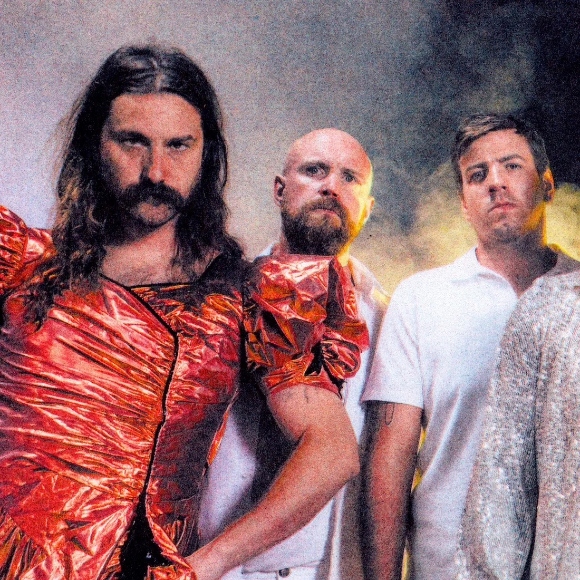
John is joined by IDLES’ Bowen, along with producer Kenny Beats, and producer and engineer Mikko Gordon, to talk about how they wrote, recorded and produced the album ‘TANGK’.
Idles are a British post-punk band who gained recognition with their 2017 debut album ‘Brutalism’. Known for their gritty, powerful sound and explosive live shows, their five albums to date have earned them nominations for the Mercury Prize, BRIT & Grammy Awards. Their latest record, ‘TANGK’, sees the band team up with producers Nigel Godrich and Kenny Beats, and digs into topics of love and gratitude, all while maintaining their signature Idles energy.
Linking up between Kenny’s LA studio and Mikko’s London studio, the trio discuss how they utilised the different strands of experience and expertise from all involved. As well as dubious covers and Christmas day demos, they share stories of writing team breakouts and the unexpected moments that came when they drew inspiration beyond their usual domains.
Tracks discussed: Roy, A Gospel, POP POP POP
Full Transcript:
00:00:00.420 –> 00:00:02.000
John Kennedy: Hello, thank you for choosing Tapenotes.
00:00:02.020 –> 00:00:03.280
John Kennedy: Do I sound different to you today?
00:00:03.540 –> 00:00:17.100
John Kennedy: Instead of using one of our studio mics, one of Neumann’s BCM-104s, if you’re interested, I am recording simultaneously on iPhone Voice Notes, which is what you’re hearing at the moment, and on Tape It, the Voice Notes app for musicians that is kindly supporting the show.
00:00:17.300 –> 00:00:20.500
John Kennedy: The team and I have been having a play with Tape It, and this is what it sounds like.
00:00:20.800 –> 00:00:21.940
John Kennedy: Can you hear the difference?
00:00:22.200 –> 00:00:27.260
John Kennedy: Tape It uses two microphones, along with gentler dynamic compression, to give a much more natural sound.
00:00:27.440 –> 00:00:30.520
John Kennedy: It’s a huge upgrade to the microphone and all-round audio quality.
00:00:30.780 –> 00:00:32.060
John Kennedy: And that’s just the start.
00:00:32.240 –> 00:00:33.920
John Kennedy: More about them later in the show.
00:00:34.080 –> 00:00:35.600
John Kennedy: But now, on to our new episode.
00:00:35.880 –> 00:00:43.600
John Kennedy: I caught up with the brilliant Idles, along with producer Kenny Beats, and engineer and producer Mikko Gordon, to talk about the band’s latest album, Tangk.
00:00:43.940 –> 00:00:49.700
John Kennedy: Bowen from the band and Kenny joined us from Kenny’s LA studio, and I joined Mikko in his Hackney studio in London.
00:00:50.000 –> 00:00:56.480
John Kennedy: The album is an interesting meeting of minds because not only was Kenny Beats involved, but Nigel Godrich produced the record too.
00:00:56.800 –> 00:01:00.620
John Kennedy: So various different levels of experience and expertise were at play.
00:01:00.940 –> 00:01:02.420
John Kennedy: So that’s our new episode.
00:01:02.580 –> 00:01:10.080
John Kennedy: And as usual, the full video podcast will be up on the Tapenotes Patreon page and highlight videos will be coming out on our YouTube channel throughout the week.
00:01:10.380 –> 00:01:12.580
John Kennedy: Thank you to all of our supporters on Patreon.
00:01:12.820 –> 00:01:14.240
John Kennedy: We really couldn’t do it without you.
00:01:14.460 –> 00:01:19.720
John Kennedy: If you’d like to find out more about becoming a patron, just head to patreon.com forward slash Tapenotes.
00:01:20.020 –> 00:01:22.840
John Kennedy: But now, without further ado, let’s get started.
00:01:22.860 –> 00:01:22.920
Kenny Beats: That’s it.
00:01:28.630 –> 00:01:34.230
John Kennedy: Hello and welcome to Tape Notes, the podcast that looks behind the scenes at the magic of recording and producing music.
00:01:34.650 –> 00:01:41.210
John Kennedy: Every episode, we’ll be reuniting an artist and producer and talking through some of the highlights from their collaboration in the studio.
00:01:41.610 –> 00:01:48.070
John Kennedy: So join us as we lift the lid on the creative process and the inner workings of music production to see what lies beneath.
00:01:54.102 –> 00:02:04.322
John Kennedy: Hello, I’m John Kennedy, and joining me for this episode of Tape Notes are Idles, with producer Kenny Beats and engineer and producer Mikko Gordon to talk about how they wrote, recorded and produced the album Tangk.
00:02:05.122 –> 00:02:14.322
John Kennedy: Idles are a British post-punk band consisting of frontman Joe Tolbert, bassist Adam Devonshire, guitarist Lee Kiernan, drummer John Beavis, and guitarist and producer Mark Bowen.
00:02:14.642 –> 00:02:18.082
John Kennedy: The band was formed in 2009 by university friends Joe and Adam.
00:02:18.342 –> 00:02:23.042
John Kennedy: The pair quickly recruited guitarist Mark and released their debut EP, Welcome, in 2012.
00:02:23.462 –> 00:02:31.722
John Kennedy: With the addition of drummer John and rhythm guitarist Lee, they released two further EPs, but it wasn’t until the single Well Done that they began to reach a wider audience.
00:02:32.162 –> 00:02:36.242
John Kennedy: In 2017, their debut album Brutalism arrived on Partisan Records.
00:02:36.542 –> 00:02:46.502
John Kennedy: Embracing the fury of punk rock, the critically acclaimed record was praised for its moody instrumental attack along with Joe’s captivating vocal delivery, something their raucous live shows became renowned for.
00:02:47.062 –> 00:02:58.062
John Kennedy: Since then, the band released a further four studio albums, each of which have seen them continue to develop their gritty, powerful sound and have earned them nominations for the Mercury Prize, BRIT & Grammy Awards.
00:02:58.522 –> 00:03:05.362
John Kennedy: Since our last conversation, Tapenote’s episode 63 discussing Ultramono, they’ve released their fourth and fifth studio albums.
00:03:05.782 –> 00:03:13.542
John Kennedy: Crawler released in 2021 with Kenny Beats taking the helm as producer, sees them bring soul and electronic influences to their energetic style.
00:03:13.962 –> 00:03:28.462
John Kennedy: 2024’s Tangk sees them continue their work with Kenny, this time with the addition of producer Nigel Godrich, reaching the number one spot in the UK album charts, the record digs into topics of love and gratitude, all while maintaining the signature Idles energy.
00:03:29.142 –> 00:03:32.462
John Kennedy: Kenny Beats is an American record producer, rapper and songwriter.
00:03:32.762 –> 00:03:43.822
John Kennedy: Growing up in a household full of music, Kenny learned drums and guitar from the age of nine and began to make beats of his own while at high school, inviting local rappers to come and record in his makeshift cupboard cum vocal booth.
00:03:44.422 –> 00:03:53.962
John Kennedy: Going on to study jazz guitar and business at Berklee College of Music, in 2017 he moved to LA, working from the studio that would become home to his YouTube producer series, The Cave.
00:03:54.522 –> 00:04:05.962
John Kennedy: Setting out to work as collaboratively as possible, one year after moving, he’d produced albums from numerous up and coming and high profile rappers, including Key, Freddie Gibbs, JPEG Mafia and Vince Staples.
00:04:06.442 –> 00:04:13.822
John Kennedy: As well as releasing his own solo album, Louis in 2022 on XL Recordings, Kenny has become one of the most in demand producers today.
00:04:14.222 –> 00:04:26.222
John Kennedy: His work can be heard across some of the biggest albums of the past few years, from artists including Denzel Curry, Ed Sheeran and Dermot Kennedy, plus Benny Sings, as heard in Tapenotes episode 112.
00:04:26.762 –> 00:04:34.682
John Kennedy: Forming close ties with Idles, his collaboration with the band over the most recent records has seen him play a key part in shaping their sound and direction.
00:04:36.382 –> 00:04:39.922
John Kennedy: Mikko Gordon is a producer, mixer and engineer based in Hackney.
00:04:40.282 –> 00:04:48.682
John Kennedy: Growing up in Helsinki, from a young age, Mikko developed a deep passion for music, primarily influenced by his music journalist father, who would often take him to concerts.
00:04:49.162 –> 00:04:56.102
John Kennedy: Later moving to London, he studied music at Goldsmiths University, where he discovered a preference for recording over performing in bands.
00:04:56.602 –> 00:05:05.862
John Kennedy: After graduating and spending time engineering and mixing records with various artists, Mikko formed a close working relationship with producer Nigel Godrich, who took him under his wing.
00:05:06.262 –> 00:05:15.302
John Kennedy: Since then, Mikko has worked on records from a variety of high profile artists, including Radiohead, Arcade Fire, The Smile, Gaz Coombs and Idles.
00:05:16.042 –> 00:05:22.322
John Kennedy: Today, I’m with Mikko and his studio in East London and Kenny and Bowen from the band join us from Kenny’s LA studio.
00:05:22.582 –> 00:05:26.442
John Kennedy: And what better way to start our conversation than by hearing something from the record.
00:05:27.022 –> 00:05:28.322
John Kennedy: This is Dancer.
00:06:15.652 –> 00:06:23.612
John Kennedy: It is Dancer by Idles from the album Tangk, and I’m very pleased to say that we’ve got a whole variety of different people connected up to us in different parts of the world.
00:06:23.632 –> 00:06:30.192
John Kennedy: So I’m speaking from London, and beside me is Mikko Gordon, who was one of the engineers on the Tangk album.
00:06:30.432 –> 00:06:38.652
John Kennedy: And then across the pond, as people like to say, on the other side of the world, in Los Angeles, California, we have Mark Bowen and Kenny Beats in a room together.
00:06:38.672 –> 00:06:39.412
John Kennedy: Hello, how are you?
00:06:39.792 –> 00:06:40.652
Kenny Beats: How’s it going, guys?
00:06:40.672 –> 00:06:41.112
Mark Bowen: How’s it going?
00:06:41.752 –> 00:06:42.352
John Kennedy: Very good.
00:06:42.372 –> 00:06:48.392
John Kennedy: It’s great to have assembled this team of people to have a look and a listen to how you created Tangk.
00:06:48.772 –> 00:06:55.672
John Kennedy: Now, part of this team has assembled before, so Kenny and Bowen, you both did work on Crawler together.
00:06:56.032 –> 00:07:00.232
John Kennedy: So you were part of, obviously Bowen would be part of the album because he’s in the band Idles.
00:07:00.752 –> 00:07:02.752
John Kennedy: Kenny, you worked on that album too a little bit.
00:07:03.112 –> 00:07:04.532
John Kennedy: And so what were you thinking?
00:07:04.552 –> 00:07:06.572
John Kennedy: Because you got Nigel Godrich involved as well, Bowen.
00:07:06.732 –> 00:07:08.412
John Kennedy: So what was the thought process?
00:07:09.872 –> 00:07:12.072
Mark Bowen: Well, me and Kenny are kind of locked in now.
00:07:12.092 –> 00:07:14.132
Mark Bowen: We’re like a production duo.
00:07:14.792 –> 00:07:16.812
Mark Bowen: You know, the dream team, as it were.
00:07:17.992 –> 00:07:19.132
Mark Bowen: The yin to my yang.
00:07:19.392 –> 00:07:20.892
Kenny Beats: Yeah, we’re three albums in.
00:07:20.912 –> 00:07:30.612
Kenny Beats: I started with Ultramano with the guys, just going back and forth with Bowen on ideas, just little kind of like versions and demos of my own things.
00:07:30.632 –> 00:07:36.872
Kenny Beats: And then Crawler was the first time us all coming together alone and making a record, just me and the band.
00:07:37.412 –> 00:07:53.172
Kenny Beats: And then when Bowen first hit me about the idea of us doing it with Nigel and Mikko and all going for this new project together, I was kind of in shock and I took it as like, oh, you guys are making a record with Nigel.
00:07:53.392 –> 00:07:54.632
Kenny Beats: And they were like, no, you’re coming.
00:07:54.652 –> 00:07:57.232
Kenny Beats: And I was like, how does this all work together?
00:07:57.252 –> 00:07:59.612
Mark Bowen: Yeah, I don’t think anyone knew actually.
00:08:00.412 –> 00:08:03.932
Mark Bowen: Mikko Mastermind did this whole thing, actually.
00:08:03.992 –> 00:08:06.172
Mark Bowen: We had just done the From the Basement session.
00:08:06.232 –> 00:08:07.932
Mikko Gordon: And we just had a really good time, didn’t we?
00:08:08.272 –> 00:08:09.392
Mark Bowen: Yeah, it was great.
00:08:09.452 –> 00:08:12.932
Mark Bowen: And it’s a really incredible, I love watching that.
00:08:13.032 –> 00:08:16.372
Mark Bowen: It really felt like what we were trying to convey with those songs.
00:08:16.972 –> 00:08:27.092
John Kennedy: So we should maybe explain, Nigel Godrich has a show called From the Basement where he gets bands in to record in his own space and it’s filmed and you can go and view it online.
00:08:27.112 –> 00:08:28.052
John Kennedy: And it’s like a music TV show.
00:08:29.132 –> 00:08:33.852
Mark Bowen: Yeah, it’s some of the best music video content that’s ever been made.
00:08:33.852 –> 00:08:36.072
Mark Bowen: Like the radiohead ones are ubiquitous.
00:08:36.392 –> 00:08:42.152
Mark Bowen: There’s like an incredible Fall one, the White Stripes one’s unreal, Queen’s of Stone Age, PJ Harvey one’s incredible.
00:08:42.172 –> 00:08:51.832
Kenny Beats: The band would make me watch episodes of The Basement in Bath working on Crawler and we’d be done for the day and Bowen would be like, have you never seen The King of Limbs one, you’ve never seen this one?
00:08:51.852 –> 00:08:58.572
Kenny Beats: And we would watch those episodes and then seeing them get their own episode for the record that we were working on, it was kind of an insane moment.
00:08:58.572 –> 00:09:02.052
Kenny Beats: And it was also my favorite performance of that record ever.
00:09:02.352 –> 00:09:02.832
Mark Bowen: Yeah.
00:09:02.952 –> 00:09:06.852
Mark Bowen: And then I met Mikko at a festival in France.
00:09:07.632 –> 00:09:09.512
Mark Bowen: He was doing Sign for the Smile.
00:09:10.152 –> 00:09:12.952
Mark Bowen: And he said, I think Nigel wants to work with you guys.
00:09:13.012 –> 00:09:16.552
Mark Bowen: And I was like, no, no more people getting involved.
00:09:16.612 –> 00:09:20.232
Mark Bowen: Like I’m done with these big producers with their fancy ideas.
00:09:20.252 –> 00:09:24.772
Mark Bowen: And then I was kind of like, it is Nigel Godrich, isn’t it?
00:09:24.792 –> 00:09:27.092
Mark Bowen: Like it would definitely be worth doing.
00:09:27.332 –> 00:09:30.952
Mikko Gordon: Yeah, and then I told Nigel as well, I think Idles want to work with you.
00:09:33.092 –> 00:09:35.052
John Kennedy: So you were the puppet master.
00:09:35.072 –> 00:09:35.612
Mark Bowen: Yeah, yeah, yeah.
00:09:35.632 –> 00:09:40.452
Mark Bowen: Cause I said to Nigel, I was like, I met him for lunch and was like, so I hear you want to work with us.
00:09:40.472 –> 00:09:43.712
Mark Bowen: He’s like, no, I think Mikko wants to work with us.
00:09:45.612 –> 00:09:49.112
John Kennedy: But you managed to make it happen and convinced all parties to do it.
00:09:49.552 –> 00:09:55.272
John Kennedy: And then did this mean, because I know that you recorded a lot in London, in Nigel’s studio in Brixton.
00:09:55.632 –> 00:09:57.212
John Kennedy: So did you come over for that, Kenny?
00:09:57.712 –> 00:09:59.972
Kenny Beats: I was there for, I think, two days.
00:10:00.232 –> 00:10:09.692
Kenny Beats: I was already in London for some shows of my own and some other sessions, and they had just started kind of the pre-writing process with Mikko and Nigel, and I went over there.
00:10:10.332 –> 00:10:16.972
Kenny Beats: And I think, actually, some of the stuff that ended up on Monolith got recorded the days I was there.
00:10:17.252 –> 00:10:18.632
Mark Bowen: Yeah, and gospel.
00:10:18.852 –> 00:10:19.852
Kenny Beats: And gospel, yeah.
00:10:19.872 –> 00:10:29.152
Kenny Beats: So I was actually seeing pieces of things that I just thought were maybe demos or the start of ideas or them kind of getting comfortable with Nigel and Mikko and their process.
00:10:29.252 –> 00:10:36.592
Kenny Beats: And really it ended up being like some of the coolest things on the record were getting made in those kind of pre-session days or some of the most influential things for the record.
00:10:36.912 –> 00:10:45.512
Mark Bowen: What it was really was that like with this album, what I wanted was the production to be really involved in the writing process.
00:10:45.972 –> 00:10:52.292
Mark Bowen: What we normally do is we have a load of songs and then I go to Kenny and go, this is the vibe and I’ll reference some stuff.
00:10:52.912 –> 00:10:56.672
Mark Bowen: And then we’ll kind of work on like, that’s how we did Crawler and we’ll work on stuff.
00:10:56.692 –> 00:11:09.952
Mark Bowen: And then the vibe of the album comes out in how we’re processing stuff at the studio and how it’s being recorded, like the wood room in real world was a big thing on Crawler and how the drums sounded in there.
00:11:10.372 –> 00:11:36.372
Mark Bowen: Whereas with this one, what I really wanted was as we were writing the music, it was sounding like we were intending, but also all the mistakes and all the accidents were also coming up and then we were vibing off that and responding to that with the writing, rather than those beautiful accidents that occur in the recording studio just being an artifact that we then embrace in the song.
00:11:36.652 –> 00:11:42.572
Mark Bowen: We then used this artifact to then go and write the rest of the song and to finish it.
00:11:43.252 –> 00:11:53.152
Mark Bowen: The other thing was that with Nigel, we were using a lot of like tape loops and it was all about kind of like, there was a lot of discovery going on through that.
00:11:53.452 –> 00:11:58.432
Mark Bowen: And it’s all these like broken bits and accidents that by and large is how we’ve written before.
00:11:58.452 –> 00:12:01.932
Mark Bowen: Like, I mean, our music isn’t like accomplished.
00:12:02.292 –> 00:12:04.812
Mark Bowen: Normally, you know, it’s all about the accidents.
00:12:04.832 –> 00:12:12.252
Mark Bowen: The best bits are the squealy bits in the guitar, the chaos and the drums are, you know, just dev in general.
00:12:13.612 –> 00:12:19.232
Mark Bowen: So yeah, so it was just about like kind of having those bits and capturing them and then season upon them.
00:12:19.772 –> 00:12:32.912
Mark Bowen: So that was really, that was the big difference on this album was that everything we were writing was being recorded and it was also kind of like blossoming out into something else as it was going, which was great and it all evolved.
00:12:33.192 –> 00:12:34.212
John Kennedy: Yeah, right.
00:12:34.252 –> 00:12:35.992
Mark Bowen: It was also chaos as well.
00:12:35.992 –> 00:12:45.672
Mark Bowen: So like from those recording sessions, from those like writing sessions in Brixton, we had like, I don’t know, 20 something pieces.
00:12:45.692 –> 00:12:46.732
Mark Bowen: They’re all just skeletons.
00:12:46.752 –> 00:12:48.012
Mark Bowen: We didn’t have any songs.
00:12:48.412 –> 00:12:52.412
Mark Bowen: And the ones that we actually had that were like full songs, we scrapped.
00:12:52.912 –> 00:12:58.092
Mark Bowen: And all the skeleton ones and all the ones that we were like, I don’t know what this is, they all turned into the best ones.
00:12:58.112 –> 00:13:00.352
Kenny Beats: Sometimes they were 11 seconds of a loop.
00:13:00.412 –> 00:13:02.432
Mikko Gordon: Yeah, it’d be like a tiny riff, wouldn’t it?
00:13:02.452 –> 00:13:06.332
Mikko Gordon: And you just be like that for like months and months, no one knew what to do with it.
00:13:06.352 –> 00:13:07.792
Mikko Gordon: And then someone would figure that out.
00:13:08.192 –> 00:13:12.652
Mark Bowen: Sometimes out of fear, like, I mean, I say sometimes 90% of the time, it was out of fear.
00:13:12.672 –> 00:13:14.152
Mark Bowen: You’re like, this is really cool.
00:13:14.572 –> 00:13:16.132
Mark Bowen: I don’t know what to do with it.
00:13:16.152 –> 00:13:20.692
Mark Bowen: So it was like, it was, yeah, a very, very different process for us.
00:13:21.232 –> 00:13:22.092
John Kennedy: Sounds exciting.
00:13:22.092 –> 00:13:25.372
John Kennedy: And we’re gonna discover more about it as we dive into these songs.
00:13:25.392 –> 00:13:28.012
John Kennedy: And the first song that we’re going to look at is Roy.
00:13:28.332 –> 00:13:31.952
John Kennedy: So Mikko, if you play a blast of the master, we’ll get an idea of what that one’s all about.
00:14:59.389 –> 00:15:02.749
John Kennedy: Just a little taste of Roy then by Idles from Tangk.
00:15:03.009 –> 00:15:04.309
John Kennedy: So that’s how it ended up.
00:15:04.729 –> 00:15:05.669
John Kennedy: How did it start?
00:15:05.689 –> 00:15:09.049
Mark Bowen: Whew, that’s a good one.
00:15:09.729 –> 00:15:11.689
Mark Bowen: This was one of the real journey ones.
00:15:12.329 –> 00:15:26.669
Mark Bowen: So it started off, sorry, one sec, I’m just gonna get the name of the track up, because basically I listen to Iggy Pop’s show a lot, and he played this track by this drummer called Chico Hamilton.
00:15:27.189 –> 00:15:27.949
Mark Bowen: Look at this guy.
00:15:28.509 –> 00:15:32.269
Mark Bowen: He looks like a vampire, he’s a cool guy.
00:15:32.609 –> 00:15:39.029
Mark Bowen: But it was a track called El Murs, and it had this like, do do do, boom boom boom boom, do do do, boom boom.
00:15:39.229 –> 00:15:39.969
Mark Bowen: And it was really cool.
00:15:39.989 –> 00:15:44.449
Mark Bowen: And what happens in the track is it, it sounds like it speeds up, but he’s just playing harder.
00:15:44.829 –> 00:15:46.689
Mark Bowen: And there’s this really cool thing.
00:15:46.709 –> 00:15:48.609
Mark Bowen: So I was really like into that.
00:15:48.629 –> 00:16:02.009
Mark Bowen: And a lot of the stuff, a lot of the like initial kind of thoughts on writing this album were, with Idles there’s always this very bipolar thing going on with what Joe wants and what I want.
00:16:02.569 –> 00:16:08.429
Mark Bowen: And they completely diverge and then they will eventually clash in the middle.
00:16:08.769 –> 00:16:13.869
Mark Bowen: And they’ll either clash and create lots of like tension and animosity, which is great.
00:16:14.309 –> 00:16:16.309
Mark Bowen: Or there’d be a nice warm, beautiful hug.
00:16:16.689 –> 00:16:19.449
Mark Bowen: And Joe was really on this tech where he wanted people to dance.
00:16:19.789 –> 00:16:22.509
Mark Bowen: That was his like MO for this whole album.
00:16:22.929 –> 00:16:27.489
Mark Bowen: And mine was all about this like 50s and 60s pop music.
00:16:28.029 –> 00:16:36.169
Mark Bowen: And trying to like make this weird kind of modern, very glitched out, broken kind of version of that.
00:16:36.509 –> 00:16:38.629
Mark Bowen: So for me, Roy was that.
00:16:38.689 –> 00:16:42.389
Mark Bowen: It was this Chico Hamilton song and Roy Orbison.
00:16:42.409 –> 00:16:44.389
Mark Bowen: That’s why it’s called Roy, because the demo was called Roy.
00:16:44.409 –> 00:16:50.589
Mark Bowen: Often our songs, if we can’t think of a good enough title, it just gets named after the demo.
00:16:50.769 –> 00:16:51.809
John Kennedy: Are we able to hear the demo?
00:16:53.749 –> 00:16:58.489
Mark Bowen: Yeah, so the very first demo is me ripping off Roy Orbison.
00:16:58.869 –> 00:17:02.169
John Kennedy: Do you know which song, Bowen, you were inspired by or trying to rip off?
00:17:02.969 –> 00:17:05.369
Mark Bowen: Oh, that’s a trick.
00:17:05.389 –> 00:17:05.889
John Kennedy: Don’t tell me.
00:17:05.909 –> 00:17:07.569
Mark Bowen: Oh, no, sorry.
00:17:08.509 –> 00:17:09.589
Mark Bowen: No, I have no idea.
00:17:09.609 –> 00:17:11.769
Mark Bowen: No, it was the sense of Roy Orbison rather than anything.
00:17:11.789 –> 00:17:12.769
Kenny Beats: We can’t seem to remember.
00:17:12.929 –> 00:17:14.089
Mark Bowen: No, I can’t seem to remember.
00:17:14.109 –> 00:17:14.969
John Kennedy: Just the general vibe, right?
00:17:15.629 –> 00:17:17.409
Kenny Beats: That was close, John.
00:17:17.429 –> 00:17:19.569
Kenny Beats: Don’t let John get you.
00:17:20.089 –> 00:17:21.009
Mikko Gordon: Right, here it comes.
00:17:21.269 –> 00:17:24.969
Mark Bowen: But yeah, so this is the very on the nose Roy Orbison cover.
00:17:24.989 –> 00:17:25.089
Mikko Gordon: I love her.
00:17:38.619 –> 00:17:40.819
Mark Bowen: And, I mean, there we go.
00:17:40.839 –> 00:17:47.799
Mark Bowen: It’s just very on the nose, like that desert, late 50s, early 60s stuff.
00:17:52.019 –> 00:17:53.119
John Kennedy: Does Joe sing on this?
00:17:53.779 –> 00:17:55.639
John Kennedy: Or is this just an instrumental demo?
00:17:55.659 –> 00:17:55.859
John Kennedy: Right.
00:17:56.639 –> 00:17:57.539
Mark Bowen: Joe doesn’t sing.
00:18:03.219 –> 00:18:04.599
Mark Bowen: Yeah, no, no, he does.
00:18:05.179 –> 00:18:11.879
Mark Bowen: Joe doesn’t write or sing anything until we get to the studio, until he gets to the mic.
00:18:12.359 –> 00:18:14.119
Mark Bowen: That’s just his process.
00:18:14.219 –> 00:18:25.539
Mark Bowen: I think it’s because, I mean, a really big thing for us, actually, and a really big thing about all this recorded stuff is, the demo is always, by and large, the most exciting thing.
00:18:25.959 –> 00:18:26.979
Mark Bowen: It’s got an energy.
00:18:27.439 –> 00:18:29.519
Mark Bowen: So there’s always something to the way you’re playing.
00:18:29.759 –> 00:18:32.319
Mark Bowen: There’s always some, this isn’t like a new thing.
00:18:32.339 –> 00:18:34.999
Mark Bowen: You know, David Burns and Brian talk about this all the time.
00:18:35.019 –> 00:18:36.339
Kenny Beats: Al Beeney talked about it all the time.
00:18:36.459 –> 00:18:37.019
Mark Bowen: All the time.
00:18:37.499 –> 00:18:40.199
Mark Bowen: And it’s like, there’s two things in that.
00:18:40.539 –> 00:18:43.839
Mark Bowen: There is an excitement to the new and the refreshing, and there’s great.
00:18:44.179 –> 00:18:51.539
Mark Bowen: There’s also artists, musicians especially, are the most neurotic and secure people in the world.
00:18:52.119 –> 00:18:53.499
Mark Bowen: And we get two things.
00:18:53.599 –> 00:18:58.699
Mark Bowen: One is that you start second guessing yourself, and you like go, oh, that’s not the one.
00:18:58.719 –> 00:19:08.839
Mark Bowen: And you start changing things and you fluff it up and you can make something that’s very beautiful and you can lose the energy because it’s very important the energy of the day and the intention.
00:19:09.019 –> 00:19:10.439
Mark Bowen: Intention is a big thing for us.
00:19:10.939 –> 00:19:14.319
Mark Bowen: But also you get demo-itis and you get really like stuck on the demo.
00:19:14.619 –> 00:19:21.659
Mark Bowen: So it’s almost better to be, do all the prep, be as considered as possible and then boom, it comes out.
00:19:21.879 –> 00:19:29.819
Mark Bowen: And I think that’s a big thing with Joe, because there’s so much emotion and so much energy and also so much honesty.
00:19:30.379 –> 00:19:38.299
Mark Bowen: Like Joe’s performances is entirely who he is at that moment in time and it never gets recaptured.
00:19:38.319 –> 00:19:43.439
Mark Bowen: If you go see us live, none of the songs feel like they will on the recording.
00:19:43.459 –> 00:19:44.919
Mark Bowen: They’ll feel like Joe is that day.
00:19:45.539 –> 00:19:50.659
Mark Bowen: If Joe’s having a bad day, it can come out in many forms and you see that across the scope of the show.
00:19:50.679 –> 00:19:52.279
Mark Bowen: If he’s having a great day, it comes across.
00:19:52.759 –> 00:19:57.919
Mark Bowen: So like, I think it’s really important for Joe to maintain that purity.
00:19:58.499 –> 00:20:01.219
Mark Bowen: So yeah, so there’s never any singing on any of the demos.
00:20:01.259 –> 00:20:02.359
John Kennedy: Yeah, right.
00:20:02.679 –> 00:20:10.039
Mark Bowen: But yeah, so we had this and this was very on the nose, but the big thing on that is it’s in 58 or 54.
00:20:10.119 –> 00:20:10.679
Mark Bowen: I don’t know.
00:20:11.019 –> 00:20:12.399
Mark Bowen: So I just tried it out.
00:20:12.539 –> 00:20:15.159
Mark Bowen: And that was how I was trying to get away from the Royal Basin.
00:20:15.179 –> 00:20:22.979
Mark Bowen: I wanted to use that 50s, 60s, very on the nose thing, but turn it into something new and maybe something that wouldn’t have been used at the time.
00:20:23.499 –> 00:20:25.959
Mark Bowen: So kept it in this 58 thing.
00:20:26.799 –> 00:20:27.859
Mark Bowen: I sent that to Joe.
00:20:28.199 –> 00:20:31.179
Mark Bowen: Joe’s like, this is insanely on the nose.
00:20:31.759 –> 00:20:32.319
Mark Bowen: Do better.
00:20:32.959 –> 00:20:37.979
Mark Bowen: So then I think on that one, you can hear the, you start to hear the bridge.
00:20:37.999 –> 00:20:42.599
Mark Bowen: The bridge does come in, the kind of, you know, moving into the minor chords and things like that.
00:20:42.879 –> 00:20:44.439
Mark Bowen: There’s no point in listening back to it.
00:20:44.459 –> 00:20:45.479
Mark Bowen: We’ll listen to the next demo.
00:20:45.499 –> 00:20:49.179
Mark Bowen: So the next demo is Mikko’s Goodbye to Player.
00:20:49.339 –> 00:20:49.699
Mikko Gordon: Yes.
00:20:50.019 –> 00:20:53.599
Mikko Gordon: So this is like the first bit of guitar you recorded for this.
00:21:07.723 –> 00:21:11.703
John Kennedy: And is that the very same guitar that ended up in the finished version on the album?
00:21:12.403 –> 00:21:13.403
Kenny Beats: Maybe, yes.
00:21:14.643 –> 00:21:15.383
Mark Bowen: I think it is.
00:21:15.403 –> 00:21:16.823
Kenny Beats: Because we tried it a bunch of times, right?
00:21:16.843 –> 00:21:17.403
Kenny Beats: No one ever liked it.
00:21:17.423 –> 00:21:18.803
Mikko Gordon: We tried it again, and I think we kept going back.
00:21:18.823 –> 00:21:19.563
Mikko Gordon: Yeah, I think you’re right, Kenny.
00:21:19.583 –> 00:21:20.543
Kenny Beats: I think it was the one.
00:21:20.663 –> 00:21:26.503
Mark Bowen: I appreciate your kindness in saying that we tried it many times and no one ever liked it.
00:21:26.803 –> 00:21:28.623
Mark Bowen: I can’t play that guitar line.
00:21:29.123 –> 00:21:31.563
Mark Bowen: I’m terrible at playing guitar.
00:21:31.843 –> 00:21:34.963
Mark Bowen: It’s the pulling across the strings, you know, that House of the Rising Sun type thing.
00:21:35.323 –> 00:21:41.343
Mark Bowen: It’s like, yeah, I couldn’t quite, and I like things being bad and that’s terrible.
00:21:41.343 –> 00:21:42.683
Mark Bowen: What you’ve just heard is awful.
00:21:42.703 –> 00:21:46.163
Kenny Beats: The sneering that demo is upsetting, very upsetting.
00:21:46.183 –> 00:21:47.183
John Kennedy: How did you record that?
00:21:47.503 –> 00:21:48.423
John Kennedy: Is that through an amp?
00:21:48.443 –> 00:21:50.783
John Kennedy: Is it straight into the computer?
00:21:50.803 –> 00:21:52.563
Mark Bowen: That’ll be a Vox, I think.
00:21:52.583 –> 00:21:56.903
John Kennedy: Right, with just a microphone in front of it, because it sounds so raw.
00:21:56.923 –> 00:21:59.923
Mark Bowen: Do you know, you’re sitting beside the correct person to answer that question.
00:21:59.943 –> 00:22:00.863
John Kennedy: Mikko, you know the answers.
00:22:00.863 –> 00:22:02.143
Mikko Gordon: We were moving so fast.
00:22:02.483 –> 00:22:03.703
Mikko Gordon: I think that’s the DI, you know?
00:22:04.963 –> 00:22:06.943
Mikko Gordon: I mean, we mainly had that one, we just went, yeah.
00:22:07.583 –> 00:22:08.623
Mikko Gordon: Yeah, straight to desk.
00:22:08.663 –> 00:22:09.463
Kenny Beats: That’d be the vibe.
00:22:09.483 –> 00:22:12.583
Mark Bowen: Yeah, it’ll be stinky straight into the desk, my broken guitar.
00:22:13.043 –> 00:22:25.543
Mark Bowen: Yeah, that was the big, one of the big things on this album was that we were moving so fast, and Mikko, in a feat of engineering, was always six steps ahead of us at every single moment.
00:22:25.563 –> 00:22:27.223
Mark Bowen: You were like, I need this, and he’d be just handing it.
00:22:27.243 –> 00:22:28.203
Kenny Beats: It was really unbelievable.
00:22:28.223 –> 00:22:33.643
Kenny Beats: I’ve talked about it so much with people, about how ahead Mikko was with everything.
00:22:33.643 –> 00:22:40.423
Kenny Beats: It was crazy, because we really had to divide up the workload so we could move even faster, as if we weren’t going fast enough.
00:22:40.443 –> 00:22:46.043
Kenny Beats: And we split up into this joke that we started an album ago, which was Team A, Team B.
00:22:46.123 –> 00:22:52.843
Kenny Beats: And it just became a Joe joke of just like, when Joe and I would go record, we would record alone and do vocals alone so we could get in this zone.
00:22:52.863 –> 00:22:56.483
Kenny Beats: And I always just thought of it as like, we’re having a moment, we’ll go back and rejoin the band.
00:22:56.503 –> 00:23:01.243
Kenny Beats: And Joe started making this joke in Bath, an album ago of, oh, we’re Team A.
00:23:01.443 –> 00:23:07.763
Kenny Beats: Team A’s finishing everything, we’re getting it done because he was putting vocals on things and it was feeling like a final song.
00:23:07.783 –> 00:23:17.263
Kenny Beats: And like Bowen said, with Joe, sometimes there’s things written ahead of time, but a lot of time, I mean, he’s starting to more and more wanna be at the mic and feel it at the mic.
00:23:17.263 –> 00:23:21.143
Kenny Beats: The performance, the writing of it, cadences everything.
00:23:21.623 –> 00:23:34.683
Kenny Beats: And sometimes him and I get done with this thing that he just invented on the mic, whether it’s him doing a falsetto for the first time or him finding a new type of bark that we haven’t heard or whatever version of Joe you’re getting that day.
00:23:35.323 –> 00:23:37.743
Kenny Beats: And Joe’s like, oh my God, wait till they hear this.
00:23:38.023 –> 00:23:40.763
Kenny Beats: And then it became this thing of like, what are they doing in that room?
00:23:40.783 –> 00:23:42.043
Kenny Beats: They’re doing another guitar track?
00:23:42.063 –> 00:23:47.463
Kenny Beats: Like, we’re gonna go in and show them best song we’ve ever done, and it’s been this ongoing joke.
00:23:47.483 –> 00:24:11.263
Kenny Beats: So when Nigel and Mikko came into the picture, the way their process was when it came to tracking instruments, like using tape, every single piece of hardware, they were so dialed that I didn’t feel like me coming in and talking about tones and mic balance and positionings and what I feel is like kind of minute details when we’re so writing the music.
00:24:11.483 –> 00:24:12.903
Kenny Beats: I was like, let me go away with Joe.
00:24:13.363 –> 00:24:18.323
Kenny Beats: And we started to tell Nigel about, hey, like, we’re gonna go to the Team A room and then we’re gonna come back.
00:24:18.763 –> 00:24:26.343
Kenny Beats: And during that process, I would get stems to things like Roy and Joe would say, no, Bowen’s ideas bat shit crazy, do this instead.
00:24:26.663 –> 00:24:32.323
Kenny Beats: And I’m conflicted because there’s another room full of people saying, this is what we’re working on, this is what we’re recording, everyone’s agreed.
00:24:32.343 –> 00:24:37.683
Kenny Beats: And then I go away with Joe and he goes, fuck that, put it four four, put it in six four, put it in five four.
00:24:37.703 –> 00:24:43.783
Mark Bowen: I was gonna say, Team A couldn’t quite handle the genius.
00:24:43.943 –> 00:24:49.983
Mikko Gordon: Kenny and Joe would just kind of come through like smiling, like, you know, kids in the candy shop, just be like, come and listen to this.
00:24:49.983 –> 00:24:58.943
Mikko Gordon: And, you know, we’d all march over there and just honestly, usually be speechless or almost in tears, just listening to what Joe was saying.
00:24:59.043 –> 00:25:00.463
Mikko Gordon: I will never forget those moments.
00:25:00.883 –> 00:25:01.503
Mark Bowen: Yeah, it was amazing.
00:25:01.523 –> 00:25:01.803
Mark Bowen: Me either.
00:25:02.063 –> 00:25:10.243
Mark Bowen: I remember that one, it was on the, I mean, we should talk about it when we’re talking about gospel, but he was like, I can’t be this, you know, quiet.
00:25:10.283 –> 00:25:12.083
Mark Bowen: Or I can’t remember what the word was.
00:25:13.403 –> 00:25:14.943
Mark Bowen: Fragile, fragile was the word.
00:25:15.423 –> 00:25:20.283
Mark Bowen: And then you were just like, you’ve just recorded one of the most fragile things I think I’ve ever heard.
00:25:20.303 –> 00:25:22.643
Mark Bowen: And then we went into the room and heard monolith and we’re all just like.
00:25:24.063 –> 00:25:26.523
Kenny Beats: So delicate, like, yeah.
00:25:26.863 –> 00:25:39.663
Kenny Beats: And it was a funny competitive joke, but at the end of the day, it became really interesting in the creative process whenever both rooms were challenging each other’s thoughts and views on the songs.
00:25:39.683 –> 00:25:47.683
Kenny Beats: Like when I heard this, it sounded to me like Ravel or like it’s like a Bolero or something like it didn’t, it has a soul thing to it because of Bowen’s tone and this and that.
00:25:47.923 –> 00:25:58.523
Kenny Beats: But it’s like, gives me this different kind of flamenco waltz feeling to it, which obviously Orbison was also inspired by and this and that, but I’m seeing it in a different way than Joe is seeing it.
00:25:58.563 –> 00:26:02.343
Kenny Beats: And then Bowen’s seeing it in a different way than the rest of the band is seeing it.
00:26:02.363 –> 00:26:11.603
Kenny Beats: And then Nigel and Mikko are seeing how we’re all seeing it in a completely different zone, but it didn’t cause the chaos you would think in a negative way, caused chaos.
00:26:11.623 –> 00:26:17.803
Kenny Beats: And there was a lot of talking and confusion and nights where we would finish music and have to talk through a single song for an hour.
00:26:18.203 –> 00:26:30.803
Kenny Beats: But it added to what was going on because that’s how Bowen and Joe’s thing meets, is when we all kind of take our different statement on it and then they synthesize it into what it finally becomes.
00:26:30.823 –> 00:26:38.363
Kenny Beats: And now I hear it, it’s like this beautiful soul song, but I never thought of it like that, especially not was in, it was an odd times and it went between times.
00:26:38.363 –> 00:26:42.743
Kenny Beats: It went from four, four to five, four back.
00:26:42.823 –> 00:26:50.963
Kenny Beats: And then Mikko and I would be in opposite rooms from each other cutting bars out of sections because they’re telling Mikko, now put this at a bar here, at a bar here.
00:26:50.983 –> 00:26:53.263
Kenny Beats: And then I’m in another room and Joe’s like, no, take a bar away.
00:26:53.283 –> 00:26:57.243
Kenny Beats: And we would be looking at each other’s stems and no one’s stems were matching.
00:26:57.903 –> 00:27:02.183
Kenny Beats: And this was an ongoing thing, but it actually caused the best happy accidents.
00:27:02.443 –> 00:27:08.423
Mikko Gordon: I’ve got a bit of the verse here when it was still in five, four, if you wanna hear that for reference.
00:27:09.063 –> 00:27:09.703
Kenny Beats: Risky.
00:27:09.723 –> 00:27:10.223
Kenny Beats: Yeah, play it.
00:27:20.220 –> 00:27:21.460
Mark Bowen: Oh, and do you know what that is?
00:27:21.480 –> 00:27:22.540
Mark Bowen: That’s with the…
00:27:23.160 –> 00:27:31.880
Mark Bowen: So what I did was after the Roy Orbison thing, when it was too on the nose, I was like, right, well, what are the other references?
00:27:31.900 –> 00:27:32.440
Mark Bowen: Where are we going?
00:27:32.460 –> 00:27:35.000
Mark Bowen: And Bowen House was a big thing for us, like, so goth.
00:27:35.460 –> 00:27:39.200
Mark Bowen: So I made the goth-y, do-doom, do-doom, boom-boom.
00:27:39.920 –> 00:27:48.120
Mark Bowen: And I didn’t have a bass in my home studio at the time, so it’s just a guitar that I’ve de-tuned with like sign toys or something like that.
00:27:48.440 –> 00:27:49.600
Mark Bowen: And it sounds really weird.
00:27:50.340 –> 00:27:53.120
Mark Bowen: And I was like, when we get to the studio, we’re gonna make something better.
00:27:53.400 –> 00:28:00.800
Mark Bowen: And so what you hear there, that’s me and Lee trying to make it better with like chorus pedals and like, and it’s not as cool.
00:28:01.240 –> 00:28:05.600
Mark Bowen: So then we just went back and used my like crap version.
00:28:07.180 –> 00:28:08.800
Kenny Beats: We might have timed it here, but yeah.
00:28:08.880 –> 00:28:09.300
Mark Bowen: Always.
00:28:09.320 –> 00:28:10.080
John Kennedy: You got to try these things.
00:28:10.100 –> 00:28:18.700
John Kennedy: So with the kind of speed of thought that you applied in the studio, can we rush through how this track was built up and finished then?
00:28:19.040 –> 00:28:20.880
John Kennedy: Can we apply those, that speed?
00:28:21.560 –> 00:28:24.180
John Kennedy: And maybe we can hear the music as Bowen talks about it.
00:28:24.800 –> 00:28:25.520
Mark Bowen: Yeah, yeah, great.
00:28:26.280 –> 00:28:28.640
Mark Bowen: So like, Roy’s was in 5’8.
00:28:31.000 –> 00:28:33.540
Mark Bowen: So this is, we’ve now flipped the drums.
00:28:33.560 –> 00:28:35.180
Mark Bowen: We’ve gone, we’ve taken them.
00:28:35.480 –> 00:28:37.620
Mark Bowen: We’ve now got this tape loop of John playing.
00:28:39.440 –> 00:28:42.700
Kenny Beats: I think we added a full rim at one point too.
00:28:42.720 –> 00:28:47.420
Kenny Beats: Yeah, it was just to keep time because we were so confused that at one point we had a fake rim in there.
00:28:47.440 –> 00:28:50.200
Mark Bowen: Yeah, yeah, to try and keep everyone on point.
00:28:51.980 –> 00:28:57.680
Mark Bowen: And then Joe was like adamant that people aren’t gonna dance if it’s gonna be 5’8.
00:28:57.700 –> 00:28:59.020
Mark Bowen: He wants to pull people along.
00:28:59.540 –> 00:29:01.680
Mark Bowen: And he also couldn’t get it.
00:29:01.700 –> 00:29:04.220
Mark Bowen: He couldn’t get the lines right.
00:29:04.840 –> 00:29:06.480
Mark Bowen: So we put it in 6’8.
00:29:06.480 –> 00:29:09.460
Mark Bowen: We tried to put it back into 5’8 afterwards, but it just didn’t work.
00:29:12.540 –> 00:29:13.640
Mark Bowen: So this is the chorus.
00:29:13.640 –> 00:29:15.940
Mark Bowen: It’s got Deb playing, oh sorry, the verse.
00:29:15.960 –> 00:29:21.560
Mark Bowen: It’s got Deb playing, bum, keeping the time, trying to keep everyone on point.
00:29:24.940 –> 00:29:26.080
Mark Bowen: And then, the bridge.
00:29:26.140 –> 00:29:27.680
Mark Bowen: This bridge has always existed.
00:29:28.300 –> 00:29:31.520
Mark Bowen: So like, and this is actually, Joe wrote this before we got to the studio.
00:29:53.182 –> 00:30:07.922
Mark Bowen: So, writing this bit, we were in Brixton, and we were trying to work out all sorts of different like choruses, and Joe was really on this like, this soul thing, where there’s a big roll in, and there’s just three big chords.
00:30:07.942 –> 00:30:11.602
Mark Bowen: Bam, bam, bam, and then he’s got it.
00:30:12.102 –> 00:30:17.242
Mark Bowen: So we just, John did the fill, and then we were like, sit, that fill’s sick, just do more of that.
00:30:17.522 –> 00:30:35.122
Mark Bowen: So then he started playing the drum beat, and then me and Joe just did the same, like I just had an organ, like this crap organ thing on me, and Joe was like, both at the exact same time, we’re just like, ding, ding, ding, did it, and then Joe was just pumped up, but we had to get rid of all the stuff.
00:30:35.142 –> 00:30:39.682
Mark Bowen: The stuff was going to France, I think, that night, and Joe was like, we can’t leave, we’ve just written it.
00:30:40.002 –> 00:30:47.762
Mark Bowen: And so Joe got Nigel to bounce it off, and then he wrote the chorus while driving back to Bristol from Brixton.
00:30:48.322 –> 00:30:50.922
Mark Bowen: And I remember he called me up and he was like in tears.
00:30:50.942 –> 00:30:54.262
Mark Bowen: He was like, I’ve got it, I’ve got it, I’ve written this song, I’ve got it, I’ve got it, I’ve got it.
00:30:54.842 –> 00:30:57.122
Mark Bowen: And then like, that was it.
00:30:57.942 –> 00:31:00.102
John Kennedy: Can we hear those bits that you were talking about there, Bowen?
00:31:00.462 –> 00:31:01.882
John Kennedy: The key part.
00:31:02.662 –> 00:31:03.022
Mikko Gordon: Yeah.
00:31:03.042 –> 00:31:03.182
Mikko Gordon: Keys.
00:31:03.202 –> 00:31:03.282
Kenny Beats: Peace.
00:31:11.440 –> 00:31:14.880
John Kennedy: So you’re just making that up on the spot in reaction to what was happening.
00:31:15.500 –> 00:31:15.800
Mark Bowen: Yeah.
00:31:16.300 –> 00:31:18.080
John Kennedy: On whatever keyboard you had to hand.
00:31:18.500 –> 00:31:18.840
Mark Bowen: Yeah.
00:31:19.280 –> 00:31:23.640
Mikko Gordon: He has an organ and then this high prophet.
00:31:23.660 –> 00:31:26.120
Mark Bowen: That’s a bit of Nigel magic there, that prophet.
00:31:26.140 –> 00:31:30.120
Mark Bowen: It’s just that little thing that just makes it incredible.
00:31:34.520 –> 00:31:35.640
Mikko Gordon: Baritone.
00:31:35.660 –> 00:31:37.120
Kenny Beats: This was one of my favorite things ever.
00:31:37.140 –> 00:31:40.180
Kenny Beats: This tremolo got automated by hand.
00:31:41.160 –> 00:31:43.480
Kenny Beats: I think Nigel might have done the performance.
00:31:44.160 –> 00:31:44.480
Mark Bowen: Yeah.
00:31:44.540 –> 00:31:52.040
Kenny Beats: But this whole, yeah, this was all Nigel doing a take, automating it by hand as it went of, I think Lee, was that Lee or was that you?
00:31:52.060 –> 00:31:52.540
Mark Bowen: Lee, Lee Planet.
00:31:52.840 –> 00:32:17.480
Kenny Beats: Yeah, it was like, it was a take of Lee and Nigel was doing the tremolo as we went and it added, it kind of was the moment where it came together for me cause there was something missing in the big bits for me because the fills felt so big, Joe felt so big, the chords felt so big, but I don’t know, there was different versions of guitar stuff going on and nothing quite met it and something about the tremolo having this like rubato thing that doesn’t fit in perfectly, it added so much.
00:32:17.500 –> 00:32:21.340
Mark Bowen: It was too on the nose for that kind of like big soul kind of chorus.
00:32:22.120 –> 00:32:35.760
Mark Bowen: And again, it’s that thing we wanted to take something that was recognizable 50s, 60s pop soul music, but do something that is alien and they’re robotic and a bit weird and wrong.
00:32:36.660 –> 00:32:38.880
Mark Bowen: And so that’s how that bit gets sewn up.
00:32:39.180 –> 00:32:42.960
Kenny Beats: Can we listen to the last chorus where Joe goes off?
00:32:43.420 –> 00:32:48.040
Kenny Beats: This was one of the most harrowing vocal performances of this entire album making process.
00:32:48.080 –> 00:32:52.660
Kenny Beats: And I sat there and watched him blow his voice completely during this.
00:33:23.534 –> 00:33:24.614
John Kennedy: Are you able to isolate that?
00:33:24.634 –> 00:33:26.014
John Kennedy: Would Joe light that isolated?
00:33:26.574 –> 00:33:27.154
Kenny Beats: He won’t mind.
00:33:27.174 –> 00:33:28.074
Kenny Beats: I don’t think he’ll mind.
00:33:28.274 –> 00:33:30.314
Mark Bowen: He was red for two days after that.
00:33:49.194 –> 00:33:49.534
Mark Bowen: Wow!
00:34:05.647 –> 00:34:17.167
Kenny Beats: He’s, he’s brought me to tears a few times in working with him on the last couple albums, but there was a time on Crawler when he did Beachland Ballroom, and it was the last song of the entire record.
00:34:17.187 –> 00:34:24.807
Kenny Beats: He didn’t do it till the last day when gear was getting packed out, and he did the entire song in one take, and it was his first take, completely as is.
00:34:25.407 –> 00:34:31.167
Kenny Beats: That was some of the most melodic, some of the most soulful singing Joe had ever done to date on that project.
00:34:31.347 –> 00:34:45.587
Kenny Beats: And when we were doing this song, not to like harken back to old music they’d made, but it felt to me like it was kind of that moment of this record in a way, and those songs, not that because they both had a waltz, not because of soul influence in both of them.
00:34:45.607 –> 00:34:55.087
Kenny Beats: It just felt like this is one of those huge spotlight on Joe, him letting 1000% of himself on the floor moments.
00:34:55.327 –> 00:35:03.307
Kenny Beats: And we had done most of the song, him and I, just left it kind of saved and left the ending for a few days and he wouldn’t do it.
00:35:03.307 –> 00:35:04.747
Kenny Beats: I knew he wouldn’t do it during the day.
00:35:05.207 –> 00:35:11.967
Kenny Beats: And I knew he had to do it on a day where he didn’t have something crucial to sing the next day because I knew he was gonna give it a thousand.
00:35:11.987 –> 00:35:16.947
Kenny Beats: If you’ve ever seen Joe play live, if you ever really listened to the records, you know like he’s not holding back at all.
00:35:17.687 –> 00:35:22.087
Kenny Beats: And one night after dinner, I asked him, I was like, is it the night or whatever?
00:35:22.107 –> 00:35:26.827
Kenny Beats: And he had a real bad day with other shit that had nothing to do with the album.
00:35:26.947 –> 00:35:30.807
Kenny Beats: And it was kind of a point where no one was gonna ask Joe to do anything.
00:35:30.827 –> 00:35:33.787
Kenny Beats: And there was some part of me that was like, this is when he should do it.
00:35:34.467 –> 00:35:36.027
Kenny Beats: He doesn’t wanna sing today at all.
00:35:36.367 –> 00:35:37.467
Kenny Beats: Maybe he should do it today.
00:35:38.207 –> 00:35:40.247
Kenny Beats: And that was the day we did it.
00:35:40.867 –> 00:35:43.287
Kenny Beats: I think he did it maybe three times.
00:35:43.427 –> 00:35:50.627
Kenny Beats: And I think that performance is just from the third one, but he couldn’t have done a fourth one.
00:35:51.027 –> 00:35:56.627
Kenny Beats: After that one, it was like he had extended himself to 100% of what he was capable of.
00:35:57.207 –> 00:36:06.547
Kenny Beats: And I’ve only ever seen people do that at the end of their wits, angry or in a fight, or in emergency moments in their life.
00:36:06.567 –> 00:36:08.487
Kenny Beats: It’s like what he does on a microphone.
00:36:08.507 –> 00:36:30.287
Kenny Beats: I’ve tracked thousands of artists in my life, nowhere near what Mikko and Nigel have, but with Joe, it’s like a very singular experience seeing something like that get sung into a microphone and then him walk away and go have a cig and me just sitting there with goose bumps like, I can’t wait till people hear this because you can feel it so instantly.
00:36:30.307 –> 00:36:46.887
Kenny Beats: It’s like even if you don’t understand the band or the song or the record or whatever, it’s like those moments are like when you see them live and you’re walking by their stage and you’ve never heard of Idles and you go, I’m gonna stay here for a second because one second of this made me feel everything I get from entire albums of other people.
00:36:46.907 –> 00:36:48.067
Kenny Beats: That was a real moment for me.
00:36:48.587 –> 00:36:51.847
John Kennedy: Yeah, the passion and the conviction is so amazing.
00:36:52.327 –> 00:36:54.327
John Kennedy: We should round up this song.
00:36:54.347 –> 00:37:02.147
John Kennedy: So maybe if we have a blast to the master of the end, another burst of Joe screaming his heart out and we can move on to the next song we’re going to look at.
00:37:59.460 –> 00:38:02.100
John Kennedy: Incredible, that is Roy by Idles.
00:38:02.120 –> 00:38:03.460
John Kennedy: We’re gonna take a quick break.
00:38:03.480 –> 00:38:05.760
John Kennedy: We’ll be back with A Gospel next.
00:38:08.960 –> 00:38:14.200
John Kennedy: This episode is supported by Musiversal, an amazing new service for working with session musicians remotely.
00:38:14.460 –> 00:38:19.780
John Kennedy: If you use session musicians or would like to, but it’s been too expensive or hard to organise, this is for you.
00:38:19.840 –> 00:38:27.540
John Kennedy: And we have a special offer for any Tapenotes listeners, 25% off for the first three months, and you get to skip the wait list, but more on that in a moment.
00:38:27.960 –> 00:38:30.720
John Kennedy: I’ve got David from Musiversal here to tell us all about it.
00:38:30.900 –> 00:38:32.960
John Kennedy: Hello David, what is Musiversal?
00:38:33.200 –> 00:38:35.080
David: Hey John, thank you so much for having us on here.
00:38:35.120 –> 00:38:36.160
David: Appreciate it a ton.
00:38:36.480 –> 00:38:47.280
David: Musiversal is an online remote recording studio for artists, producers, composers, anyone who’s a music creator to work with session musicians remotely.
00:38:47.580 –> 00:38:55.980
David: In a couple of clicks, you can go on and you can book a session with a drummer or a guitar player, a piano player, you name it, they’re on the platform.
00:38:56.880 –> 00:39:00.460
David: And so the way that it works is all of the sessions are hosted over live stream.
00:39:00.780 –> 00:39:11.560
David: So all of the revisions and feedback and all of the different little, hey, would you mind moving to the ride symbol for the fourth bar?
00:39:11.560 –> 00:39:15.180
David: Or would you mind finger plucking instead of using a pick?
00:39:15.200 –> 00:39:21.200
David: All of those types of creative choices can happen quite literally as if the musician is in the room just done over live stream, yeah.
00:39:21.660 –> 00:39:22.540
John Kennedy: It sounds amazing.
00:39:22.640 –> 00:39:34.320
John Kennedy: And in a way, the clue is in the name, Musiversal, it means that whether you’re a beginner or whether you’re somebody with a lot of experience, you can still get access to the same kind of level of musicianship and creativity.
00:39:34.560 –> 00:39:52.020
David: Yeah, it’s amazing because it allows the music to have expression on it and musicianship that if I’m sitting in my basement playing piano versus a piano player that’s played for Jay-Z or has been playing for 25 plus years, the material that comes out of that is gonna sound night and day.
00:39:52.220 –> 00:39:52.960
John Kennedy: What does it cost?
00:39:53.300 –> 00:39:58.660
David: So the service is $200 a month, US., and included in that is all of the sessions.
00:39:58.760 –> 00:40:00.620
David: So there’s no additional fees or anything.
00:40:01.160 –> 00:40:03.700
David: You get to book as many sessions as you can have per month.
00:40:04.060 –> 00:40:13.880
David: To put it in perspective, the average user probably books about five to seven sessions per month, but we actually have some users booking 10, 12, 15 sessions per month.
00:40:13.900 –> 00:40:16.120
David: So, I mean, you can do the math on 200.
00:40:16.140 –> 00:40:22.060
David: The deal really is awesome and it allows people to work with incredible musicians and not break the bank.
00:40:22.960 –> 00:40:23.700
John Kennedy: It sounds great.
00:40:23.760 –> 00:40:26.300
John Kennedy: Can you remind us what the offer is for Tape Notes listeners?
00:40:26.540 –> 00:40:29.360
David: Well, look, we’re so thankful that you guys are having us on here.
00:40:29.740 –> 00:40:34.780
David: What we would love to do is offer 25% off per month for their first three months.
00:40:34.860 –> 00:40:37.400
David: And then the other cool part is they get to skip our wait list.
00:40:37.540 –> 00:40:39.600
David: So, we usually run a wait list.
00:40:39.620 –> 00:40:45.040
David: It’s about two weeks long, but in this case, finding us through this episode, you could have a session as early as tomorrow.
00:40:45.480 –> 00:40:46.080
John Kennedy: Fantastic.
00:40:46.240 –> 00:40:50.440
John Kennedy: And to get the offer, all you have to do is find the link in any of our recent episode show notes.
00:40:50.700 –> 00:40:52.240
John Kennedy: David, thank you so much for speaking to us.
00:40:52.240 –> 00:40:57.160
John Kennedy: And maybe one day we’ll be talking about a piece of music that’s been created using Musiversal.
00:40:57.360 –> 00:40:58.320
David: That would be incredible.
00:40:58.340 –> 00:40:59.400
David: We cannot wait for that day.
00:41:02.180 –> 00:41:08.740
John Kennedy: The next song we’re going to look at from Tangk by Idles is A Gospel, and Mikko is going to give us a blast of the master.
00:41:08.760 –> 00:41:08.820
Kenny Beats: Thank you.
00:42:04.640 –> 00:42:06.040
John Kennedy: A gospel by idols.
00:42:06.695 –> 00:42:10.795
John Kennedy: Following on from Roy, it’s the sequence on the album as well.
00:42:11.755 –> 00:42:18.955
John Kennedy: And you can see certain connections in that whole soul thing that you’re exploring on these songs.
00:42:19.315 –> 00:42:21.735
John Kennedy: How did A Gospel come about?
00:42:21.815 –> 00:42:29.095
Mark Bowen: So A Gospel started, it actually started with a guitar track that I had written.
00:42:29.115 –> 00:42:30.455
Mark Bowen: I was like playing around with stuff.
00:42:31.295 –> 00:42:34.395
Mark Bowen: Kenny got me really into this thing.
00:42:34.655 –> 00:42:44.875
Mark Bowen: It was actually on Ultramano where you capture the midi of what you’re playing and then you can sync things up and make other things play it.
00:42:45.075 –> 00:42:46.735
Kenny Beats: But he likes it when it sounds terrible.
00:42:46.775 –> 00:42:47.375
Mark Bowen: I love it.
00:42:47.395 –> 00:42:51.055
Kenny Beats: He likes when you convert the midi and it doesn’t work and it sounds like something else.
00:42:51.095 –> 00:42:55.955
Mark Bowen: One of my favorite things in the world is the artifact that comes from that.
00:42:56.295 –> 00:43:00.555
Mark Bowen: So there’s lots of like, so especially with guitar because there’s lots of little squeals and moves.
00:43:00.575 –> 00:43:04.495
Mark Bowen: And if you’ve got horrible callousy fingers like me, there’s lots of screeches and stuff.
00:43:04.955 –> 00:43:07.875
Mark Bowen: So it just picks up these as high pitched kind of things.
00:43:07.895 –> 00:43:11.695
Mark Bowen: And if you have like a violin playing and it goes, stuff like that.
00:43:12.155 –> 00:43:19.735
Mark Bowen: So I had this track and it was, it’s really, it’s the same kind of like chord sequence, but it was really twee.
00:43:20.335 –> 00:43:23.715
Mark Bowen: It was inappropriate at all to Idles.
00:43:23.755 –> 00:43:24.775
Mark Bowen: It just wouldn’t work.
00:43:26.355 –> 00:43:32.595
Mark Bowen: And then a lot of this album was written around me learning to play piano.
00:43:32.615 –> 00:43:34.355
Mark Bowen: Like I started playing a lot more piano.
00:43:34.735 –> 00:43:49.935
Mark Bowen: So a lot of it is in C major, cause it’s all the white keys, but it’s also in whatever Aeolian or Locrian or whatever mode of that that you can make out of just playing all the white keys.
00:43:50.475 –> 00:43:51.715
Mark Bowen: Now this isn’t all the white keys.
00:43:51.735 –> 00:43:53.355
Mark Bowen: There’s some black keys in this song.
00:43:53.495 –> 00:43:54.515
Kenny Beats: Is it Dory?
00:43:54.535 –> 00:43:54.995
Kenny Beats: That’s wrong.
00:43:55.975 –> 00:43:58.315
Mark Bowen: I’m not even gonna pretend to know.
00:43:58.315 –> 00:43:59.555
Kenny Beats: Phrygians flat two.
00:44:00.335 –> 00:44:00.815
Mark Bowen: Yeah.
00:44:00.835 –> 00:44:03.935
Mark Bowen: So, but basically, you know, it doesn’t matter.
00:44:03.955 –> 00:44:05.415
Mark Bowen: You just, you change the center.
00:44:05.435 –> 00:44:06.535
Mark Bowen: You move away.
00:44:06.935 –> 00:44:14.755
Mark Bowen: And this one basically was all about rather the, all the chords are just the extension of the chord on.
00:44:15.115 –> 00:44:16.655
Mark Bowen: So like, you know, you’re doing that shape.
00:44:17.195 –> 00:44:20.275
Mark Bowen: This is making for terrible podcasting.
00:44:20.515 –> 00:44:22.895
Mark Bowen: And then, and then it’s just the next thing on and it moves up.
00:44:22.935 –> 00:44:25.115
Mark Bowen: So that all the rises are based around that.
00:44:25.275 –> 00:44:35.935
John Kennedy: Well, luckily, if people look at the YouTube clips, or maybe if they become a patron on Patreon, they’ll get to see the whole video and they’ll see your hand movements there, Bowen, the illustration that you gave us.
00:44:36.495 –> 00:44:38.075
Mark Bowen: Yeah, so it’s all stuff like that.
00:44:38.195 –> 00:44:43.175
Mark Bowen: And so I had all these like iterations of this movement.
00:44:43.775 –> 00:44:46.035
Mark Bowen: And it’s really weird.
00:44:46.055 –> 00:44:51.955
Mark Bowen: I’ve written a lot of our songs at Christmas, my wife’s mom and dad’s house.
00:44:52.735 –> 00:44:55.755
Mark Bowen: They live out in the country and I go for like big walks around the fields.
00:44:56.235 –> 00:44:59.915
Mark Bowen: And then kind of that helps me do this like process and I don’t know what it is.
00:44:59.935 –> 00:45:06.235
Mark Bowen: And then I’ll just like, they have a piano in this like room that’s really reverberant for some reason.
00:45:06.715 –> 00:45:08.135
Mark Bowen: And I’ll just like start playing it.
00:45:08.155 –> 00:45:14.075
Mark Bowen: So like MTT 420 was written there and loads of our other songs.
00:45:14.455 –> 00:45:20.055
Mark Bowen: But I, so I was, I sat down at the piano and started like playing the bits and the piano’s broken.
00:45:20.195 –> 00:45:23.915
Mark Bowen: So the mute only works on the lower half of the piano, but not the top half.
00:45:24.575 –> 00:45:26.315
Mark Bowen: So it makes this really weird sound.
00:45:26.935 –> 00:45:28.155
Mark Bowen: And I was just like, I was in the middle.
00:45:28.175 –> 00:45:29.055
Mark Bowen: I was like, this is kind of cool.
00:45:29.075 –> 00:45:30.175
Mark Bowen: I’m gonna record it on my iPhone.
00:45:30.615 –> 00:45:36.135
Mark Bowen: So I recorded it on my iPhone and like, you can hear me breathing.
00:45:36.555 –> 00:45:39.815
Mark Bowen: I think there’s one point where I like under my breath, go fuck.
00:45:40.615 –> 00:45:43.895
Mark Bowen: And like, so I did that.
00:45:43.915 –> 00:45:49.755
Mark Bowen: And like you can hear my daughter, she got like a bike for Christmas and you can hear her cycling around behind me and she rings the bell at one bit.
00:45:50.495 –> 00:45:53.135
Mark Bowen: And it’s actually like, Vigley and Kenny timed it in.
00:45:53.155 –> 00:45:56.575
Mark Bowen: So it’s like perfectly in time with the track.
00:45:56.775 –> 00:45:58.095
John Kennedy: So that’s on the finished track.
00:45:58.295 –> 00:46:06.575
Mark Bowen: So yeah, so we got this and then I was like, I sent it to Joe and I was like, I wanna write this like gritty rock and roll song.
00:46:06.595 –> 00:46:14.935
Mark Bowen: I wanted to feel like some historical piece of tape that someone’s just find and it’s broken and it’s honest.
00:46:15.615 –> 00:46:24.755
Mark Bowen: You know, like again, this is like a lot of like common grind that we get with Kenny, like both of our favorite, one of our favorite artists is Daniel Johnson.
00:46:25.515 –> 00:46:33.115
Mark Bowen: And like the brokenness and the humanity is just so much more important than anything else.
00:46:33.715 –> 00:46:37.155
Mark Bowen: You know, on paper, none of those recordings should work.
00:46:37.435 –> 00:46:38.695
Mark Bowen: The voice shouldn’t work.
00:46:38.875 –> 00:46:53.155
Mark Bowen: It shouldn’t, but it’s so beautiful and so real and so honest and you’re just like, my God, you know, like I could cry right now thinking about Danny Johnson, you know, but like I had this and I said to Joe and I was like, obviously it’s going to sound better.
00:46:53.215 –> 00:46:55.175
Mark Bowen: And Joe was like, I mean, sounds good.
00:46:55.595 –> 00:46:56.715
Kenny Beats: We worked from that.
00:46:56.875 –> 00:46:57.655
Mark Bowen: We worked from that.
00:46:57.675 –> 00:46:58.875
Kenny Beats: We used the iPhone recording.
00:46:58.895 –> 00:47:02.175
Mark Bowen: No, we did do a little left turn.
00:47:02.395 –> 00:47:14.075
Mark Bowen: Mikko’s got a version of this song that is like, this is the reason why you should always trust the demo because someone’s going to come in and his name is Mark Bowen and he’s going to absolutely ruin a song.
00:47:14.095 –> 00:47:15.415
Mark Bowen: So can you play that one?
00:47:16.055 –> 00:47:18.155
Mikko Gordon: This is the original demo.
00:47:18.595 –> 00:47:20.095
John Kennedy: So this is the original demo.
00:47:20.555 –> 00:47:20.815
Mark Bowen: Yeah.
00:47:21.575 –> 00:47:23.295
Mark Bowen: So this is me playing at Christmas.
00:47:24.995 –> 00:47:25.995
Mark Bowen: Might even be Christmas Day.
00:47:59.752 –> 00:48:00.392
John Kennedy: Sounds lovely.
00:48:00.692 –> 00:48:03.852
John Kennedy: I’m listening out for your daughter on her bike, but I…
00:48:03.872 –> 00:48:04.712
Mark Bowen: It’s in the chorus.
00:48:08.852 –> 00:48:11.732
Mark Bowen: You’ll hear, I’ll point it out when we hear the later thing.
00:48:11.732 –> 00:48:12.392
John Kennedy: Yeah, great.
00:48:15.732 –> 00:48:19.612
Mark Bowen: So there’s that, and that’s enough, isn’t it?
00:48:19.772 –> 00:48:21.832
Mark Bowen: Like, that’s just lovely.
00:48:21.992 –> 00:48:25.372
Mark Bowen: And it expresses something, pure.
00:48:27.092 –> 00:48:30.052
John Kennedy: But then you’re saying you came along and decided to change all that.
00:48:30.592 –> 00:48:31.492
John Kennedy: Is that what you were saying?
00:48:32.112 –> 00:48:38.012
Mark Bowen: So let’s, look at that, beautiful chord, jazz.
00:48:45.172 –> 00:48:45.972
Mark Bowen: So we get that.
00:48:45.992 –> 00:48:49.812
Mark Bowen: And then I then took it and we did this like demo.
00:48:50.432 –> 00:48:51.272
Mark Bowen: Can you play that, Mikko?
00:48:51.292 –> 00:48:56.892
Mark Bowen: You know, the one with the like terrible organs and awful drums.
00:48:56.932 –> 00:48:57.652
Mark Bowen: Is it this one?
00:48:59.032 –> 00:48:59.392
Mark Bowen: Yeah.
00:48:59.932 –> 00:49:01.392
Mark Bowen: So this is the same song.
00:49:02.732 –> 00:49:02.972
John Kennedy: Ugh.
00:49:06.452 –> 00:49:07.572
Mark Bowen: We’d hear the drums, can you?
00:49:07.592 –> 00:49:08.312
Mark Bowen: Are you gonna be so proud of me?
00:49:17.995 –> 00:49:18.695
Kenny Beats: I hate this.
00:49:20.095 –> 00:49:21.515
John Kennedy: Well, maybe we should, but this was a bit-
00:49:21.535 –> 00:49:22.335
Mark Bowen: Wait, wait, wait, wait.
00:49:36.103 –> 00:49:37.523
Mikko Gordon: That’s for the Deluxe album then.
00:49:50.802 –> 00:49:55.442
Mark Bowen: Awful, just some of the worst things in the world.
00:49:55.442 –> 00:49:57.862
Kenny Beats: It makes it sound like supertramp all of a sudden.
00:49:57.882 –> 00:49:59.282
Kenny Beats: It went like a whole other way.
00:50:05.413 –> 00:50:06.933
Mikko Gordon: Okay, we’ve probably heard enough of that.
00:50:07.733 –> 00:50:09.293
John Kennedy: So you tried that.
00:50:09.633 –> 00:50:12.073
John Kennedy: You played it to people and they kind of…
00:50:12.173 –> 00:50:14.893
Mark Bowen: Oh, no, we, like, I played that to people.
00:50:14.913 –> 00:50:16.013
Mark Bowen: We played that in the room.
00:50:16.873 –> 00:50:20.313
Mark Bowen: We did a couple of demo sessions with Mikko, and we actually recorded.
00:50:20.333 –> 00:50:24.473
Mark Bowen: Like, you were just about to hear the guitar that actually is in the recording, the…
00:50:26.373 –> 00:50:27.213
John Kennedy: Oh, right, okay.
00:50:27.233 –> 00:50:27.873
Mark Bowen: It was all in there.
00:50:27.953 –> 00:50:30.833
John Kennedy: It merged in that, but sorry to go back to that.
00:50:30.993 –> 00:50:34.293
John Kennedy: Maybe we’ll just hear a bit of that and then transfer to the main recording.
00:50:44.693 –> 00:50:45.862
Mark Bowen: And the glocks in there.
00:50:47.662 –> 00:50:49.202
Mark Bowen: What is the hi-hat doing there?
00:50:52.242 –> 00:50:53.802
Kenny Beats: The guitars are so cool though.
00:50:53.922 –> 00:50:55.042
Mark Bowen: Yeah, that’s Lee.
00:50:55.262 –> 00:51:00.962
John Kennedy: I guess your point is though, that you tried to do something else, but something else did happen.
00:51:01.042 –> 00:51:10.322
John Kennedy: You got that guitar thing that wouldn’t have been there maybe otherwise, and then you were able to dump all that silly experimentation, but yeah, the guitar.
00:51:10.342 –> 00:51:17.882
Mark Bowen: So what happened there was that Lee heard something that was absolutely awful, and was like, it needs something sick, please.
00:51:18.502 –> 00:51:23.422
Mark Bowen: So yeah, and then he came up with a guitar line, and that’s one of the best bits in the song.
00:51:23.942 –> 00:51:32.402
Mark Bowen: So yeah, so we got to that point with that, and I remember we then, we were in LA for the Grammys, actually.
00:51:32.502 –> 00:51:33.002
John Kennedy: As you do.
00:51:33.042 –> 00:51:46.402
Mark Bowen: And as you do, and we were showing Kenny and Nigel the demos that the band had created, and Kenny just was like, this is the trashest crap ever.
00:51:46.442 –> 00:51:47.102
Mark Bowen: What the?
00:51:48.142 –> 00:51:50.182
Mark Bowen: And I was just like, yeah, you’re right, actually.
00:51:50.502 –> 00:52:04.182
Mark Bowen: But I believed in the song, and then I can’t remember how it came about, but we were listening through everything else, and we listened back to the piano version, and everyone was just like, this is great.
00:52:05.062 –> 00:52:13.602
Mark Bowen: So we get to that point, and then we come back to Brixton, and Nigel has this thing called a Dysclavier.
00:52:13.622 –> 00:52:15.302
Mark Bowen: So it’s like a player piano.
00:52:15.922 –> 00:52:19.962
Mark Bowen: And what we did was, it was one of the days you were there.
00:52:19.982 –> 00:52:22.282
Mark Bowen: Sent the MIDI to it.
00:52:22.442 –> 00:52:27.702
Mark Bowen: So what we did was Kenny tidied up my terrible playing and made it all in time and all work.
00:52:28.182 –> 00:52:29.722
Mark Bowen: And then we took the MIDI out of that.
00:52:30.402 –> 00:52:39.222
Mark Bowen: And then I made, I extended all the chords out, and I put them in different places, and then I played like, this is all just in the MIDI.
00:52:39.602 –> 00:52:43.022
Mark Bowen: And then I made the MIDI chords, like the opposite shapes.
00:52:43.402 –> 00:52:48.662
Mark Bowen: And just doing things that I wouldn’t be able to do on the fly as a not good piano player.
00:52:48.902 –> 00:52:52.262
Mark Bowen: And also wouldn’t be able to do on the fly as someone with 10 fingers.
00:52:52.282 –> 00:52:55.122
Mark Bowen: So there’s like multiple, multiple hands playing the piano.
00:52:55.802 –> 00:52:57.082
Mark Bowen: And then we sent it to the…
00:52:57.222 –> 00:52:57.922
Kenny Beats: The disclaimer.
00:52:57.942 –> 00:52:59.182
Mark Bowen: The disclaimer, the disclaimer.
00:53:00.002 –> 00:53:04.202
Mark Bowen: And what you get is this amazing mechanical thing.
00:53:04.722 –> 00:53:05.042
Mark Bowen: Yeah.
00:53:08.022 –> 00:53:11.642
Mark Bowen: So you get this very mechanical, very on point thing.
00:53:11.762 –> 00:53:14.402
Kenny Beats: So the velocity in the MIDI wasn’t delicate.
00:53:14.422 –> 00:53:17.042
Kenny Beats: There wasn’t all this like texture in the playing.
00:53:17.062 –> 00:53:22.982
Kenny Beats: It was like 127 velocity chords stabbing, but now you’re hearing it off a real instrument.
00:53:23.002 –> 00:53:26.742
Kenny Beats: You’re hearing it recorded off like a beautiful Yamaha piano in a big, beautiful room.
00:53:27.202 –> 00:53:31.002
Kenny Beats: And so there’s something super weirdly robotic about it.
00:53:31.022 –> 00:53:32.822
Kenny Beats: It’s something else that’s kind of human about it.
00:53:32.842 –> 00:53:37.822
Kenny Beats: And like the bits of Bowen’s playing laid in with this from the…
00:53:38.982 –> 00:53:41.942
Kenny Beats: starts to be something interesting, yeah.
00:53:42.442 –> 00:53:43.742
Mark Bowen: And you get like a…
00:53:43.862 –> 00:53:45.982
Mark Bowen: it’s almost like a shaker effect created from the…
00:53:47.022 –> 00:53:48.982
Mark Bowen: the mechanical thing going.
00:53:49.002 –> 00:53:49.302
Kenny Beats: Yeah.
00:53:49.362 –> 00:53:50.722
Mark Bowen: And the marion of those two.
00:53:50.742 –> 00:53:51.842
Mark Bowen: I mean, I love that tension.
00:53:51.862 –> 00:53:59.322
Mark Bowen: I love that tension between the human and the robotic, and the human and the frail and then the machine.
00:53:59.682 –> 00:54:01.602
Kenny Beats: Do we have Aaron’s strings as well, Mikko?
00:54:01.962 –> 00:54:02.682
Kenny Beats: Yes, indeed.
00:54:03.042 –> 00:54:11.782
Kenny Beats: So I think like Lee’s guitar part ended up almost like inspiring strings that Aaron Paris sent in and did on this as well.
00:54:11.802 –> 00:54:22.222
Kenny Beats: And it like, when I first heard Bowen play it, I think I couldn’t picture Joe, and I’m not sure Joe could picture himself on it, but it was more the structure.
00:54:22.402 –> 00:54:25.662
Kenny Beats: It was such a long flowing journey.
00:54:25.662 –> 00:54:29.302
Kenny Beats: I think it had an A, B, C, D section.
00:54:29.362 –> 00:54:30.102
Mark Bowen: Yeah, and an E.
00:54:30.402 –> 00:54:30.842
Mark Bowen: And an E.
00:54:31.402 –> 00:54:33.822
Kenny Beats: So, it was like a very elaborate song form.
00:54:34.522 –> 00:54:44.202
Kenny Beats: And as me and Joe kind of took it apart and dialed it back, it started to feel really elegant to the point where these strings kind of fit in perfectly.
00:54:44.582 –> 00:54:52.822
Kenny Beats: But when you go back to his Whitney Houston, Want to Dance with Somebody demo, you could never imagine how ornate and how beautiful this became.
00:54:52.842 –> 00:54:56.062
Kenny Beats: And I think that was something that happened all over the record.
00:54:56.242 –> 00:55:07.202
Kenny Beats: That happened on pop, that happened on gratitude, that happened on multiple songs where these things started off like me and Mikko were saying, these little short riffs, and that’s all they were.
00:55:07.822 –> 00:55:11.762
Kenny Beats: And sometimes they were these long ideas that just felt like a mess, like what this one was.
00:55:12.162 –> 00:55:19.862
Kenny Beats: And slowly, like as they went through multiple people’s vision in hands in the different teams and in the different rooms, it started to take shape.
00:55:19.882 –> 00:55:31.702
Kenny Beats: And I remember structuring the arrangement of this was a long conversation that Joe and I were having, was just what’s a verse, what’s a hook, what’s a pre-chorus, what’s a bridge in this?
00:55:31.722 –> 00:55:36.562
Kenny Beats: Because there was a lot of sections in the initial like Christmas Day demo.
00:55:37.162 –> 00:55:45.562
Kenny Beats: And so it’s actually like kind of beautiful that it has like this different sense of composition in it, even though the chords are simple.
00:55:45.582 –> 00:55:56.062
Kenny Beats: And like Bowen likes to demote his piano playing, but he’s intentional with it, because we could have sat there and we could have had it played by any number of people in the room with beautiful inversions and all these things if we wanted.
00:55:56.422 –> 00:56:04.742
Kenny Beats: It was a specific decision, just like a lot of the guitar parts on these records, to have the kind of like violence and directness and instinctual feeling to it.
00:56:04.982 –> 00:56:11.282
Kenny Beats: But like slowly it created a lot of things that were really easy for Joe to understand.
00:56:11.642 –> 00:56:15.282
Kenny Beats: Like once everybody discussed where they were coming from.
00:56:15.302 –> 00:56:17.982
Kenny Beats: And I think it was one on that where I really couldn’t see it.
00:56:17.982 –> 00:56:24.202
Kenny Beats: I could never see that song becoming what it became in this beautiful like ballad of a thing.
00:56:24.222 –> 00:56:27.942
Kenny Beats: And I couldn’t see it in the record when I was listening to the other riffs and the other things that were going on.
00:56:27.962 –> 00:56:29.902
Kenny Beats: It was so hard to picture this.
00:56:29.922 –> 00:56:32.482
Kenny Beats: And now it’s become like top three for me.
00:56:32.502 –> 00:56:36.862
Kenny Beats: It’s become a huge favorite because it is so different for Idles.
00:56:36.882 –> 00:56:40.382
Kenny Beats: And it is such a like defining thing of this album.
00:56:40.482 –> 00:56:43.642
Kenny Beats: It doesn’t, no other Idles album could have fit that song in it.
00:56:43.942 –> 00:56:45.242
Mark Bowen: It’s one of those things as well.
00:56:45.262 –> 00:56:47.922
Mark Bowen: It’s like that I was really trying to drive Joe into.
00:56:48.462 –> 00:56:51.682
Mark Bowen: It’s like Joe is a very honest performer.
00:56:51.702 –> 00:56:52.642
Mark Bowen: He’s very much himself.
00:56:53.102 –> 00:56:58.462
Mark Bowen: And it’s all like parts of his personality, but he’s never really had in the tenderness.
00:56:59.222 –> 00:57:00.682
Mark Bowen: Joe’s a very tender person.
00:57:00.702 –> 00:57:02.342
Mark Bowen: He’s a very caring like friend.
00:57:02.362 –> 00:57:05.542
Mark Bowen: He’s a very like soft person often.
00:57:06.402 –> 00:57:09.462
Mark Bowen: And that hasn’t really come across until this album.
00:57:09.802 –> 00:57:19.022
Mark Bowen: And I think he’s really, you know, expressed something very tender and melancholic that is beautiful in the vocal on that.
00:57:19.022 –> 00:57:20.182
Kenny Beats: We got to give it to Nigel.
00:57:20.402 –> 00:57:27.562
Kenny Beats: Joe would give it to Nigel too, because there was times where Nigel would say to him, how can someone else sing this song?
00:57:27.842 –> 00:57:28.482
Kenny Beats: That’s not you.
00:57:28.682 –> 00:57:40.122
Kenny Beats: Because with Joe, he is such an unreal performer and he can walk in and just give you this thing that like is one only he can kind of do, especially when it gets to like big scary Joe mode.
00:57:40.142 –> 00:57:41.942
Kenny Beats: There’s not a lot of people that can compete with that.
00:57:42.502 –> 00:57:53.282
Kenny Beats: And there was times where Nigel didn’t push him to be vulnerable or push him to be more of anything, just saying, what’s another way you could do this?
00:57:53.482 –> 00:58:02.202
Kenny Beats: And I like always worked in a way with the band where the way Bowen produces the band and them is their own thing that they’ve had since day one.
00:58:02.362 –> 00:58:08.102
Kenny Beats: But the way I’ve always worked with them is just championing everyone’s ideas, no matter what they are.
00:58:08.462 –> 00:58:11.962
Kenny Beats: And so when Joe comes to me and says, this is the song, this is how I’m saying it.
00:58:12.162 –> 00:58:17.322
Kenny Beats: This is about my child, my life, my parent, whatever these huge topics.
00:58:17.342 –> 00:58:19.142
Kenny Beats: I never say, well, can you do it different?
00:58:19.422 –> 00:58:21.142
Kenny Beats: Well, can you try it this way?
00:58:21.162 –> 00:58:22.102
Kenny Beats: Like, I don’t do that.
00:58:22.142 –> 00:58:28.442
Kenny Beats: I don’t do that with when Bowen comes to me with these bat shit insane Ableton sessions or crazy concepts.
00:58:28.462 –> 00:58:29.902
Kenny Beats: I just say, you know what?
00:58:29.922 –> 00:58:32.982
Kenny Beats: You guys have made so much stuff that I love that I’m just gonna trust this.
00:58:33.002 –> 00:58:34.222
Kenny Beats: Yes, let’s do this.
00:58:34.282 –> 00:58:35.262
Kenny Beats: You know, what’s the worst case?
00:58:35.282 –> 00:58:35.802
Kenny Beats: We’ll delete it.
00:58:35.982 –> 00:58:39.442
Kenny Beats: But it was really, really, I don’t know.
00:58:39.462 –> 00:58:46.022
Kenny Beats: It was just like such a shock for me to see Nigel say those things to Joe.
00:58:46.422 –> 00:58:50.582
Kenny Beats: And then Joe have to reassess something that he had decided was a fact.
00:58:50.742 –> 00:58:51.842
Kenny Beats: This is what that song is.
00:58:52.342 –> 00:58:53.982
Kenny Beats: And then Joe and I would go in there and it wasn’t easy.
00:58:54.002 –> 00:58:57.902
Kenny Beats: It wasn’t like he went right back in and goes, oh, here’s a falsetto version of a big tough song.
00:58:58.282 –> 00:59:06.802
Kenny Beats: But this was a process throughout the album of him finding a new fifth or sixth character for Joe that we haven’t heard yet.
00:59:06.822 –> 00:59:08.502
Kenny Beats: Cause we’ve heard Soul Joe and other albums.
00:59:08.522 –> 00:59:10.082
Kenny Beats: We’ve heard Bark Joe.
00:59:10.102 –> 00:59:11.122
Kenny Beats: We’ve heard, you know what I mean?
00:59:11.142 –> 00:59:12.282
Kenny Beats: Vulnerable Poetic Joe.
00:59:12.302 –> 00:59:25.782
Kenny Beats: And now some of the things you hear like on songs like Grace and on Gospel and on Monolith, it’s almost more powerful than his most typically powerful moments because of the restraint.
00:59:25.802 –> 00:59:30.322
Kenny Beats: And I do think that like conversations with Nigel were big moments there, you know?
00:59:30.342 –> 00:59:32.182
Kenny Beats: And Joe would agree with me 150%.
00:59:33.122 –> 00:59:37.882
John Kennedy: Is there anything else we should hear on the track before we move on to our final song?
00:59:38.222 –> 00:59:42.302
Kenny Beats: Was this the one where I was trying to leave all the noise in his recording or was that Monolith?
00:59:42.982 –> 00:59:45.282
Kenny Beats: That was when I was like, when the book dropping and everything.
00:59:46.482 –> 00:59:47.922
Kenny Beats: Okay, yeah, then I’m good on this one then.
00:59:48.102 –> 00:59:49.302
Mikko Gordon: Shall I just play out a bit?
00:59:49.322 –> 00:59:54.262
John Kennedy: Yeah, let’s just play out a bit and then if anything strikes you, we can mention it and then, but we’ve got to move on.
01:00:45.226 –> 01:01:02.520
John Kennedy: So that is A Gospel by Idles, and the strings that are introduced on A Gospel lead nicely into Dancer on the album, I always think, which then takes us in another direction already, and we’ve already heard a little bit of Dancer, but we’re actually gonna go back a couple of tracks for the next song we’re going to investigate, which is Pop Pop Pop, next.
01:01:04.760 –> 01:01:06.560
John Kennedy: Time for a quick Tape It feature highlight.
01:01:06.740 –> 01:01:11.120
John Kennedy: Among the various ways Tape It helps you organize your voice notes, you can create mixtapes.
01:01:11.300 –> 01:01:16.140
John Kennedy: If you’re working on a particular song or want to group specific ideas, you can add them to a mixtape.
01:01:16.280 –> 01:01:23.020
John Kennedy: And the best thing is you can invite bandmates or writing partners to collaborate on them so they can add their ideas to the mixtape as well.
01:01:23.360 –> 01:01:29.820
John Kennedy: To find out more, head to the link in a recent episode Show Notes, or use the promo code Tapenotes for 50% off Tape It Pro.
01:01:32.220 –> 01:01:35.680
John Kennedy: The next song we’re going to look at from Tangk is Pop Pop Pop.
01:02:27.427 –> 01:02:30.207
John Kennedy: Thank It is pop, pop, pop, Idles from Tangk.
01:02:30.547 –> 01:02:32.267
John Kennedy: So where did it all start with this?
01:02:34.227 –> 01:02:41.007
Mark Bowen: Okay, so this one was, Joe really wanted to use that beat, that kind of…
01:02:41.427 –> 01:02:45.167
Kenny Beats: Made him feel like Jungle, made him feel like Garage, made him feel like those days.
01:02:45.187 –> 01:02:48.907
Mark Bowen: Pop was his big thing, and he just wanted this big beat thing.
01:02:48.927 –> 01:03:06.267
Mark Bowen: So we had, I think we had a version of that beat somewhere, and then Joe, we were in Brixton, and Joe just grabbed, it was a hollow body bass, and was trying to find notes that he wanted to go with it, and he started playing it.
01:03:06.627 –> 01:03:20.267
Mark Bowen: And because it was a hollow body, through a pretty cranked bass amp, it started feeding back while he was making these notes, and there was like a really sick harmonic came through, and we were all like, oh, that’s sick, that’s sick, that’s sick.
01:03:20.527 –> 01:03:24.487
Mark Bowen: So Mikko can play that bit, so he’s kind of playing it.
01:03:24.507 –> 01:03:37.067
Mikko Gordon: This is one of those moments where, you know, Kenny talked where, like, you know, you just got no clue what is happening, but something sounding really cool, and you’re just capturing this kind of wild stuff, and you’re like, how is this going to turn into a song?
01:03:37.067 –> 01:03:37.647
Mikko Gordon: But, uh…
01:03:42.087 –> 01:03:45.347
Mark Bowen: So you can hear the first harmonics there, and then you’ll hear the second one in a bit.
01:04:04.320 –> 01:04:09.540
John Kennedy: Nice, sorry, is the drum from an actual bit of John’s drumming, or is it a loop created from?
01:04:09.560 –> 01:04:10.240
Kenny Beats: It’s two, I believe.
01:04:10.320 –> 01:04:15.160
Kenny Beats: I think it’s a first clip of John that I think Joe kind of mouthed exactly what the beat was.
01:04:15.180 –> 01:04:19.720
Kenny Beats: John played it, and then there’s a separate tom fill that Nigel layered with it.
01:04:19.740 –> 01:04:22.920
Mark Bowen: What you’re hearing there is either me or Nigel playing drums.
01:04:23.000 –> 01:04:29.280
Kenny Beats: Yeah, but in the final version, it’s two layers of John from tape loops that Nigel kind of created.
01:04:29.300 –> 01:04:30.940
Mark Bowen: Yeah, that was a sick bit.
01:04:32.700 –> 01:04:35.680
Kenny Beats: The tom fill makes it, the non-playable kind of it.
01:04:35.700 –> 01:04:37.000
Kenny Beats: Now John is playing it shows.
01:04:37.300 –> 01:04:44.940
Kenny Beats: The octopus arms thing of him playing this beat and then having this weird fill on top of it kind of made it, and also loops for Idles are rare.
01:04:44.980 –> 01:04:47.140
Kenny Beats: Short phrases are popular with Idles.
01:04:47.160 –> 01:04:53.560
Kenny Beats: They’ve had a lot of things that are like, yes, a four bar loop that they’re playing over and over, but there’s not truly a looped instrument.
01:04:53.580 –> 01:04:57.840
Kenny Beats: There isn’t actually something that’s one thing being played, one performance of it.
01:04:57.860 –> 01:05:00.160
Kenny Beats: It’s them playing a simple thing for three minutes.
01:05:00.500 –> 01:05:02.380
Kenny Beats: This is a true loop of John.
01:05:02.420 –> 01:05:07.140
Kenny Beats: And we had a listening with all of us in LA to some of the demos.
01:05:07.160 –> 01:05:14.720
Kenny Beats: And then me and Nigel had a separate, just me and him listening day where we were both voicing our concerns with if these would be songs or what was happening.
01:05:14.740 –> 01:05:17.160
Kenny Beats: And Nigel played me that.
01:05:17.940 –> 01:05:23.020
Kenny Beats: And him and I were both just like, no matter what, there’s something here.
01:05:23.020 –> 01:05:24.300
Kenny Beats: And it was one bass note.
01:05:24.500 –> 01:05:27.040
Kenny Beats: It was one bass note with the harmonic kinda.
01:05:28.440 –> 01:05:32.120
Kenny Beats: And I think there was maybe two layers of bass that were on the initial demo.
01:05:32.140 –> 01:05:35.420
Kenny Beats: But it was one note of bass and one drum loop.
01:05:35.440 –> 01:05:39.020
Kenny Beats: But something about it was like, there’s something here.
01:05:39.040 –> 01:05:40.240
Kenny Beats: There’s something amazing here.
01:05:40.260 –> 01:06:00.000
Kenny Beats: But me with so many years of making rap beats and making short loops, I instantly have a fear of not having a B section, not having another piece of the sample to chop, not having another variation of the phrase because I know how boring something can get if it’s not the best vocal performance you’ve ever heard when it’s that simple.
01:06:00.020 –> 01:06:08.960
Kenny Beats: So I think we all got to this point where it was like, is the bass with the feedback in the cool drum thing enough to keep focusing on it after weeks of it just being that?
01:06:09.600 –> 01:06:09.960
Mark Bowen: Yeah.
01:06:10.220 –> 01:06:13.940
Mark Bowen: So we had the bass feedback and there was like these different harmonics.
01:06:14.380 –> 01:06:19.200
Mark Bowen: And then we started to create these chords from it that then became the chords across the bit.
01:06:19.360 –> 01:06:22.800
Kenny Beats: But at first they sounded bad when it was all feedback.
01:06:24.400 –> 01:06:49.900
Kenny Beats: I remember the idea of feedback chords came up and if you know Lee and Bowen, feedback chords is something that you would have thought would have came up three albums ago because they use feedback in a very artistic way and every album has a whole day of just feedback takes of just playing through the songs, the loudest they possibly can, not replaying parts just to kind of fill in bits and here and there.
01:06:49.920 –> 01:07:04.300
Kenny Beats: I’ve never seen anyone do anything like that, but they came up with this idea and the feedback actually against each other sonically was really hard to read and even hard panned on different sides one note at a time with a bunch of EQ.
01:07:04.320 –> 01:07:10.400
Kenny Beats: It didn’t create this kind of big full kind of cloud thing that I think we were hoping for.
01:07:11.260 –> 01:07:23.300
Kenny Beats: And we had a phrase between like the band and I that started the day that this song kind of got figured out, which was there was a night where there was all this feedback stuff on the computer.
01:07:23.440 –> 01:07:27.180
Kenny Beats: People had tried a bunch of different kind of overdub versions of what this idea is.
01:07:27.900 –> 01:07:30.320
Kenny Beats: And Nigel started to kind of do it his way.
01:07:30.340 –> 01:07:35.740
Kenny Beats: And he almost was kind of, I think, frustrated with all of us.
01:07:35.820 –> 01:07:42.040
Kenny Beats: It was kind of just like, it was kind of like a move kind of vibe and walked over.
01:07:42.060 –> 01:07:49.800
Kenny Beats: He added a few different things to it that were already things that were in there harmonically, but played different ways and done different ways.
01:07:50.000 –> 01:08:01.440
Kenny Beats: And me, Lee and Bowen, I kid you not, jumping up and down, like running around the back of the room in La Fabrique, but trying not to let him hear us.
01:08:01.720 –> 01:08:07.920
Kenny Beats: So we’re like pushing each other, but we’re both like shh, because we’re so excited hearing what he’s doing.
01:08:07.940 –> 01:08:16.400
Kenny Beats: And Nigel walked up to the computer, sat right there for 15 minutes and just started shifting all the feedback, all of the things that he kind of put in.
01:08:16.420 –> 01:08:19.660
Kenny Beats: And we were like really punching each other, like what is happening?
01:08:19.680 –> 01:08:21.000
Kenny Beats: And we called it Full Nigel.
01:08:21.160 –> 01:08:24.140
Kenny Beats: So from then on, it was like, he’s going full Nigel.
01:08:24.240 –> 01:08:26.240
Kenny Beats: Yeah, that was the first time.
01:08:26.260 –> 01:08:30.140
Mark Bowen: So yeah, what it was, was like we were at one point and I think Joe had gone to bed.
01:08:30.160 –> 01:08:32.240
Mark Bowen: And I was like, pop up on these more chords.
01:08:32.780 –> 01:08:37.000
Mark Bowen: So we got the Prophet up and I just started playing, trying to find chords.
01:08:37.180 –> 01:08:39.160
Mark Bowen: I was just playing lots of different stuff.
01:08:39.180 –> 01:08:41.060
Mark Bowen: And Nigel was just grabbing it all.
01:08:41.640 –> 01:08:52.880
Mark Bowen: And I was just like, couldn’t like, I was playing all these different like two note things, three note things, trying to like really expand out and do lots of different stuff.
01:08:52.900 –> 01:08:54.760
Kenny Beats: But always a note that isn’t already there.
01:08:54.780 –> 01:08:58.140
Kenny Beats: I remember it was always like, what note isn’t there that could be there?
01:08:58.420 –> 01:08:59.720
Kenny Beats: And that kept going on.
01:08:59.740 –> 01:09:01.660
Kenny Beats: So like how many notes can fit?
01:09:02.100 –> 01:09:07.200
Mark Bowen: And then Nigel just like took it and chopped it all up and put it in, and we were all going, wah!
01:09:11.260 –> 01:09:28.380
Kenny Beats: To me, it was so exciting to see as someone who grew up programming drums and doing so much on a computer with samples, because you think of a guy like Nigel as someone who’s like this purist, you know what I mean, guy who records bands and instruments in this way, and just is basically chopping samples.
01:09:28.400 –> 01:09:28.900
Kenny Beats: You know what I mean?
01:09:28.920 –> 01:09:47.100
Kenny Beats: He was taking just these little bits of all these recordings that were kind of inconsequential, and he was arranging them in a way where I think there was an eight or nine minute version of it, and we were arguing that it has to be that, because we couldn’t figure out where the fat was after Nigel had put it all together.
01:09:48.080 –> 01:09:52.340
Mark Bowen: Mikko, sorry, put the other prophet in, I was going to say.
01:09:52.360 –> 01:09:53.920
John Kennedy: So what are we hearing here, Mikko, then?
01:09:54.040 –> 01:09:59.560
Mikko Gordon: This is just all different kind of prophet tracks that have been cut off and put together.
01:10:00.140 –> 01:10:07.540
John Kennedy: So these are all the different prophet things that Bowen worked on and other people worked on, and this is Nigel’s rearrangement of all these into some kind of form.
01:10:07.680 –> 01:10:10.880
Kenny Beats: Yes, and layered in with feedback also.
01:10:10.980 –> 01:10:19.820
Kenny Beats: So it becomes kind of hard to tell on first listen for people what’s real feedback, what’s a prophet, where does one thing end, where does one start?
01:10:19.840 –> 01:10:24.860
Mikko Gordon: Yeah, we had the prophet going for a big muff as well, so that’s giving all those kind of distortion overtones there.
01:10:32.140 –> 01:10:35.893
John Kennedy: I mean, I can understand why you started to think, we need an eight or nine minute version of this.
01:10:36.753 –> 01:10:38.693
John Kennedy: Because it’s like a piece of its own, isn’t it?
01:10:38.713 –> 01:10:42.413
John Kennedy: It’s like a cage composition or something.
01:10:42.973 –> 01:10:45.793
Kenny Beats: That’s how the outro became such a long thing.
01:10:45.833 –> 01:10:46.373
Kenny Beats: You know what I mean?
01:10:46.393 –> 01:10:51.193
Kenny Beats: Where the drums end and the song has two or three minutes left and a lot of people are like, it’s done.
01:10:51.213 –> 01:10:57.093
Kenny Beats: And then before Joe speaks again, there’s minutes of time to just feel it because it really had the sound bad thing.
01:10:57.113 –> 01:11:06.293
Kenny Beats: And like that night, it kind of went from like, oh, it’s just a loop to this is maybe what this record is.
01:11:06.853 –> 01:11:12.053
Kenny Beats: And I think it was a moment with Pop where we all knew we had the right team.
01:11:12.073 –> 01:11:13.373
Kenny Beats: We all knew there was something there.
01:11:13.393 –> 01:11:15.713
Kenny Beats: We all knew we were getting to it and gonna find it.
01:11:16.033 –> 01:11:20.773
Kenny Beats: But the first few days, it wasn’t found specifically in any one song.
01:11:20.793 –> 01:11:25.133
Kenny Beats: It was kind of like, when are we all gonna be on the edge of our seats?
01:11:25.173 –> 01:11:30.933
Kenny Beats: And the morning after, everybody heard it and we weren’t exaggerating and everybody felt it in that way.
01:11:30.953 –> 01:11:36.533
Kenny Beats: And it reinvigorated me on so many other songs because I was like, oh, this is what this record is.
01:11:36.813 –> 01:11:49.013
Kenny Beats: And when Joe and I took our simplified version, a lot of times like I’d go to Mikko behind the scenes while Nigel’s with the band and say like, Mikko, can I get guitars as one stem, bass one stem?
01:11:49.473 –> 01:11:50.933
Kenny Beats: You don’t need to give me mic balances.
01:11:50.953 –> 01:11:51.613
Kenny Beats: It can be rough.
01:11:51.633 –> 01:11:54.373
Kenny Beats: Give me all the drums, all the guitar, all the bass is one thing.
01:11:54.413 –> 01:11:55.753
Kenny Beats: And then let me go with Joe.
01:11:56.073 –> 01:11:57.273
Kenny Beats: I’ll see if I can get a vocal.
01:11:57.633 –> 01:12:07.293
Kenny Beats: And I would go to our room and Joe, especially on this song was like, it needs to feel like me at the club when I’m this age and it needs to feel like this record.
01:12:07.313 –> 01:12:09.913
Kenny Beats: It needs to feel like old jungle and garage and whatever.
01:12:09.933 –> 01:12:30.753
Kenny Beats: And so he keeps telling me, turn the drums up, turn the drums up, distort the bass more, and I’m in a zone where I don’t want to mess up Nigel’s amazing recordings and go back to Nigel and play him something with a cheap distortion plugin on these like the U-47 recorded guitars through vintage amps and all these things.
01:12:30.773 –> 01:12:38.073
Kenny Beats: It’s like, I was nervous, but Joe’s telling me, if you want me to perform on this, I need those stems to get all types of mangled.
01:12:38.093 –> 01:12:47.313
Kenny Beats: And so I would do versions of the songs just for him to record to, then take all my processing off and play the original instrumental with Joe’s vocal for the band.
01:12:47.553 –> 01:12:54.413
Kenny Beats: But this time I played my processed version of Pop, Pop, Pop in its simplest form.
01:12:54.713 –> 01:13:07.113
Kenny Beats: And I did the same thing to the drums that I would have done for a Denzel Curry album or you know what I mean, like a rap album I’m working for where I did all this kind of like faux drum machine compression and this and that.
01:13:07.173 –> 01:13:10.373
Kenny Beats: And Nigel heard the drums and was like, oh no, we got to leave them like this.
01:13:10.933 –> 01:13:30.993
Kenny Beats: And it blew my mind as this guy who like mixes on vintage consoles and records this way, this and that, that my plugin bastardized version was he was so excited about it and it felt like pop was a moment where everybody kind of found their place in the record, definitely myself included, but also found what the record meant.
01:13:31.013 –> 01:13:33.533
Kenny Beats: And it’s like such a core memory for me.
01:13:33.893 –> 01:13:34.993
Mark Bowen: You’re right, completely.
01:13:35.013 –> 01:13:42.793
Mark Bowen: This gets to the essence of what the album was, but also how the trio of producers worked together.
01:13:43.413 –> 01:13:48.213
Mark Bowen: Because we had Nigel going full Nigel, we had Kenny going full Kenny.
01:13:48.233 –> 01:13:55.273
Mark Bowen: Like, you know, if you hear the vocal ad libs, they’re like, fae, fae, fae, fae, that bit, that’s all Kenny, that’s pure Kenny.
01:13:55.293 –> 01:13:58.073
Mark Bowen: The drums, pure Kenny, the big filter bit when it comes in.
01:13:58.093 –> 01:14:00.513
Kenny Beats: That’s some of the fills, we chopped the drums.
01:14:00.513 –> 01:14:05.053
Mark Bowen: Yeah, like that, the bit where it comes back in, like everyone went full Kenny.
01:14:05.093 –> 01:14:12.073
Mark Bowen: And then we got like, you know, I did the Apex Twin Crawler Machine thing on the drums and that kind of end bit.
01:14:12.313 –> 01:14:16.493
Mark Bowen: And it’s just where everyone kind of like, we all synced up and we understood our roles.
01:14:16.893 –> 01:14:19.173
Mark Bowen: And it wasn’t that anyone had one particular role.
01:14:19.193 –> 01:14:24.513
Mark Bowen: It was just that we would serve the song as best we could, given our tools.
01:14:24.553 –> 01:14:28.093
Mark Bowen: And everyone was also open to each other using each other’s tools.
01:14:28.193 –> 01:14:28.533
Kenny Beats: Yeah.
01:14:30.393 –> 01:14:31.793
Mikko Gordon: There’s a bit of the crawler drums.
01:14:33.093 –> 01:14:37.313
Mark Bowen: Yeah, this is it going through the thing I call the crawler machine.
01:14:38.153 –> 01:14:40.973
Kenny Beats: So the crawler machine got invented during crawler.
01:14:40.993 –> 01:14:49.913
Kenny Beats: And it’s basically like a very interesting combination of pedals and hardware that Bowen started needing to use live to recreate some of the crawler moments.
01:14:50.513 –> 01:15:00.453
Kenny Beats: But he would do these kind of performances in the studio where we’d run things through the crawler machine and he would kind of just lose his mind on it and we’d pick the best pieces.
01:15:00.793 –> 01:15:02.613
Kenny Beats: And that’s what this whole drum performance is.
01:15:03.313 –> 01:15:08.293
Kenny Beats: It’s the thing I get asked about the most when people hear the record is like, what happened to those drums or what are those drums doing?
01:15:08.313 –> 01:15:10.433
John Kennedy: Yeah, people wanna know this processing.
01:15:10.433 –> 01:15:11.793
John Kennedy: No, they want the secrets, Kenny.
01:15:12.153 –> 01:15:14.013
Kenny Beats: I think the secrets are it’s not automation.
01:15:14.033 –> 01:15:25.273
Kenny Beats: I think the secrets are that it’s like someone playing it and all the imperfections of Bowen’s timing are making it this super cool, like instinctual kind of thing.
01:15:25.413 –> 01:15:34.553
Kenny Beats: And I think there’s moments also where the texture of the drums changes so much because they gain all these artifacts and all these things when they go through the crawler machine.
01:15:35.133 –> 01:15:37.333
Kenny Beats: And there was a moment of like, how do we blend it?
01:15:37.353 –> 01:15:38.853
Kenny Beats: How do we make that more seamless?
01:15:38.873 –> 01:15:41.853
Kenny Beats: How do we make it feel like it’s slowly going into this other thing?
01:15:41.873 –> 01:15:44.533
Kenny Beats: And then it was just like, nah, like just let it be that.
01:15:44.753 –> 01:15:46.613
Kenny Beats: You know, like that’s just what it is.
01:15:46.653 –> 01:15:54.553
Kenny Beats: And that song, not only did everybody kind of like have their place and serve the song, but I feel like everybody was like pushing it individually.
01:15:54.573 –> 01:16:00.473
Kenny Beats: Nigel was pushing it, the guys were pushing it, I was pushing it and Mikko was 10 steps ahead of us.
01:16:00.553 –> 01:16:08.193
Kenny Beats: So it’s like, it really felt like that was the first time we all knew where to go and how, and that we didn’t have to compromise.
01:16:08.213 –> 01:16:29.433
Kenny Beats: Because there was definitely this new thing with Nigel of insane reverence and respect, and the boys being in this position of like, man, we have this view of this record, but we also have this immense respect for Nigel, and how do we push our ideas without compromising at all, and then also listen to the guidance.
01:16:29.453 –> 01:16:34.353
Kenny Beats: And during this one, it was just like, Nigel became one of the boys during Pop Pop Pop.
01:16:34.873 –> 01:16:40.733
Kenny Beats: Like, there was no conversation, and he did exactly what they would have dreamed of that song becoming.
01:16:40.753 –> 01:16:43.373
Kenny Beats: And it was just like, I don’t know, he found it there, yeah.
01:16:43.793 –> 01:16:59.433
Mark Bowen: Pop Pop Pop was, again, for me, this is something we haven’t really spoken about yet, but there was a lot of baggage brought to working with Nigel in that he’s one of the greatest producers of all time, and he’s changed music twice.
01:16:59.453 –> 01:17:06.953
Mark Bowen: And you’re trying to show him demos, and you’re like, I can’t show Nigel Godrich, that’s terrible.
01:17:07.493 –> 01:17:18.013
Mark Bowen: Or you put so much pressure on yourself to write the greatest thing ever, and then you get insecure and you lose confidence and you don’t wanna, you’re just like, okay.
01:17:18.673 –> 01:17:27.093
Mark Bowen: And so Pop Pop Pop was where I started to feel confident in just going, all right, Mikko, can you hook up the crawler machine?
01:17:27.113 –> 01:17:27.973
Mark Bowen: I wanna do these drums.
01:17:28.093 –> 01:17:31.553
Mark Bowen: And I didn’t have to go, Nigel, mate, I’ve got this idea.
01:17:32.053 –> 01:17:33.553
Mark Bowen: And he was in there as well.
01:17:33.893 –> 01:17:35.213
Mark Bowen: And that was the sick thing.
01:17:35.233 –> 01:17:38.773
Mark Bowen: Everyone kind of opened up and just kind of became cool with each other.
01:17:38.893 –> 01:17:40.713
John Kennedy: Yeah, I guess it takes that time, doesn’t it?
01:17:40.733 –> 01:17:49.433
John Kennedy: When you get to know each other and understand how you work and also see that, oh, they can do something that I can’t or vice versa and kind of letting them do it.
01:17:49.653 –> 01:17:51.973
John Kennedy: This crawler machine, what is it made of?
01:17:52.193 –> 01:17:53.413
John Kennedy: Is it a physical thing?
01:17:53.433 –> 01:17:57.953
John Kennedy: Is it just a series of plugins that you’ve stitched together?
01:17:58.713 –> 01:18:01.713
Mark Bowen: No, so it’s just a load of different effects.
01:18:01.933 –> 01:18:04.213
Mark Bowen: And then there’s like noise generators.
01:18:04.233 –> 01:18:05.493
Mark Bowen: There’s a lot of Moogler-Fooger stuff.
01:18:05.573 –> 01:18:10.133
Mark Bowen: Importantly, there’s like a big loop station thing and electroharmonics loop station thing.
01:18:10.893 –> 01:18:20.793
Mark Bowen: And basically at the end of crawler, I just had been using all this stuff to kind of make weird production choices, put on vocals, put on bass, put on drums.
01:18:21.473 –> 01:18:29.193
Mark Bowen: And my guitar tech, Gavin, was like, right, you write down everything that happens and then I’m gonna design something that will make it happen.
01:18:29.213 –> 01:18:32.033
Mark Bowen: So there’s loads of expression pedals on the floor.
01:18:32.053 –> 01:18:35.533
Mark Bowen: There’s lots of MIDI flying around that you can control certain things from.
01:18:35.553 –> 01:18:37.233
Mark Bowen: You can move quickly between effects.
01:18:37.793 –> 01:18:41.653
Mark Bowen: And what I really needed was, I needed something that wasn’t programmed.
01:18:41.753 –> 01:18:52.413
Mark Bowen: I needed something that was performative because if I’m gonna be stood still on stage at an Idol show, it needs to have some sort of performance to it, it can’t just be me just like doing that.
01:18:52.433 –> 01:18:54.653
Mark Bowen: It can’t just be me just pressing a few buttons.
01:18:55.293 –> 01:18:57.053
Mark Bowen: So it becomes this very expressive thing.
01:18:57.073 –> 01:19:01.593
Mark Bowen: It’s got these big knobs, I can move things around and that’s what you hear, it becomes, you play it.
01:19:01.653 –> 01:19:04.813
Mikko Gordon: It’s also very unpredictable in a great way.
01:19:05.593 –> 01:19:05.953
Mark Bowen: Yeah.
01:19:06.513 –> 01:19:10.293
Mark Bowen: And it’s also, Kenny mentioned GainStage in earlier where we were talking.
01:19:10.573 –> 01:19:12.453
Mark Bowen: It is a nightmare for GainStage.
01:19:12.473 –> 01:19:16.113
Mikko Gordon: The level coming out, you just could be anything at any time.
01:19:16.133 –> 01:19:17.533
Mark Bowen: It jumps left, right.
01:19:17.653 –> 01:19:20.333
Mark Bowen: I mean, our monitor engineer cries every night.
01:19:20.453 –> 01:19:27.953
Kenny Beats: I would almost, I would almost rather have to like train for a marathon than tech for them one night.
01:19:28.333 –> 01:19:36.353
Kenny Beats: Like Gavin’s job, ever since the crawler machines got invented, like I think Dev’s doing seven basses a set now, it’s like, it’s unreal.
01:19:36.713 –> 01:19:45.393
Mark Bowen: Now there’s a weird piano thing on stage that has like multiple, it’s got little levers on it that I can put the layers that we were talking about on the piano, I can kind of put them in.
01:19:45.773 –> 01:19:58.993
Kenny Beats: But this is exactly what he’s talking about is like why these guys are my favorite people to work with ever and why this record was such a pleasure because like there’s never no, there’s never a we can’t.
01:19:59.013 –> 01:20:03.213
Kenny Beats: There’s never an excuse of, oh, I haven’t done this or I don’t know how or whatever.
01:20:03.233 –> 01:20:04.573
Kenny Beats: It’s like, they just go.
01:20:05.033 –> 01:20:13.033
Kenny Beats: And there’s not a single Idles record with this insane guitar solo or this unbelievably complicated harmony.
01:20:13.053 –> 01:20:20.813
Kenny Beats: And like some of the chords and layering on Tangk are, you know what I mean, the most lush they’ve ever been, but it’s not about that, it’s about the idea.
01:20:21.033 –> 01:20:21.933
Kenny Beats: It’s about the feeling.
01:20:21.953 –> 01:20:23.313
Kenny Beats: It’s about so much more than that.
01:20:23.333 –> 01:20:32.713
Kenny Beats: And like, just for him to say like, even if I have to use these two pedals I used on the album, it needs to be this whole machine with these knobs on it and this and that.
01:20:32.953 –> 01:20:35.673
Kenny Beats: That to me is like, what’s so exciting.
01:20:35.693 –> 01:20:40.773
Kenny Beats: Cause when we talk about Nigel, it’s like you talk about Radiohead, Paul McCartney and Pavement and all these people.
01:20:40.793 –> 01:20:44.353
Kenny Beats: It’s like Paul McCartney is writing songs in a completely different way.
01:20:44.373 –> 01:20:48.413
Kenny Beats: Radiohead have some of the most unbelievable output harmonically and musically, this and that.
01:20:48.433 –> 01:20:53.853
Kenny Beats: And these guys can take one note like in pop and turn it into something you’ve never ever heard before.
01:20:54.173 –> 01:21:03.093
Kenny Beats: And that makes me push my ideas farther because sometimes it’s not about more notes or more musicianship or more effects or more anything.
01:21:03.113 –> 01:21:05.613
Kenny Beats: It’s just about how do you get that feeling across?
01:21:05.633 –> 01:21:11.853
Kenny Beats: And they like come up with the most insane ways to like first describe that feeling to you.
01:21:11.873 –> 01:21:14.813
Kenny Beats: But then once you get it, you believe it forever, you know?
01:21:15.073 –> 01:21:15.353
John Kennedy: Yeah.
01:21:15.933 –> 01:21:18.953
John Kennedy: What else can we hear from the stems then, from all this extraordinary?
01:21:18.973 –> 01:21:21.753
Mikko Gordon: Breakdown, so here’s some of the drums that Kenny’s processed.
01:21:23.773 –> 01:21:27.873
Mikko Gordon: And then we’ve got all these feedback layers.
01:21:28.093 –> 01:21:31.353
Kenny Beats: We do some of maybe Joe’s vocals in like the hook.
01:21:31.373 –> 01:21:32.673
Mikko Gordon: Yeah, the ad libs.
01:21:33.073 –> 01:21:34.853
Mark Bowen: My favorite bit on it is vulnerable.
01:21:47.893 –> 01:21:49.953
Mikko Gordon: We’ve got this sign tone here.
01:21:49.973 –> 01:21:55.813
Mikko Gordon: That’s down there at the bottom.
01:22:55.285 –> 01:22:57.505
Mikko Gordon: Then we’ve got our little detail here.
01:23:00.265 –> 01:23:04.285
Mikko Gordon: One of those is Tim from the label from Pompasso.
01:23:04.305 –> 01:23:05.225
Kenny Beats: The finger assembly.
01:23:05.545 –> 01:23:06.605
Mark Bowen: Finger assembly, yeah.
01:23:06.625 –> 01:23:07.965
Mikko Gordon: That’s his.
01:23:21.545 –> 01:23:22.685
Mark Bowen: Guest spot.
01:23:22.705 –> 01:23:23.705
Kenny Beats: That didn’t make the record.
01:23:24.265 –> 01:23:27.665
Kenny Beats: That little bit right there, that distorted bit.
01:23:28.585 –> 01:23:29.745
Kenny Beats: I used to love that bit.
01:23:29.765 –> 01:23:30.305
Kenny Beats: I didn’t make it.
01:23:31.205 –> 01:23:37.845
Mikko Gordon: Because the very final session is mixed off a desk, so I’ve had to go back a step to be able to isolate stuff.
01:23:37.865 –> 01:23:38.105
John Kennedy: Right.
01:23:39.065 –> 01:23:39.725
John Kennedy: But that’s special.
01:23:39.745 –> 01:23:41.205
John Kennedy: We get to hear those extra bits.
01:23:42.145 –> 01:23:55.245
Mark Bowen: And then at the end, so we had this, the instrumental ending, and then I think it probably should have stayed an instrumental ending, but Joe did this poem thing, the spoken word bit at the end, and we recorded that.
01:23:55.265 –> 01:23:57.325
Mark Bowen: Actually, that’s a cool bit, Mikko was going to say.
01:23:57.345 –> 01:24:00.365
Mark Bowen: We recorded it with a head, so it’s binaural.
01:24:00.845 –> 01:24:06.625
Mark Bowen: And we played it through a speaker in Nigel’s studio, and there’s a van drives past just the perfect bit.
01:24:06.645 –> 01:24:08.105
Mark Bowen: It goes, hmmm.
01:24:08.865 –> 01:24:09.665
Mark Bowen: It’s so sick.
01:24:10.245 –> 01:24:11.525
Kenny Beats: Also the delays.
01:24:11.545 –> 01:24:12.585
Kenny Beats: Remember the delays?
01:24:12.725 –> 01:24:12.985
Mark Bowen: Yeah.
01:24:15.685 –> 01:24:16.885
Mikko Gordon: Here we got some of this stuff here.
01:24:23.088 –> 01:24:24.048
Mikko Gordon: It’s off the AMS.
01:24:32.290 –> 01:24:43.390
Mark Bowen:A dead canary and a thief for a king, a cheerleader barely, but I will sing, that love, love, love is the thing.
01:24:46.010 –> 01:24:47.110
Mark Bowen:Love is the thing.
01:25:02.010 –> 01:25:12.750
Mark Bowen: So, I had listened to this piece of music by Steve Reich, where it’s this vocal line and it’s two loopers and they diverge and come together.
01:25:13.390 –> 01:25:21.090
Mark Bowen: The bit with the spoken word, there’s sibilance starts to become a hi-hat pattern, and then a ca becomes a snare.
01:25:21.390 –> 01:25:25.190
Mark Bowen: For a very brief moment in the recording, it becomes a drum beat and then disappears again.
01:25:29.310 –> 01:25:31.590
Mark Bowen: I was like, I was really sick, I want to replicate that.
01:25:31.610 –> 01:25:37.810
Mark Bowen: The writing process in this album was one of the most difficult in Joe’s and mine relationship that we’ve ever had.
01:25:38.150 –> 01:25:45.610
Mark Bowen: We were very loggerheads on what we wanted and how we were getting it across.
01:25:46.290 –> 01:25:49.110
Mark Bowen: There was a lot of experimental experimentation.
01:25:49.710 –> 01:25:53.790
Mark Bowen: Joe’s a very impatient person and he had to sit through a lot of that.
01:25:54.830 –> 01:25:58.670
Mark Bowen: So it was tough, it was really tough in places.
01:25:58.770 –> 01:26:02.330
Mark Bowen: I had to walk out of the studio at some points.
01:26:02.910 –> 01:26:05.110
Mark Bowen: This was hell for Joe.
01:26:05.430 –> 01:26:07.990
Mark Bowen: So me and Nigel got really excited about this idea.
01:26:08.230 –> 01:26:11.010
Mark Bowen: We got Joe to repeat these lines, to say a line.
01:26:11.410 –> 01:26:15.070
Mark Bowen: Then we were creating loops and the loops were all falling apart.
01:26:15.090 –> 01:26:27.710
Mark Bowen: We were trying to find the percussive thing, and Joe just sat there listening to his voice being looped terribly for like two hours.
01:26:28.390 –> 01:26:31.470
Mark Bowen: Me and Nigel were like, yeah.
01:26:31.490 –> 01:26:33.350
Kenny Beats: But this is like a bell and whistle.
01:26:33.370 –> 01:26:35.890
Kenny Beats: The whole record was done for the most part.
01:26:35.910 –> 01:26:39.050
Kenny Beats: It was like the record had been done for a day and they were doing this.
01:26:39.770 –> 01:26:49.510
Kenny Beats: I could see Nigel had gone full Bowen for the first time, and like he was lost in Bowen’s like, yeah, the delay could be crazier and we can add five more delays.
01:26:49.530 –> 01:26:51.390
Kenny Beats: And I was like, oh, it’s time to go now.
01:26:51.590 –> 01:26:53.370
Kenny Beats: Now it’s time for everybody to go home.
01:26:53.390 –> 01:26:55.970
Kenny Beats: Like we converted Nigel to full Idles brain.
01:26:55.990 –> 01:26:57.130
Kenny Beats: Like we all got to leave.
01:26:57.150 –> 01:26:59.890
Mark Bowen: But it’s an iconic part of the album.
01:26:59.910 –> 01:27:02.430
Mark Bowen: So, you know, it’s great.
01:27:02.450 –> 01:27:03.970
Mark Bowen: Love is a sangha.
01:27:04.810 –> 01:27:05.470
John Kennedy: It certainly is.
01:27:05.490 –> 01:27:07.970
John Kennedy: Should we just have a quick blast of The Master?
01:27:08.250 –> 01:27:10.030
John Kennedy: And then I’ve got some questions on Patreon.
01:27:10.050 –> 01:27:13.250
John Kennedy: Then I’ve got the questions that we ask everyone who comes on the podcast.
01:28:18.205 –> 01:28:19.025
John Kennedy: Love is the thing.
01:28:19.265 –> 01:28:27.085
John Kennedy: And of course, that’s a motif that is continued on the album, and I even have it at home on a T-shirt, and it looks pretty cool.
01:28:27.945 –> 01:28:32.385
John Kennedy: And I nearly wore it today, but of course, I got the blue message, so I kind of tied in with a bit of blueness.
01:28:32.405 –> 01:28:39.265
John Kennedy: But we have one question from Nick Webb, who says, to the Idles guitarists, what new pedals are you most excited by?
01:28:39.665 –> 01:28:43.145
John Kennedy: And it sounds like you’ve gone beyond pedals though, with the crawler machine.
01:28:44.245 –> 01:28:44.925
Mark Bowen: Ah, you see.
01:28:44.945 –> 01:28:46.305
Kenny Beats: What’s the one you told me about yesterday?
01:28:46.405 –> 01:28:47.885
Mark Bowen: This is a big thing for me, right?
01:28:47.905 –> 01:28:50.185
Mark Bowen: And this is something that I’ve learned on this album.
01:28:50.245 –> 01:28:58.905
Mark Bowen: I used to be very, very in the gear and very into what’s new, what’s fresh, what’s experimental and what is something I can latch on to.
01:28:59.285 –> 01:29:03.005
Mark Bowen: And what I’ve discovered is that it doesn’t matter.
01:29:03.545 –> 01:29:14.925
Mark Bowen: And like I’m in a very privileged position in that my job is music and I can afford to buy expensive pieces of equipment and gear.
01:29:14.945 –> 01:29:20.885
Mark Bowen: So like if you were to ask me what my new favorite thing is like a Vaughan gone low pass filter thing that I’ve just bought.
01:29:21.225 –> 01:29:24.265
Mark Bowen: But what I would say is don’t focus on that.
01:29:24.745 –> 01:29:26.505
Mark Bowen: Gear isn’t where it’s at.
01:29:26.525 –> 01:29:30.405
Mark Bowen: And it’s really hard to say, because look, there’s lots of beautiful gear all around us.
01:29:30.805 –> 01:29:37.965
Mark Bowen: But like everything is about how you intuitively respond to what you’ve got and what your limitations are.
01:29:38.685 –> 01:29:42.385
Mark Bowen: Every piece of equipment that Nigel Godrich owns is broken.
01:29:42.805 –> 01:29:44.065
Mark Bowen: It’s idiosyncratic.
01:29:44.485 –> 01:29:45.925
Mark Bowen: It has its own flavor.
01:29:46.305 –> 01:29:53.005
Mark Bowen: You can buy the same thing as Nigel Godrich and it won’t be the same thing.
01:29:53.145 –> 01:29:54.185
Mark Bowen: It’s not gonna have it.
01:29:54.265 –> 01:29:56.305
Mark Bowen: Also, you’re not Nigel Godrich.
01:29:56.565 –> 01:29:57.705
Mark Bowen: You’re not Kenny Beats.
01:29:58.005 –> 01:29:59.025
Mark Bowen: You’re not Mark Bowen.
01:29:59.225 –> 01:29:59.945
Mark Bowen: You’re you.
01:30:00.265 –> 01:30:07.125
Mark Bowen: And you’ve got intent within you and you’ve got incredible insight that doesn’t matter what the gear is.
01:30:07.165 –> 01:30:07.985
Mark Bowen: Use what you’ve got.
01:30:08.325 –> 01:30:13.025
Mark Bowen: Yes, get excited about new stuff because a new piece of equipment can be transformative.
01:30:13.045 –> 01:30:14.305
Mark Bowen: It can really change a song.
01:30:14.565 –> 01:30:19.165
Mark Bowen: Bring in a new pedal on board and just experiment in.
01:30:19.185 –> 01:30:23.565
Mark Bowen: Yes, equipment is important and changing things and affecting things is huge.
01:30:23.585 –> 01:30:24.605
Mark Bowen: It’s all we do.
01:30:25.365 –> 01:30:27.925
Mark Bowen: But find your own thing.
01:30:28.165 –> 01:30:28.885
John Kennedy: Yeah, yeah.
01:30:28.925 –> 01:30:30.145
John Kennedy: No, that’s a good response.
01:30:30.265 –> 01:30:37.105
John Kennedy: Sour Skittles says, Kenny, on the episode with Benny Sings, you mentioned being in love with the biodynamic M500.
01:30:37.505 –> 01:30:39.405
John Kennedy: Is that still your go-to, Mike?
01:30:39.705 –> 01:30:41.765
John Kennedy: Did it play a role in Tangk at all?
01:30:43.045 –> 01:30:45.925
Kenny Beats: You might see I’m actually recording into that microphone right now.
01:30:45.945 –> 01:30:51.165
Kenny Beats: This is a Beyerdynamic M500, but it didn’t play a process in Tangk.
01:30:51.185 –> 01:30:58.125
Kenny Beats: I think if I had one with me, probably all the percussion probably wouldn’t run through it if it was up to me, but yeah, I don’t know.
01:30:58.145 –> 01:30:59.565
Kenny Beats: I fell in love with these weird ribbons.
01:30:59.885 –> 01:31:04.065
Kenny Beats: Maybe I’ll give a new one to the people out there for this tape notes episode.
01:31:04.125 –> 01:31:05.565
Kenny Beats: I really like the RE10.
01:31:06.245 –> 01:31:10.765
Kenny Beats: I’m not sure if that’s a ribbon, but it’s a little small mic that has no proximity effect.
01:31:10.905 –> 01:31:19.005
Kenny Beats: So when you’re recording guitars, you can basically put it right up to the grillcloth and they’re vintage, but they’re way under a thousand dollars and pretty good little tip.
01:31:19.025 –> 01:31:23.845
Kenny Beats: But the M500 for acoustics and percussion is still like my number, number one.
01:31:24.205 –> 01:31:29.725
Mark Bowen: And he’s given me the Joe Rogan fucking card piece.
01:31:30.625 –> 01:31:33.445
Kenny Beats: It’s a gain staging thing, it’s a gain staging thing.
01:31:33.465 –> 01:31:38.605
John Kennedy: For recording Joe’s vocals, do you have a process or does he have a favored process?
01:31:39.405 –> 01:31:41.065
Kenny Beats: Yeah, we have a definite process.
01:31:41.085 –> 01:31:54.845
Kenny Beats: This time we used one of Nigel’s 47s, which was new for us because I’ve watched Joe break capsules and I’ve watched Joe annihilate gear in the past whenever he goes full volume.
01:31:55.425 –> 01:31:56.665
Kenny Beats: And I had to learn from that.
01:31:56.745 –> 01:32:08.505
Kenny Beats: And shout out to the techs at Real World who fixed a couple of vintage Neumanns for us very fast and very efficiently, because I was nervous that Joe would break Nigel’s beautiful mic.
01:32:09.145 –> 01:32:16.045
Kenny Beats: And we recorded the whole album on it, minus, I don’t know, maybe like two or three sections of the whole record.
01:32:16.145 –> 01:32:19.665
Kenny Beats: And it was a new process for me because I had to learn how to space him.
01:32:19.685 –> 01:32:26.565
Kenny Beats: And I also, I’ve never had that supersonic hearing that a 47 gives you for that long, for weeks of time.
01:32:26.585 –> 01:32:31.265
Kenny Beats: I’ve used them in doses here and there, but I’ve never been on a 47 every single day.
01:32:31.285 –> 01:32:36.565
Kenny Beats: And it taught me a lot about Joe’s voice that I hadn’t learned recording him for an album before that.
01:32:36.585 –> 01:32:45.205
Kenny Beats: But our process is based in speed and a real sensitivity to where his head’s at with volume.
01:32:45.205 –> 01:32:49.525
Kenny Beats: Cause there’s days where he likes a ton of headphone and there’s days where he likes a little bit of headphone.
01:32:49.685 –> 01:32:54.465
Kenny Beats: And if you have the headphone up where it was yesterday and today’s a quiet day, you might not do the take after that.
01:32:54.585 –> 01:32:59.245
Kenny Beats: And so with Joe, like I’ve developed a template that is my Joe template.
01:32:59.245 –> 01:33:06.265
Kenny Beats: That is his exact series of like chain that I developed for him years ago that I know works for tracking only.
01:33:06.505 –> 01:33:09.545
Kenny Beats: And then I have basically a group that I drop it down into.
01:33:09.565 –> 01:33:12.545
Kenny Beats: That’s kind of like a more proper chain for playback.
01:33:12.565 –> 01:33:20.605
Kenny Beats: That sounds a little better, but I have something where I know he’s kind of never gonna be too loud for anything I’m running him through.
01:33:20.625 –> 01:33:24.025
Kenny Beats: And I’ve tried a lot of different preamps and a lot of different compressors with him now.
01:33:24.045 –> 01:33:29.385
Kenny Beats: And for certain days we treat him like he’s a snare drum and then other days we treat him like Frank Sinatra.
01:33:29.745 –> 01:33:33.885
Kenny Beats: But on this record, he did a lot more falsetto and a lot more melodic singing.
01:33:34.265 –> 01:33:53.905
Kenny Beats: And so it was kind of really cool to hear different things out of Joe’s voice that I haven’t heard, even having such a like process with him for years, like hearing him on that mic so close, being that vulnerable was a new experience and something I have to like take into account whenever I record him from now on, you know, cause I never knew he could do that or heard him sound like that before.
01:33:54.025 –> 01:33:55.505
Mark Bowen: He really responded to that mic.
01:33:55.525 –> 01:33:55.825
Kenny Beats: Big time.
01:33:56.665 –> 01:33:58.905
Mikko Gordon: We compressed him hard on the way in, right?
01:33:58.925 –> 01:34:00.985
Mikko Gordon: And we had a lot of top end EQ on there.
01:34:01.005 –> 01:34:06.845
Mikko Gordon: So it was just, you know, getting all that like presence there when he, yeah, he really responded to it.
01:34:06.865 –> 01:34:07.845
Kenny Beats: Was it a 2A?
01:34:07.865 –> 01:34:08.465
Kenny Beats: I think it was a 2A.
01:34:08.485 –> 01:34:11.205
Mikko Gordon: 1176 was the compressor.
01:34:11.225 –> 01:34:13.725
Mikko Gordon: 1176.
01:34:13.845 –> 01:34:18.845
Mikko Gordon: And then we’re using a API EQ 560 to just like 12K, just like all the way up basically.
01:34:19.145 –> 01:34:25.005
Kenny Beats: Tube Tech is not gonna do it for Joe, which is usually my go-to for rap stuff and a lot of other stuff, but Joe needs like a little more room.
01:34:25.025 –> 01:34:28.425
Kenny Beats: I had joked through a distressor one time because I was just so I didn’t know what else to do with him.
01:34:28.445 –> 01:34:29.305
Kenny Beats: I was so scared.
01:34:29.325 –> 01:34:31.905
Mikko Gordon: 1176, best compressor in the world.
01:34:32.265 –> 01:34:34.365
Mikko Gordon: I’ll just take 10 of those if I can in the studio.
01:34:34.385 –> 01:34:36.185
Mark Bowen: 1176 is the one.
01:34:36.205 –> 01:34:38.125
Kenny Beats: Big fan of the Purple Audio one.
01:34:38.145 –> 01:34:39.305
Mark Bowen: Oh, MC77.
01:34:39.345 –> 01:34:41.505
Kenny Beats: A big fan of the Purple Audio 77.
01:34:41.525 –> 01:34:42.345
Kenny Beats: Huge fan of that.
01:34:43.525 –> 01:34:46.065
John Kennedy: Moving on to our questions that we ask everybody.
01:34:46.085 –> 01:34:48.105
John Kennedy: The first is always the tech one.
01:34:48.405 –> 01:34:52.065
John Kennedy: Now, is there a piece of gear that you can’t live without or work without?
01:34:52.085 –> 01:34:59.985
John Kennedy: And I’m gonna shoot this to Mikko first because you two have had an opportunity to speak about this before, and I’m sure you’ll come up with a different angle on it, but Mikko hasn’t.
01:35:00.005 –> 01:35:06.445
John Kennedy: So, no, you’re in the epicenter of this whole business with Nigel.
01:35:06.585 –> 01:35:08.345
Mikko Gordon: I’m old fashioned when it comes to that.
01:35:08.445 –> 01:35:20.225
Mikko Gordon: It’s like API preamps, Neumann microphones, but the 1176 is probably the one kind of go-to thing because just for me, compression is the sound of popular music.
01:35:20.245 –> 01:35:22.405
Mikko Gordon: It’s not just there to limit the dynamic range.
01:35:22.425 –> 01:35:23.945
Mikko Gordon: It does something to the transients.
01:35:23.965 –> 01:35:28.805
Mikko Gordon: It’s like 1176 is almost like tracing out an image and bringing things really forward.
01:35:28.825 –> 01:35:32.525
Mikko Gordon: And I just have that across all over this record basically.
01:35:32.625 –> 01:35:34.325
John Kennedy: Yeah, very interesting.
01:35:34.625 –> 01:35:37.285
John Kennedy: And what about you two over there in LA?
01:35:37.305 –> 01:35:38.785
Mark Bowen: For a bank balance, however.
01:35:39.945 –> 01:35:40.785
John Kennedy: Yeah, sorry.
01:35:41.885 –> 01:35:42.565
Mark Bowen: What tech?
01:35:42.785 –> 01:35:43.085
Kenny Beats: Yeah.
01:35:44.025 –> 01:35:48.705
Mark Bowen: See, I had an answer prepared for this question that was, I was going to say Tape Notes podcast.
01:35:49.125 –> 01:35:50.445
John Kennedy: Oh, I love that Bowen.
01:35:51.605 –> 01:36:02.445
Mark Bowen: No, but honestly, like the Floating Points podcast has like, without Floating Points, you don’t have progress at the Idle Song Progress.
01:36:02.465 –> 01:36:06.825
Mark Bowen: That was literally the idea for that with all the glitchy up and down the octave.
01:36:07.185 –> 01:36:10.225
Mark Bowen: You know the bit where he draws the strings out of the CSAD?
01:36:10.245 –> 01:36:12.525
Mark Bowen: I was like, oh my God, I’m going to do that.
01:36:12.565 –> 01:36:15.385
Mark Bowen: So I got a pedal that then did it.
01:36:15.785 –> 01:36:28.885
Mark Bowen: So like hearing other people’s ideas and hearing other people’s processes is one inspiring, but it’s also freeing because you hear the plethora of scope for different people’s processes.
01:36:29.225 –> 01:36:33.285
Mark Bowen: You hear the plethora of scope for the amount of access people have.
01:36:33.405 –> 01:36:41.425
Mark Bowen: Like some people are bedroom producers and don’t have access to incredible gear, but they still make incredible music that gets played on the radio and everyone jams to.
01:36:41.825 –> 01:36:51.725
Mark Bowen: You know, Kenny was making sick stuff on a laptop and now Kenny makes sick stuff with incredible gear and an incredible insight to that, but he still is the laptop guy.
01:36:51.745 –> 01:36:54.725
Mark Bowen: But he brings that experience to it.
01:36:55.025 –> 01:36:56.725
Mark Bowen: And it’s what makes it unique.
01:36:56.745 –> 01:36:59.165
Kenny Beats: And so his answer is the Electro Harmonix Pog.
01:37:00.505 –> 01:37:04.565
Kenny Beats: He said all that to say that the Pog by Electro Harmonix is the one.
01:37:04.585 –> 01:37:06.245
Mark Bowen: So yeah, so that is very true.
01:37:06.265 –> 01:37:07.905
Mark Bowen: I have two of them on my pedal board.
01:37:07.925 –> 01:37:09.865
Kenny Beats: He’s broken eight in the last two years.
01:37:10.545 –> 01:37:11.205
Mark Bowen: More than that.
01:37:11.425 –> 01:37:13.505
Mark Bowen: I broke a three this tour.
01:37:13.685 –> 01:37:15.225
Mark Bowen: They need to make a sweat proof one.
01:37:15.345 –> 01:37:20.505
Mark Bowen: Electro Harmonix, if you’re listening, your boy Bow’s sweating too much on top of these things that it’s breaking.
01:37:20.865 –> 01:37:23.925
Mark Bowen: I mean, they probably love it because I’m buying so many of them.
01:37:25.545 –> 01:37:32.245
Mark Bowen: Yeah, Electro Harmonix, I mean, a big thing for me is that everyone in the band’s favorite instrument is bass or cello.
01:37:32.725 –> 01:37:37.885
Mark Bowen: And so I’m constantly trying to make my guitar sound like a bass.
01:37:38.465 –> 01:37:41.105
Mark Bowen: 90% of the guitar you hear on this album is baritone.
01:37:41.445 –> 01:37:45.885
Mark Bowen: I moved to baritone guitar, one, cause it helps new chords come and new kind of like.
01:37:45.905 –> 01:37:47.505
Kenny Beats: You’re playing lower than B though, aren’t you?
01:37:47.585 –> 01:37:48.145
Mark Bowen: Yeah, yeah, yeah.
01:37:48.165 –> 01:37:52.285
Mark Bowen: Drop, drop A sharp, drop A, drop A in a lot of places.
01:37:52.745 –> 01:37:54.565
Mark Bowen: And then also putting that an octave down.
01:37:54.585 –> 01:37:55.785
Mark Bowen: Sometimes I’m lower than bass.
01:37:56.285 –> 01:37:58.265
Mark Bowen: And then also the exact opposite happens.
01:37:58.285 –> 01:38:00.005
Mark Bowen: I’ll go as high as I possibly can.
01:38:00.645 –> 01:38:05.145
Mark Bowen: And yeah, so getting the scope of octaves is doing that and also making organs and things like that.
01:38:05.165 –> 01:38:05.925
Mark Bowen: Yeah, the pogs are one.
01:38:06.365 –> 01:38:08.065
Kenny Beats: It was three letters, so you could have just said pog.
01:38:09.325 –> 01:38:10.145
John Kennedy: What about you, Kenny?
01:38:10.165 –> 01:38:13.865
John Kennedy: Have you got something succinct that you?
01:38:13.865 –> 01:38:14.665
Kenny Beats: I do right now.
01:38:14.685 –> 01:38:19.985
Kenny Beats: I hate to say that it’s like, because it is a bit of a rare one, but it’s just changed a lot for me.
01:38:20.065 –> 01:38:26.225
Kenny Beats: I got really into all tech stuff from getting put onto it by producers I look up to and friends.
01:38:26.325 –> 01:38:36.945
Kenny Beats: And at first it was kind of like, I was using old all tech mixers to kind of crunch things and just running things really hot into solid state mixers, tube mixers and using them as distortion.
01:38:37.325 –> 01:38:44.365
Kenny Beats: But then I started getting certain mixers from old all tech five channel things that are only a couple hundred dollars.
01:38:44.385 –> 01:38:53.945
Kenny Beats: These aren’t super insane, but I started getting ones with EQs on them and I started loving the low end EQ on any piece of all tech gear became my thing.
01:38:53.945 –> 01:39:00.665
Kenny Beats: So if you see an old green piece of all tech gear and it says LF on it, that became my kick drum sound, that became a big bass thing for me.
01:39:00.685 –> 01:39:10.385
Kenny Beats: And so Bowen actually shifts a little bit, right behind him there, these two EQs, they’re all tech 9073s.
01:39:10.405 –> 01:39:15.605
Kenny Beats: I have them right there next to my volume knob for a reason, because I just use them on almost everything.
01:39:15.665 –> 01:39:26.725
Kenny Beats: And I was in a session recently with someone whose drums I aspire to get even close to, and I played them some stuff I was working on and they were like, what is on the drums on this song?
01:39:26.745 –> 01:39:28.305
Kenny Beats: You should do that to all of your drums.
01:39:28.405 –> 01:39:32.745
Kenny Beats: And I went and looked at it and all it was, was like an old sample of a break through that EQ.
01:39:33.425 –> 01:39:43.005
Kenny Beats: And in this insane, loud room or the red room at Miloco in London, I’m listening on like giant Augsburgers and my drums are punching way better in this one song than anywhere else.
01:39:43.025 –> 01:39:43.965
Kenny Beats: And it was this EQ.
01:39:43.985 –> 01:39:49.745
Kenny Beats: So now I’ve built myself a console with those EQs in it and then on every channel.
01:39:49.925 –> 01:39:54.225
Kenny Beats: Well, there’s a smaller version, but it’s become my whole sound for live recording.
01:39:54.465 –> 01:39:57.065
Mark Bowen: Is that what, I’m going to ask you a question.
01:39:57.085 –> 01:39:57.465
Kenny Beats: Go ahead.
01:39:57.485 –> 01:40:04.945
Mark Bowen: Mark Bowen asks, how do you get your snares so bright, but with so much weight?
01:40:05.325 –> 01:40:06.425
Mark Bowen: That’s the thing for me.
01:40:06.445 –> 01:40:07.985
Mark Bowen: It’s like, you know, we listen to Pop Pop Pop though.
01:40:08.005 –> 01:40:10.765
Mark Bowen: The snare is so much brighter than I would have made the choice.
01:40:10.785 –> 01:40:12.745
Mark Bowen: Cause I’m always looking for weight from snare.
01:40:12.745 –> 01:40:17.985
Kenny Beats: I’m always fighting against people in hip hop who are clipping their drums, whether they know it or not sometimes.
01:40:18.005 –> 01:40:24.165
Kenny Beats: Now, obviously like people are doing it on purpose, but the way FL sounded for years, it has a certain ceiling to it.
01:40:24.185 –> 01:40:26.685
Kenny Beats: So drums in FL have this kind of clipped thing to it.
01:40:26.705 –> 01:40:30.725
Kenny Beats: It became a really big sound in hip hop cause of Metro Boomin and other huge producers.
01:40:30.785 –> 01:40:58.085
Kenny Beats: And for me, even when I go to a kit recorded with 10 mics or whatever, a bit of clipping or a bit of like stock Ableton saturation and things like that, give it like a different, not the weight, the weight’s gonna come from how you’re recording it, the sound of the sample, whatever, but the snappiness and the punch that you feel like you don’t get sometimes from like, when you listen to a close mic on a drum kit and you’re like, this sounds nothing like a sick trap snare or whatever, it’s a little bit of clipping for me.
01:40:58.185 –> 01:41:07.765
Kenny Beats: Really is the thing where I think people hear drums that I do that are live instruments or live recorded drums and they go, wow, this really hits like someone a rap song or this or that.
01:41:07.785 –> 01:41:08.725
Kenny Beats: It’s clipping.
01:41:08.745 –> 01:41:10.365
Kenny Beats: I really like Venn Audio V-clip.
01:41:10.705 –> 01:41:12.325
Kenny Beats: And then I’m an Ableton guy.
01:41:12.345 –> 01:41:16.945
Kenny Beats: So I really like the Ableton stock saturator and you just engage soft clip.
01:41:16.965 –> 01:41:20.605
Kenny Beats: But I think that like you put that on your drums right now and tell me it doesn’t make a difference.
01:41:21.045 –> 01:41:22.965
Mark Bowen: And drum bus, drum bus is sick as well.
01:41:22.985 –> 01:41:24.025
Kenny Beats: Yeah, I’m off drum bus now.
01:41:24.025 –> 01:41:27.685
Kenny Beats: It’s a little bit, like I hate plugins that you don’t know what they do.
01:41:28.125 –> 01:41:33.345
Kenny Beats: I used to hate the CLA plugin because it’s like it does CLA vocals, but it’s like no one knows what the hell is going on in there.
01:41:33.365 –> 01:41:35.905
Kenny Beats: And like that for me is what drum bus does.
01:41:35.925 –> 01:41:36.925
Kenny Beats: But yeah, I’m off to get into it.
01:41:36.945 –> 01:41:39.625
Mark Bowen: I mean, I only recently discovered what a compressor was.
01:41:39.645 –> 01:41:41.745
Kenny Beats: I’m trying to keep it short and you made it go long.
01:41:41.765 –> 01:41:42.725
Kenny Beats: I was trying to go short.
01:41:43.265 –> 01:41:45.765
John Kennedy: Right, quick one, advice, Mikko first.
01:41:45.785 –> 01:41:49.525
John Kennedy: So have you got any advice you would pass on to any budding producers or artists?
01:41:50.085 –> 01:41:58.585
Mikko Gordon: I think that thing that Bowen said about, you know, people, especially early on in their career, are really focused on equipment and it really doesn’t matter.
01:41:58.605 –> 01:42:04.725
Mikko Gordon: You know, I’d happily make, you know, an album with a 57 and an audio interface.
01:42:04.745 –> 01:42:10.785
Mikko Gordon: You know, it’s about the ideas and capturing a vibe and a feeling and an idea in the room.
01:42:10.805 –> 01:42:20.545
Mikko Gordon: And I always want to make the technical process as invisible as possible to the creative process so that people can come in and do creative things rather than…
01:42:20.565 –> 01:42:22.925
Kenny Beats: And you really do, Mikko, you really, truly do that.
01:42:23.005 –> 01:42:24.625
Kenny Beats: Like you really accomplish that.
01:42:24.625 –> 01:42:31.665
Kenny Beats: It’s in especially at such a high level of recording where we’re doing 30 tracks to tape, like it was seamless working with you, truly.
01:42:31.965 –> 01:42:33.565
Mikko Gordon: So that would be my advice.
01:42:33.585 –> 01:42:40.245
Mikko Gordon: Yeah, just kind of allow the conditions for the creative process to happen and make that technical side just invisible to the process.
01:42:40.505 –> 01:42:41.765
John Kennedy: Yeah.
01:42:41.785 –> 01:42:43.945
John Kennedy: And yourselves, Kenny, Bowen?
01:42:45.245 –> 01:42:52.805
Mark Bowen: My piece of advice would be to hit people up, hit people up online, hit people up wherever you can.
01:42:52.845 –> 01:42:59.085
Mark Bowen: If you bump into someone, if you see someone in the street who’s an artist, don’t just do the, hey, can I get a photo thing?
01:42:59.225 –> 01:43:02.725
Mark Bowen: If they are like Kenny Beats, talk to them.
01:43:03.405 –> 01:43:04.125
Mark Bowen: Pester them.
01:43:05.005 –> 01:43:07.005
Mark Bowen: Make their life hell.
01:43:07.365 –> 01:43:25.905
Mark Bowen: But no, but do, the reason I’m sat next to Kenny Beats and the reason I’m talking to Mikko Gordon in that studio and I’m talking to you, John, is because at some point, we probably sent you a demo of one of our EPs, John, and Kenny Beats hit us up on Instagram and we made, we, you know, we’re now sewn together.
01:43:25.925 –> 01:43:28.165
Mark Bowen: We wear the same T-shirts and we hang out.
01:43:28.725 –> 01:43:34.825
Mark Bowen: And like, you know, Mikko Gordon came up to me at the festival and sewed the seeds to make Tangk happen.
01:43:34.945 –> 01:43:36.405
Kenny Beats: Your network is your net worth.
01:43:36.465 –> 01:43:41.905
Mark Bowen: It’s huge, but it’s not just, you know, make people who you know become people you know.
01:43:42.305 –> 01:43:42.905
Mark Bowen: And that’s it.
01:43:43.225 –> 01:43:46.225
Mark Bowen: You message someone on Instagram, they might not respond.
01:43:46.245 –> 01:43:51.565
Mark Bowen: You know, I’m not gonna say that I’m gonna respond to everything that someone hits me up on Instagram, but I very well might.
01:43:52.365 –> 01:43:58.605
Mark Bowen: And you know, if you do that to, you know, everyone and you do it enough and you make yourself aware, then people are aware of you.
01:43:58.625 –> 01:44:00.825
Mark Bowen: So yeah, hit people up, is my advice.
01:44:01.025 –> 01:44:02.165
John Kennedy: Yeah, I like that.
01:44:02.385 –> 01:44:03.545
Kenny Beats: Mine’s along the same lines.
01:44:03.565 –> 01:44:04.625
Kenny Beats: I’ll try to do something different though.
01:44:04.645 –> 01:44:09.665
Kenny Beats: I think being yourself in music is what people need more than anything right now.
01:44:10.345 –> 01:44:20.385
Kenny Beats: And I was in a zone where I reached out to this band and I was super fortunate to be having the opportunities in my career I was and be working on the records that I have.
01:44:21.125 –> 01:44:30.685
Kenny Beats: But when I reached out to them, I hadn’t worked on, I’d done a record with a band called Trash Talk, but I hadn’t done really anything in the scope of what idols do or what they were gonna go on to do.
01:44:30.705 –> 01:44:37.525
Kenny Beats: And they were working with Nick Launay and would go on to work with Nigel Godrich and anybody in between has hit them up.
01:44:37.565 –> 01:44:52.545
Kenny Beats: And for them to see my passion and give me a shot to come into their world, had so many people open up to me and say, man, I’ve always wanted to try and make another type of music or step in with this thing I really love, that’s not really my forte.
01:44:52.625 –> 01:45:02.625
Kenny Beats: And idols have treated me like a peer from day one when I had no idea about so many things that I do now that it takes to work with a band like this.
01:45:02.645 –> 01:45:11.885
Kenny Beats: And I think, like Bowen said, like having the confidence to say to someone what your dreams really are, what you’re really trying to do and mean it, it goes a really, really long way, you know?
01:45:11.905 –> 01:45:19.185
Kenny Beats: And even like being able to reach out to a band like this got to the point where I’m learning from guys like Nigel and Mikko, you know what I mean?
01:45:19.205 –> 01:45:31.405
Kenny Beats: They came and paid me back a hundred times to go do the honest, harder thing and have every rock publication in the world be like, oh, you guys grabbed a white hip hop producer for your new record, like nice work.
01:45:31.425 –> 01:45:39.345
Kenny Beats: You know, it’s like, it wasn’t easy to start doing stuff with these guys, but I’d always dreamed of working with a band that I love as much as I love this band.
01:45:39.365 –> 01:45:45.345
Kenny Beats: And if I had sat there and say, well, I’m this, I’m a rap producer or I’m this kind of musician, it would have never happened.
01:45:45.365 –> 01:45:48.205
Kenny Beats: And these guys don’t ever put a title on themselves.
01:45:48.225 –> 01:45:50.265
Kenny Beats: So I’d say, don’t put a title on yourself either.
01:45:50.285 –> 01:45:51.365
Kenny Beats: You’re not one genre.
01:45:51.365 –> 01:45:56.385
Kenny Beats: You’re just a person who makes music and you can make any music no matter what you’ve been making, you know?
01:45:56.985 –> 01:45:58.345
John Kennedy: All fantastic advice.
01:45:58.605 –> 01:46:01.125
John Kennedy: So good to be able to hook up and chat.
01:46:01.565 –> 01:46:05.245
John Kennedy: We need to go out though with one more selection from Tangk, an outro track.
01:46:06.045 –> 01:46:07.345
John Kennedy: What do you think we should go with?
01:46:07.885 –> 01:46:08.505
Kenny Beats: Monolith.
01:46:08.965 –> 01:46:10.245
John Kennedy: Yes, the closing song.
01:46:10.265 –> 01:46:13.145
John Kennedy: You’ve mentioned it a few times and it’s a special song.
01:46:13.165 –> 01:46:15.745
John Kennedy: I mean, you were explaining how special you think it is.
01:46:16.945 –> 01:46:22.065
Kenny Beats: Very vulnerable and you can feel it from everybody on the song and even just the way the song ends.
01:46:22.785 –> 01:46:31.645
Kenny Beats: I think like without any words being said, it gives you a very, very, very intimate feeling when everything dissipates besides this one horn.
01:46:32.245 –> 01:46:37.445
Kenny Beats: And it kind of like, for me, it really summed up in the record that wasn’t just in a lyrical way.
01:46:37.645 –> 01:46:40.905
Kenny Beats: It’s like, it summed up the experience, you know?
01:46:40.925 –> 01:46:45.845
Kenny Beats: And I really feel like this real beautiful closing to everything I felt throughout Tangk.
01:46:46.225 –> 01:46:47.285
Kenny Beats: How do you feel about Monolith?
01:46:47.505 –> 01:46:48.905
Mark Bowen: I mean, I’m crying thinking about it.
01:46:48.985 –> 01:46:49.305
Kenny Beats: Yeah.
01:46:49.445 –> 01:46:52.285
Mark Bowen: Honestly, like who needs wings when I hear you sing?
01:46:52.305 –> 01:46:55.145
Mark Bowen: I’m gonna cry.
01:46:55.165 –> 01:47:12.245
Kenny Beats: I tried to leave as much as I could in the recording from the room, because what happened was Joe finished the last line and like he does, dropped the notebook on the floor with the pen opened up the doorway next to him, walked outside, lit a cig and smoked a cig and said nothing to me.
01:47:12.265 –> 01:47:13.105
Kenny Beats: Wasn’t like, yeah, we’re done.
01:47:13.125 –> 01:47:13.665
Kenny Beats: Yeah, I’m good.
01:47:14.405 –> 01:47:16.085
Kenny Beats: He just stopped and walked away.
01:47:16.385 –> 01:47:19.645
Kenny Beats: When I played it for everybody, I left that in the recording.
01:47:20.105 –> 01:47:32.325
Kenny Beats: So as the outro started to happen, you hear all this foley, all this noise of Joe slamming his thing down, walking out of the room, the door closing a lighter, and we ended up tidying it a little bit.
01:47:32.345 –> 01:47:44.565
Kenny Beats: But I think that moment we all listened to that together in that room was one of the most powerful moments of the whole trip because it was like, we all could feel this album closing and what we had made and everything.
01:47:44.585 –> 01:47:46.725
Kenny Beats: You know, it was a really, really big moment.
01:47:47.625 –> 01:47:47.905
John Kennedy: Fantastic.
01:47:47.925 –> 01:47:48.725
Kenny Beats: Oh yeah, Monolith.
01:47:49.405 –> 01:47:50.165
John Kennedy: Thank you, Kenny.
01:47:50.225 –> 01:47:50.945
John Kennedy: Thank you, Bowen.
01:47:51.045 –> 01:47:51.685
John Kennedy: Thank you, Mikko.
01:47:52.445 –> 01:47:53.065
John Kennedy: This is Monolith.
01:47:53.765 –> 01:47:54.465
John Kennedy: It is Idles.
01:48:06.425 –> 01:48:07.385
John Kennedy: Thank you for listening.
01:48:07.425 –> 01:48:11.545
John Kennedy: And in particular, thanks to all of you who have signed up to support us on Patreon.
01:48:11.845 –> 01:48:16.025
John Kennedy: I’m just one part of the team that brings you take notes and it relies on your support.
01:48:16.345 –> 01:48:24.005
John Kennedy: Access to Patreon includes the full length videos of new episodes where possible, ad-free episodes and detailed gear lists among many other things.
01:48:24.285 –> 01:48:27.705
John Kennedy: If you’d like to join, head to the link on our socials or website.
01:48:28.065 –> 01:48:32.985
John Kennedy: For pictures, highlight clips and behind the scenes content, head to our Instagram or YouTube channel.
01:48:33.225 –> 01:48:36.505
John Kennedy: And on Discord, you can join the growing Tape Notes community.
01:48:36.785 –> 01:48:38.125
John Kennedy: Once again, thank you for listening.
01:48:38.305 –> 01:48:39.805
John Kennedy: Until next time, goodbye.